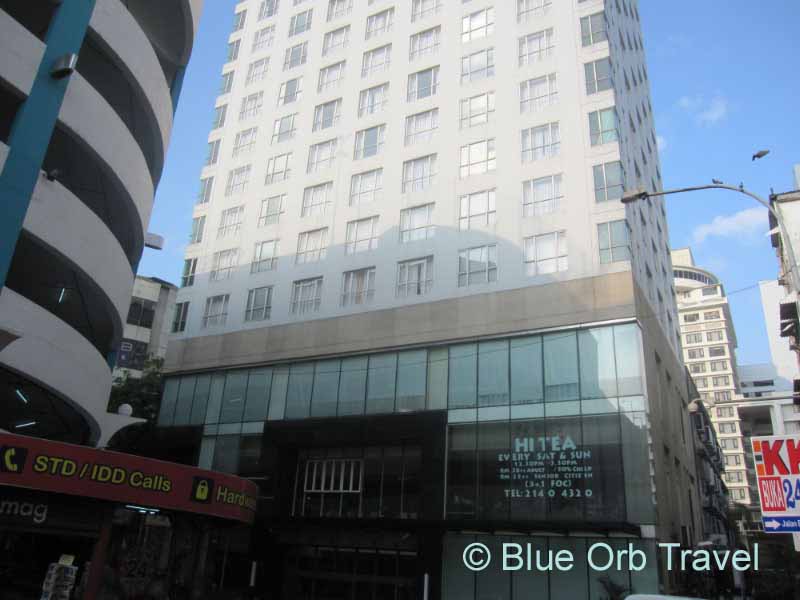
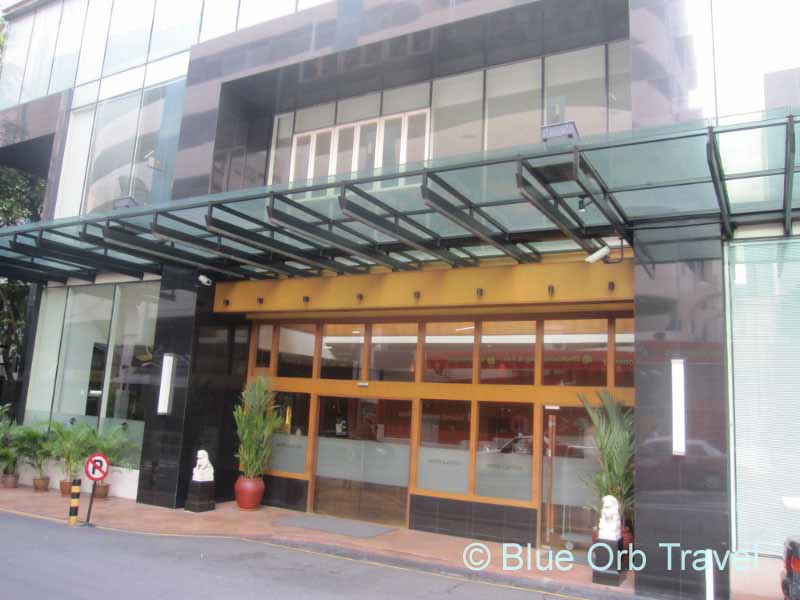
Just a short walk from Pudu Sentral, the main bus terminal in Kuala Lumpur, I found a wonderful hotel where an elegant room was waiting just for me without even having a reservation. Hotel Capitol is located on Jalan Bukit Bintang, one of the major roads in KL, lying in the Bukit Bintang district which is known for its restaurants, shopping and entertainment. One could easily walk to most of the major sights in KL from the hotel, including the Petronas Twin Towers, the KL Tower, the National Mosque and the old KL Railway Station, not to mention the many museums, shopping plazas and markets dotting the city. In addition, the hotel is only a 30 minute ride from the ultra modern Kuala Lumpur International Airport on the high speed rail line.
Hotel Capitol Entrance, Kuala Lumpur, MalaysiaHotel Capitol, Kuala Lumpur, Malaysia
Elegant Decor
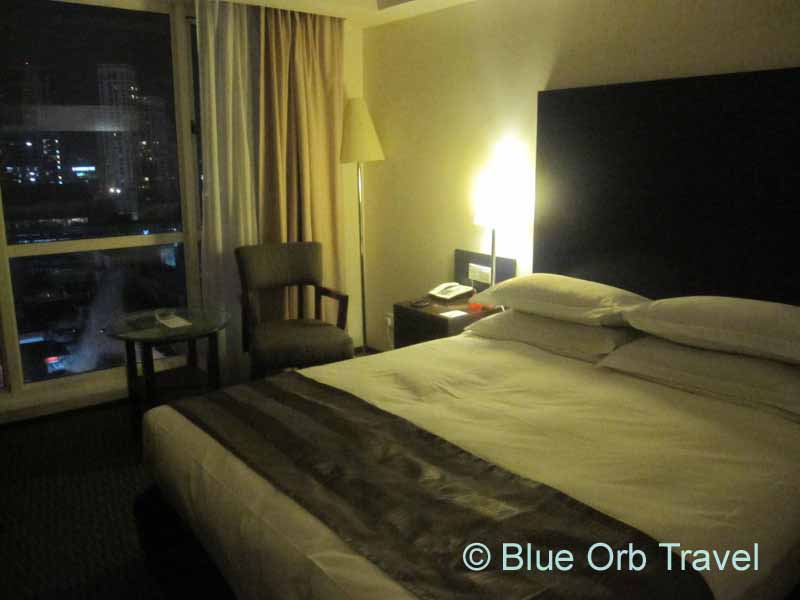
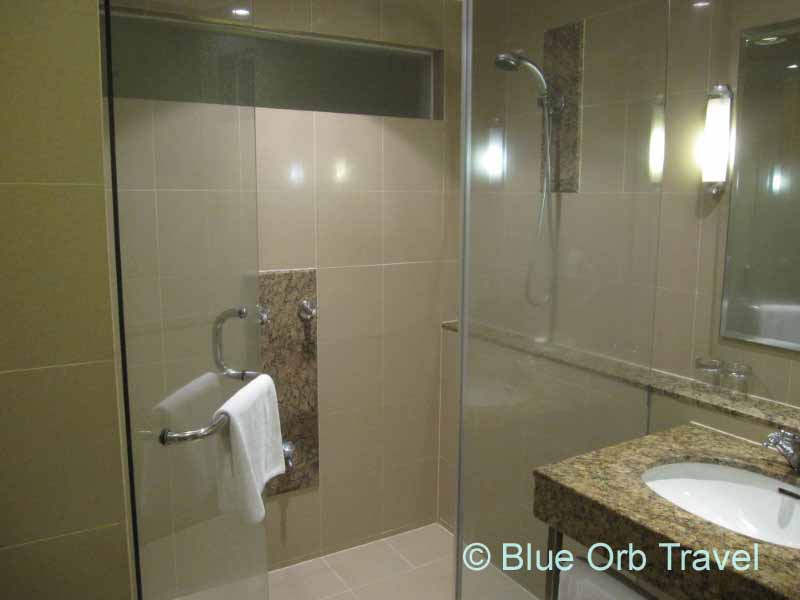
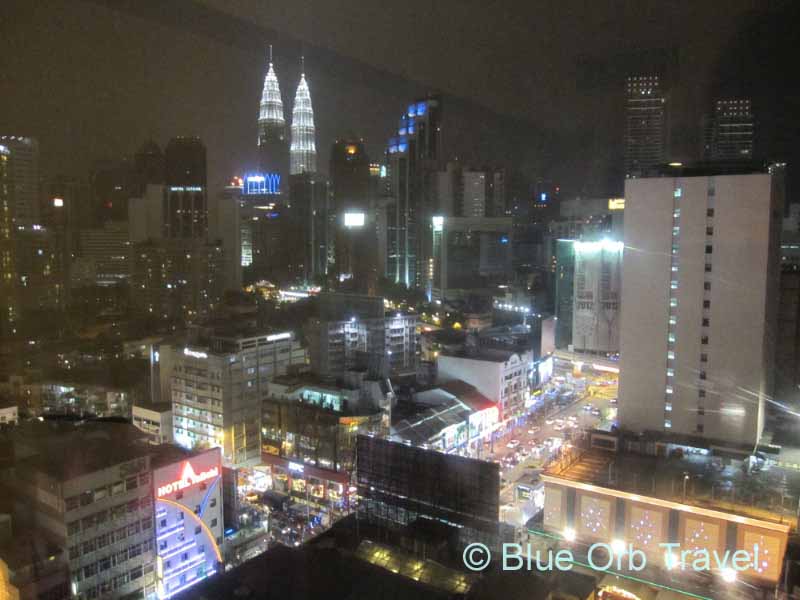
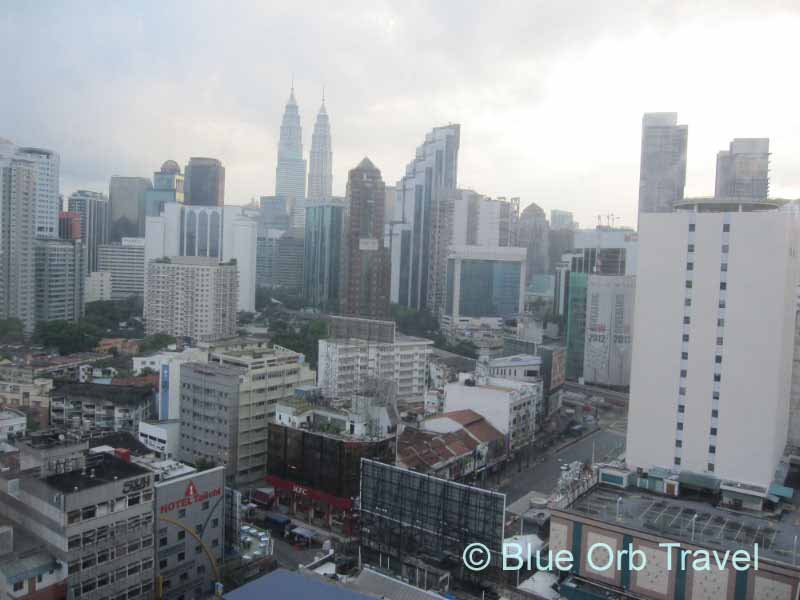
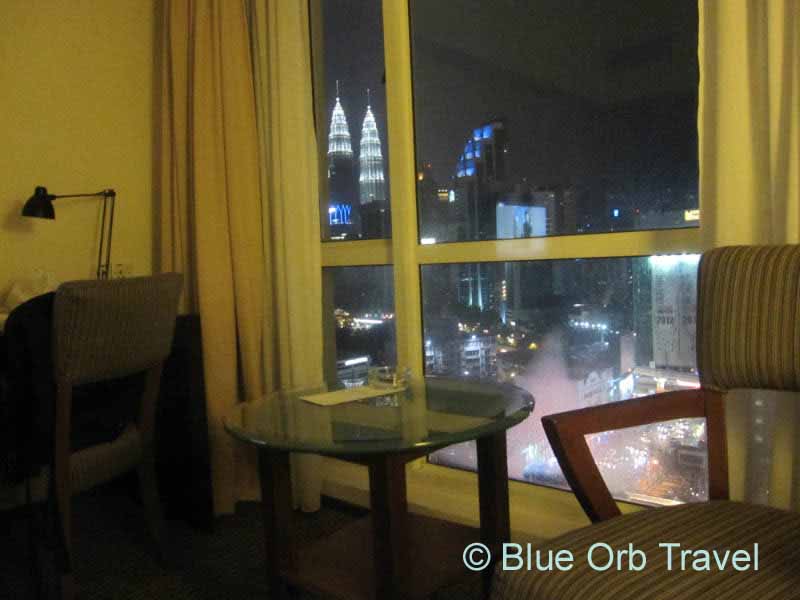
The large, beautifully appointed room was fresh and clean and had a spectacular view of the city through large floor to ceiling windows. To my surprise, after getting into bed for the night I looked out the window and saw the Petronas Twin Towers all lit up in a sparkling display…a truly stunning sight! The room had one queen bed, a large, modern bathroom, a desk and a mini bar with free coffee and tea service. Wi-Fi access was free and for a small fee, wired high speed internet was available in the room. After a frenetic walking tour of the city, it was nice to return to my quiet, relaxing, comfortable room.
Room at the Hotel Capitol, Kuala Lumpur, MalaysiaBathroom at the Hotel Capitol, Kuala Lumpur, Malaysia
Reasonably Priced
All of this came for the price of $82, and while this did not include breakfast, there were two dining options available within the facility. Another nice amenity for those traveling by car…parking is free. This excellent value for such an elegant hotel qualifies it for inclusion on our list of Awesome Accommodations on Blue Orb Travel. The Hotel Capitol in Kuala Lumpur met all of the standards I look for in lodging. It was safe, clean and comfortable. The location was ideal and the staff could not have been more welcoming, friendly and helpful. I can highly recommend the Hotel Capitol for your next visit to Kuala Lumpur, Malaysia!
Night View of Petronas Twin Towers from Hotel Capitol RoomDay View of Petronas Twin Towers from Hotel Capitol Room
Just a pleasant six hour bus ride north of Singapore, Kuala Lumpur is both an interesting and a beautiful city that should be on the itinerary for any visit to Southeast Asia. Perhaps best known for its spectacular Petronas Twin Towers, KL, as it is affectionately known, is also a wonderful example of a welcoming capital city in a moderate Islamic country. After checking into my hotel and purchasing my bus ticket to Georgetown for the next day I took a walking tour of the city with a fellow from Germany who I’d met on the bus. Marten had been to KL before and was a great travel guide.
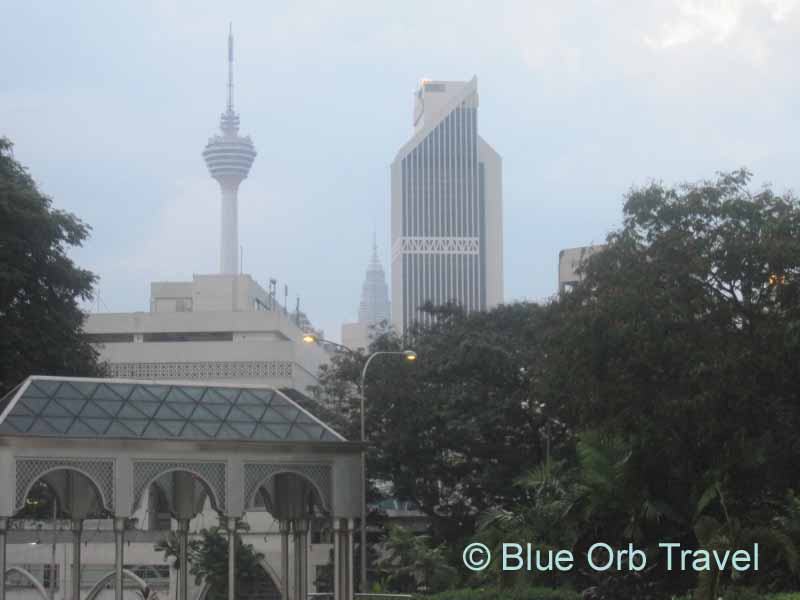
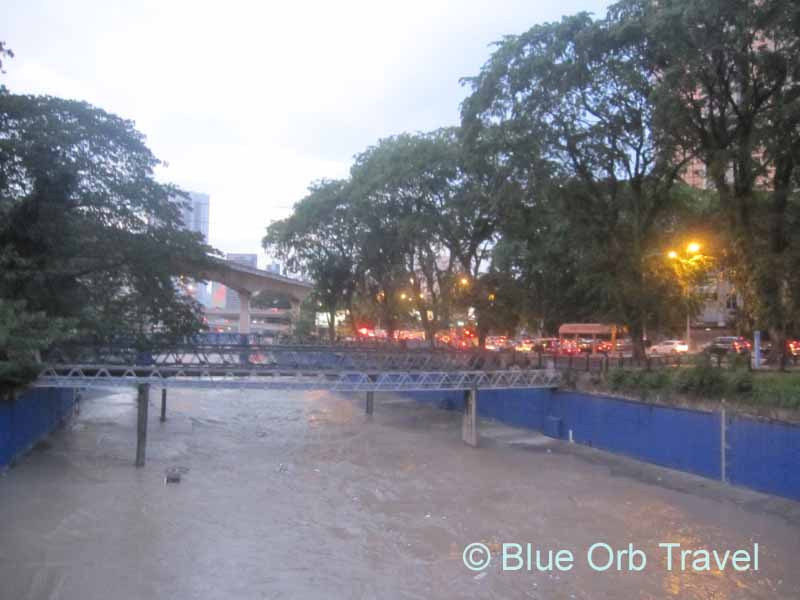
The KL Tower and Petronas Twin Towers Dominate the SkylineBridge over Muddy Water, Kuala Lumpur, Malaysia
The Petronas Twin Towers
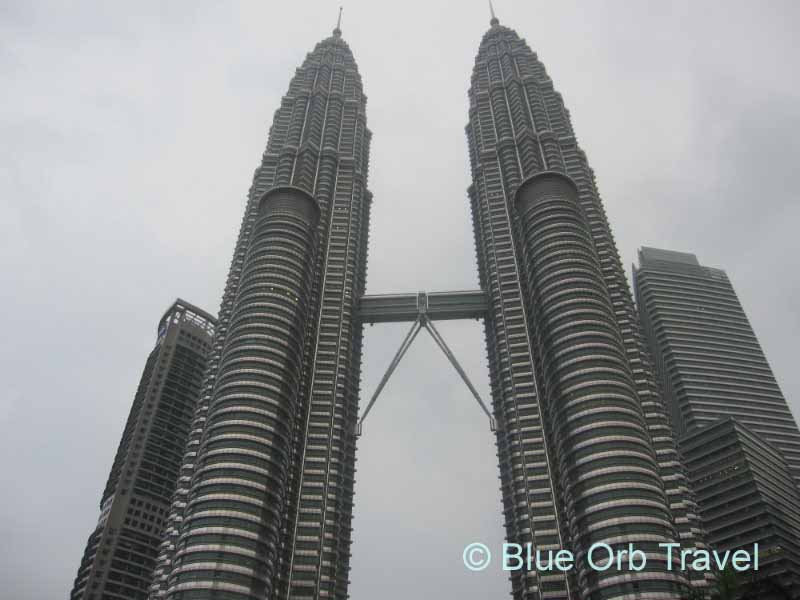
We started out with the number one attraction, the Petronas Twin Towers, which were completed in 1998. At a height of 1,483 feet and 88 floors, the towers were the tallest buildings in the world from 1998 to 2004 when they were surpassed by Taipei 101 in Taiwan. The towers are connected by a skybridge at the 41st and 42nd floors which is not actually fastened to the main tower structures. Instead, it is designed to slide in and out of the towers when they sway during high winds to prevent the bridge from breaking. It is truly a dazzling spectacle when all the lights are shining from the towers at night!
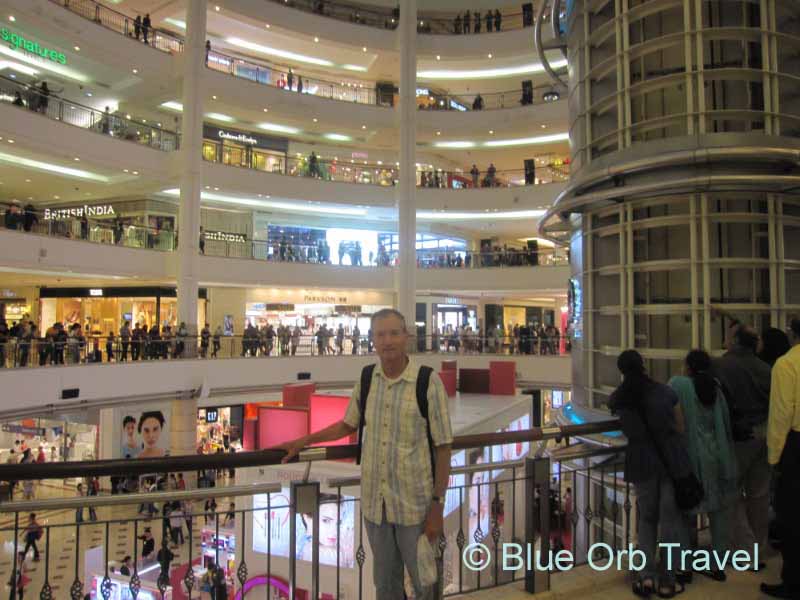
Petronas Twin Towers with Connecting Skybridge, Kuala LumpurJohn in the Lobby of the Petronas Twin Towers, Kuala Lumpur
The National Mosque
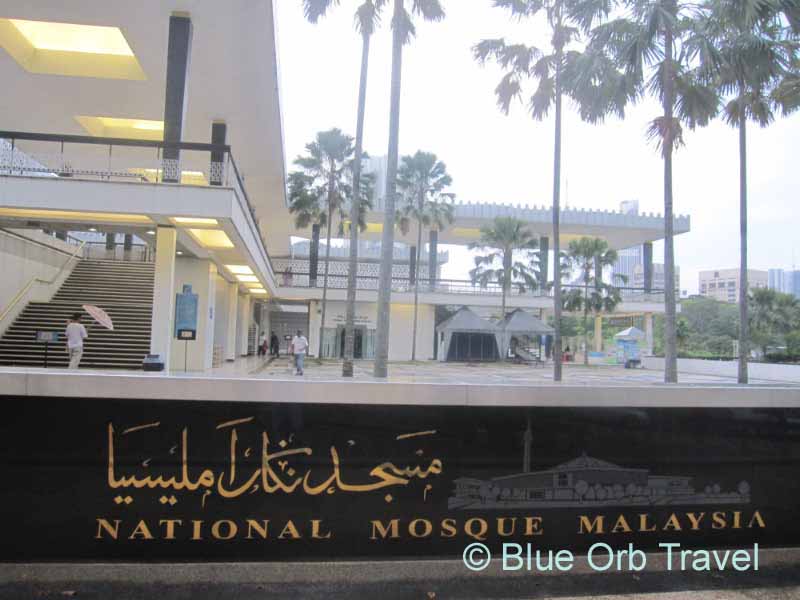
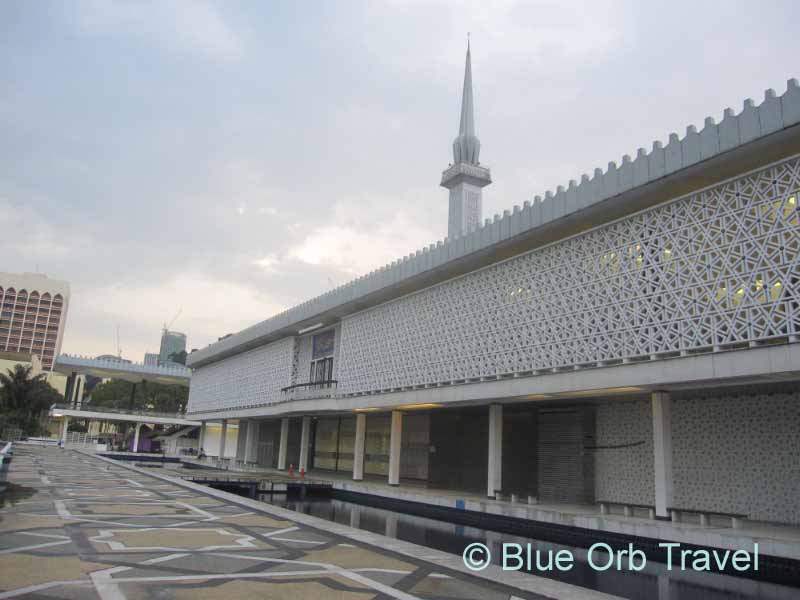
The city was founded in 1857 where the muddy waters of the Klang and Gombak Rivers come together, and in Malay the term Kuala Lumpur means ‘muddy confluence’. We walked past the KL Tower, another landmark pinnacle in the city, and across the river to visit the National Mosque. This modern structure built in 1965 features a 239 feet high minaret and an umbrella shaped roof and it can accommodate 15,000 people! Visitors can enjoy the reflecting pools and fountains outside the Mosque and are welcome to visit the interior after donning the appropriate apparel.
The National Mosque, Kuala Lumpur, MalaysiaMinaret and Reflecting Pools at National Mosque, Kuala Lumpur
The Old KL Railway Station
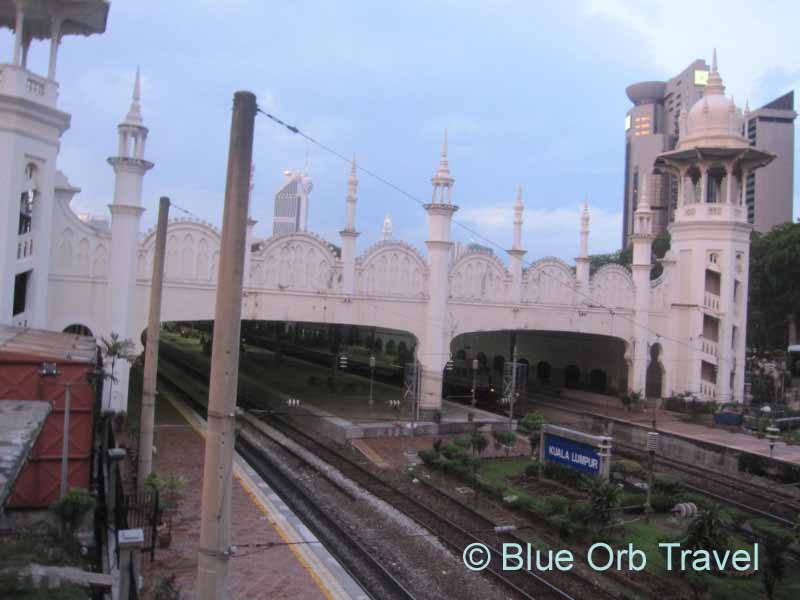
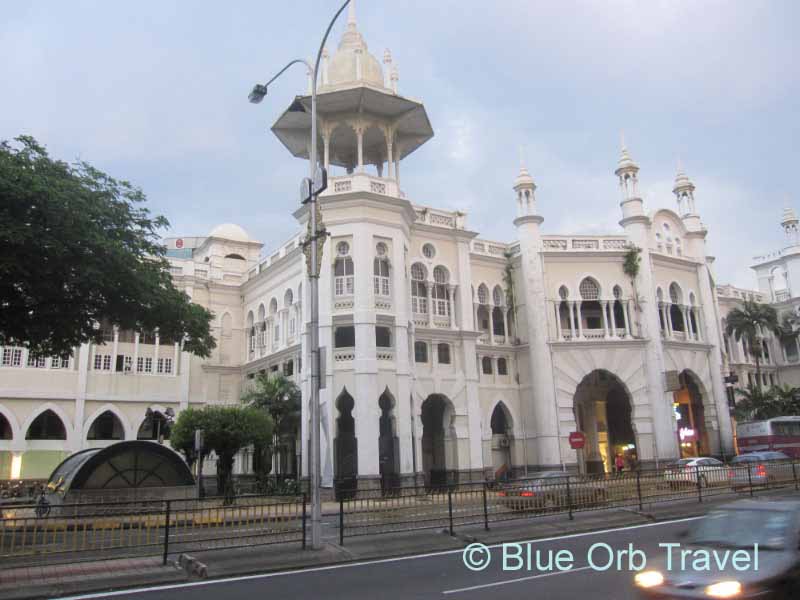
Only a short walk from the mosque is the old Kuala Lumpur Railway Station, completed in 1911 and now replaced by the newer KL Sentral Station nearby. Commuter trains still stop at the old station, but the last real train rolled through in 2001. The distinctive Mughal architecture (the Mughal style of India) is definitely worth a peek. Several museums, such as the National Museum and the Islamic Arts Museum, are located nearby rounding out the important tourist attractions in this section of the city.
The Old Kuala Lumpur Railway StationOld KL Railway Station Displaying Mughal Architecture
The Markets of Kuala Lumpur
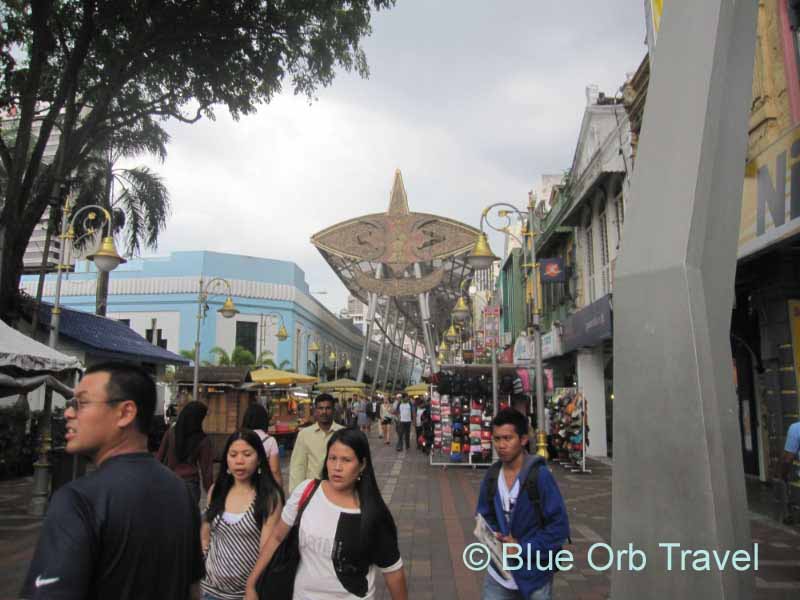
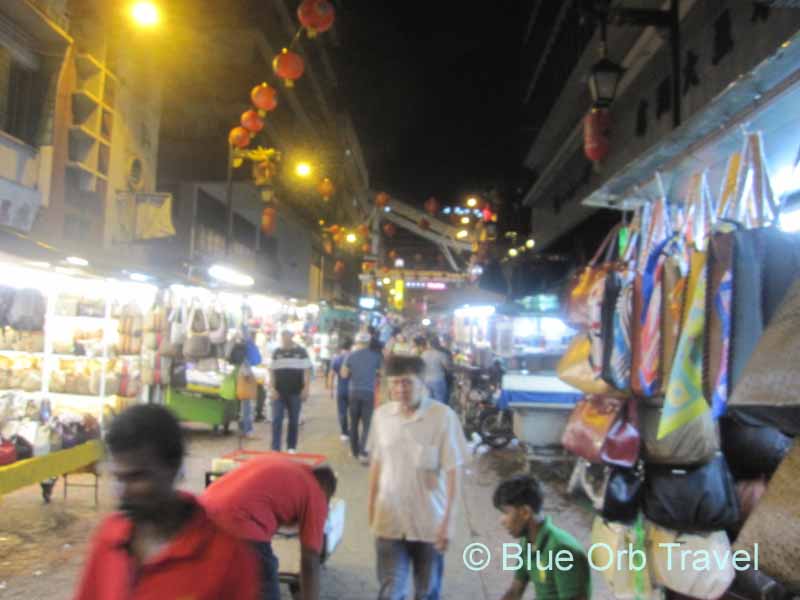
Among the most fun and interesting aspects of Kuala Lumpur are the markets, the most notable of which is the Central Market. This two story and thankfully now air conditioned structure was built in 1936 and has become a cultural center featuring many artists and craftsmen. There are many other street markets and night markets throughout the city, which I found to be a lot more interesting than the modern malls. Be sure to return for my next posting where I’ll provide a full report and review of an Awesome Accommodation in Kuala Lumpur, the Hotel Capitol.
Street Market, Kuala Lumpur, MalaysiaNight Market, Kuala Lumpur, Malaysia
The two Southeast Asia gateway cities of Singapore and Bangkok, which lie at either end of the Malay Peninsula, are connected by an efficient, inexpensive, safe and comfortable network of ground transportation. I had been wanting to check out this route for a number of years and finally had the opportunity to go by bus and train from Singapore in the south to Bangkok in the north, with overnight stays in the Malaysian cities of Kuala Lumpur and Georgetown/Penang. I met a number of other travelers, including solos, groups and families, following the same trail and it turned out to be a great way to experience the culture and history of this interesting region. As per my usual routine, I had made no reservations for transportation or lodging ahead of time, but had no difficulty in securing either along the way.
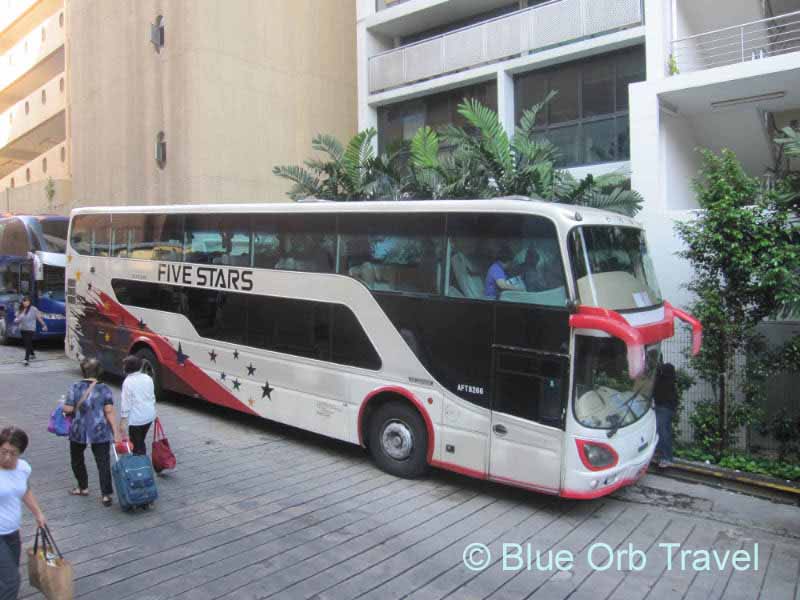
Bus Leaving from Golden Mile Complex, Singapore
Logistics
While travelers could just as easily start at the huge, but visitor friendly train station up in Bangkok and head south, I began my journey down in Singapore going north. The trip only took me three days, but of course it would have been nice to have had more time to explore some of the sights along the way, such as Melaka and the Cameron Highlands in Malaysia or Phuket on the Southern Peninsula of Thailand. After carefully researching all the alternatives I chose to take the bus from Singapore to Kuala Lumpur and then from there to Georgetown. I then took the overnight train from Penang to Bangkok. A good starting point for planning your trip is a visit to the website, The Man in Seat 61, one of our featured links, which has all the details on ground transportation in Southeast Asia and throughout the world for that matter. I found that the detailed information described on this website was factually correct, reliable and up to date…spot on, as they say…and I used it as a guide during my entire trip through Southeast Asia.
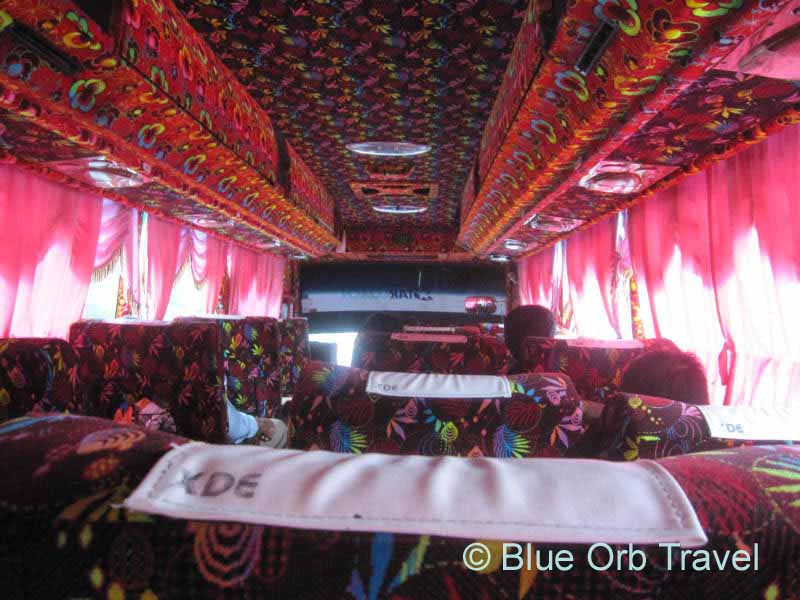
Inside Bus from Kuala Lumpur to Georgetown, Malaysia
Booking Your Tickets
When visiting Southeast Asia, I recommend that you fly in and out with an ‘open jaw’ ticket, arriving in Singapore, as I did, and flying home from Bangkok, or vice versa. This precludes the need for backtracking, saving both time and money. While I was exploring Singapore, I stopped at the Golden Mile Complex on Beach Road, a shopping mall where there are many bus companies standing by to book your seat on a coach heading north. For $32 I reserved a seat on a bus with Five Stars Tours (Update: Five Stars Tours abruptly closed all operations in January 2014) leaving the next morning for Kuala Lumpur, Malaysia. The six hour ride took us across the Straits of Johor and on through some beautiful country. Arriving in Kuala Lumpur around 3 PM gave me plenty of time to explore this city and get my bus ticket for the next day heading on to Georgetown/Penang. On that leg of the trip the five hour bus ride was comfortable and included rest stops along the way, including a stop at Ipoh near the Cameron Highlands. The train is an equally good alternative for traveling between Singapore, Kuala Lumpur and Georgetown.
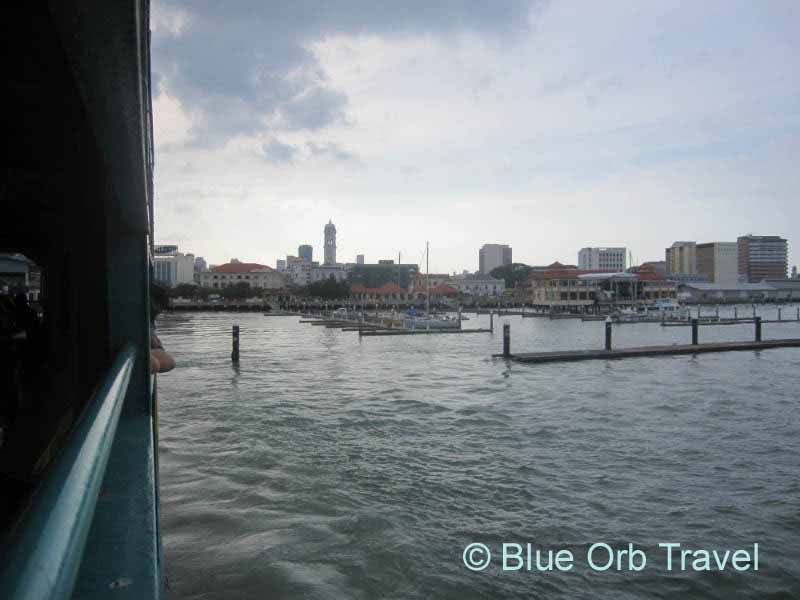
Ferry from Butterworth to Georgetown, Malaysia
A Town Called Butterworth in Malaysia?
Confused about Penang vs. Georgetown vs. Butterworth? Well, here’s the low-down. Penang is a state on the northwest coast of Malaysia which consists of an island, known as Penang Island, and a portion which is situated on the mainland. Butterworth (love that name!) is a city on the mainland part of the state of Penang, which has a bus and train station and a ferry landing all within walking distance of one another. Georgetown is a city on the Penang Island part of the state of Penang and it has a bus station and ferry landing, but no train service. The most popular way in and out of Georgetown on Penang Island is through Butterworth on the mainland. The 20 minute ferry crossing costs about 40 cents for pedestrians going from Butterworth to Georgetown and is free going the other way. Ferries leave every 10 to 20 minutes from about 6 AM to 1 AM.
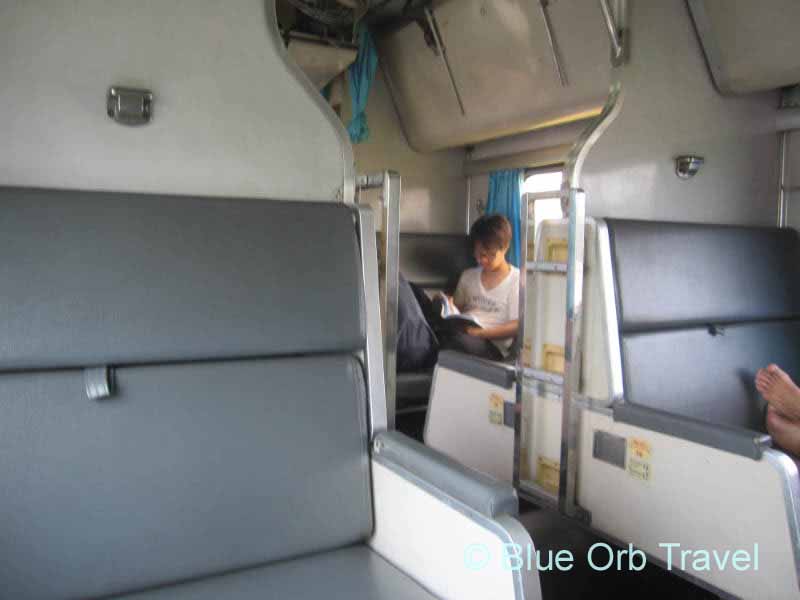
Inside the Night Train to Bangkok, Thailand
Night Train to Bangkok
In my case I arrived in Butterworth from Kuala Lumpur by bus. I walked to the nearby train station to purchase my ticket on the night train to Bangkok for the following day. Then I took the ferry across to Georgetown for the rest of the day and overnight. The following day, I took the ferry back across to Butterworth to catch the train. The ticket for a sleeper on the train cost $34 and the train left at 2:20 PM, arriving at the Hua Lamphong Railway Station (the main station in Bangkok) at 12:20 PM the next day. So, what was it like spending almost 24 hours on a train traveling up the Southern Peninsula of Thailand? It was actually quite pleasant and relaxing with some spectacular scenery along the way. I enjoyed meeting a number of other travelers and had a good night’s sleep before arriving in Bangkok the next morning. It was also my first introduction to the sometimes painfully slow speed of the trains in Southeast Asia, compared to the express trains of Europe or the bullet train in Japan. While the departure and arrival times were reliable, there were times that the train seemed to be just pooping along. In the end this ate into some of my allotted time, which I eventually had to make up for by taking several unplanned in-region flights.
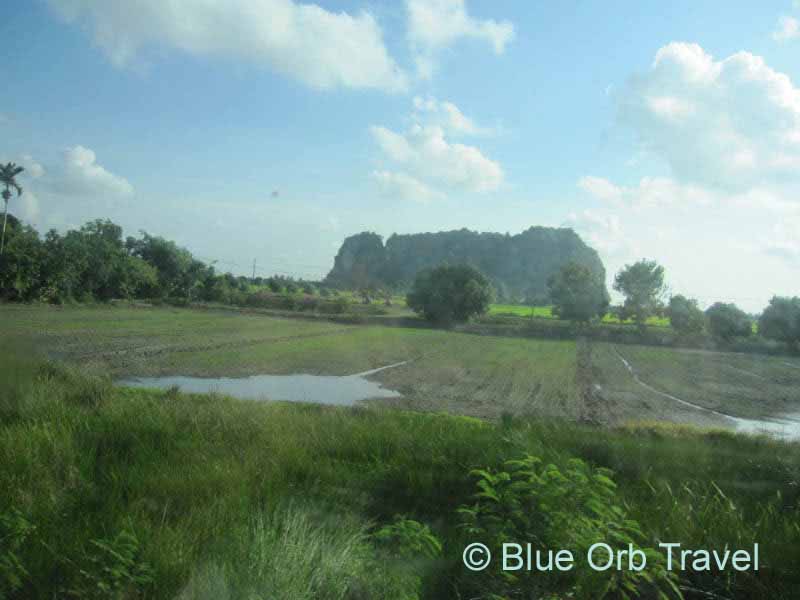
Scenery Along Train Route to Bangkok, Thailand
Coming Next: Kuala Lumpur and Georgetown with reviews of two Awesome Accommodations.
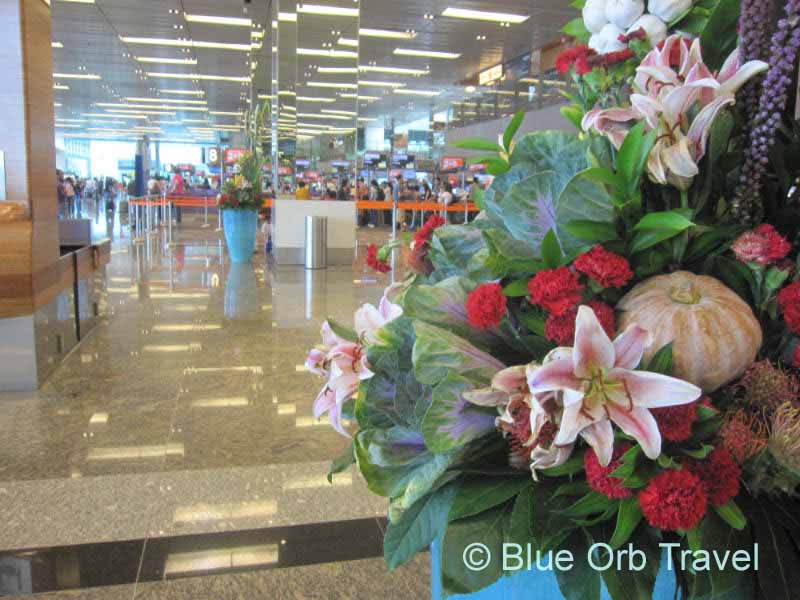
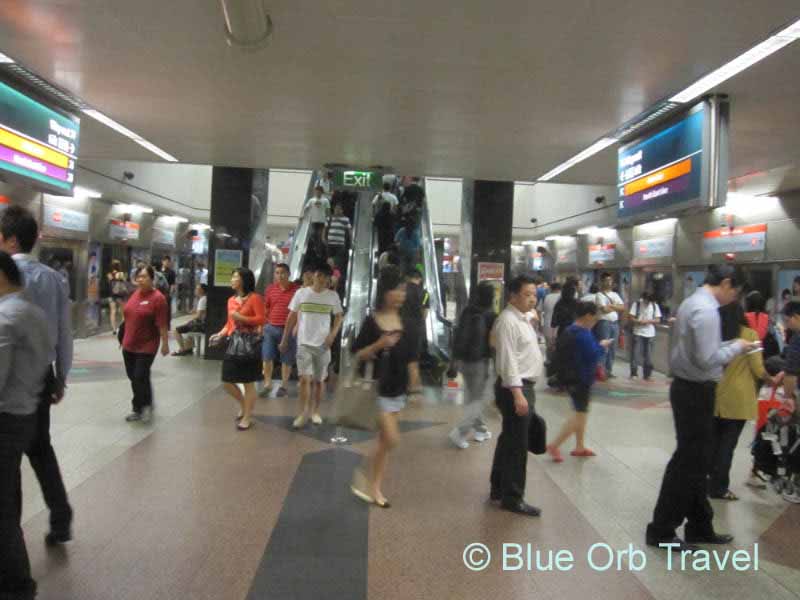
You can get to Singapore by train, bus or boat, but most visitors will arrive by plane at the spectacular Changi Airport, widely regarded as one of the most beautiful in the world. There you will be greeted by an efficient, friendly staff as you walk through the great halls festooned with live orchids and other exotic blooms. Going through customs is a breeze and almost 80% of the world’s countries can travel to Singapore without a visa! The Singapore Mass Rapid Transit subway or MRT is one of the best transportation systems in the world and you can catch the 30 minute ride from the airport into downtown for about $2. Although much of downtown Singapore can and should be walked, the MRT will be your best friend when your feet get tired or you want to explore some of the outer regions.
Changi Airport, Singapore
Along with Bangkok, Singapore is one of the two major gateway cities for Southeast Asia. For those heading north, I recommend taking the bus from the Golden Mile Complex on Beach Road where I got a ticket to Kuala Lumpur, Malaysia for $32. There are many bus companies to choose from there and I can recommend Five Stars Tours (Update: Five Stars Tours abruptly closed all operations in January 2014), which provided a safe, comfortable ride across the Straits of Johor and up the Malay Peninsula. In short, Singapore has transportation all figured out and tourists will appreciate the ease, comfort and convenience that this travel hub provides.
The MRT, Mass Rapid Transit, Singapore
2. Amenities Galore
When it comes to amenities, the city-state of Singapore is at the head of the pack. Whether it’s hotels, dining, shopping or top quality hospitals you’re looking for, Singapore has them all. The spectrum of available accommodations runs the gamut from five star hotels to budget hostels, but visitors will find few real bargains when it comes to looking for a place to stay. Perhaps a city with so much else to offer can be forgiven this one disappointment. On the other hand, Singapore is a diner’s paradise, particularly if you’re into street food. There are vendors everywhere, now mostly in well regulated centers, which is somewhat reassuring to wary visitors concerned about sanitary standards. Be sure to save some room in your suitcase or backpack, because nobody leaves Singapore empty-handed. The shopping is simply too good to pass up. In addition to toys, house wares and silk ties and scarves, I have purchased three custom tailored suits on my various visits to Singapore.
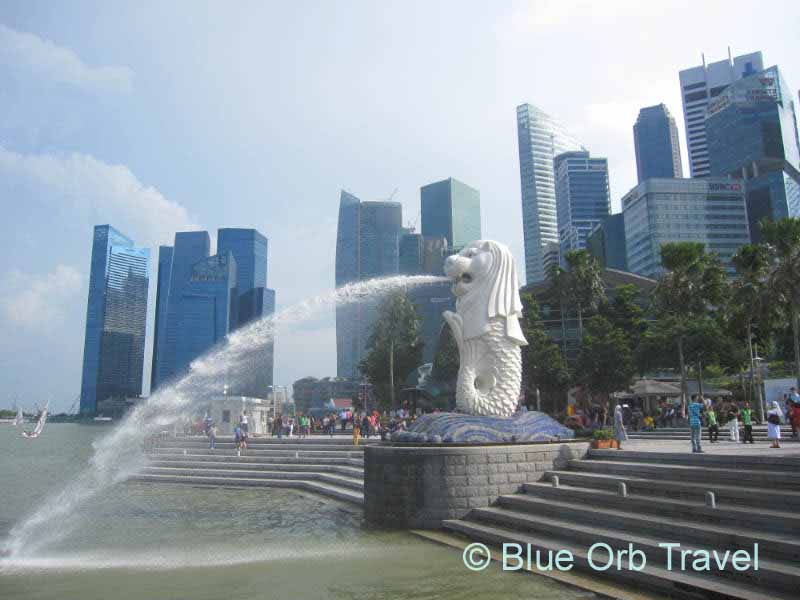
Merlion Park on Marina Bay, Singapore
Planning ahead regarding medical care is an important part of any trip and includes having adequate health insurance, medical evacuation coverage when appropriate and a contingency for where to seek assistance when needed. Singapore is fortunate to have several excellent hospitals, including Mount Elizabeth Hospital and Singapore General Hospital. It’s no accident that Singapore has one of the world’s highest life expectancy and lowest infant mortality rates. One tip to remember regarding medical care in any foreign city…you can always check with your embassy or consulate for advice or recommendations.
Clarke Quay, Singapore
3. Multicultural Diversity
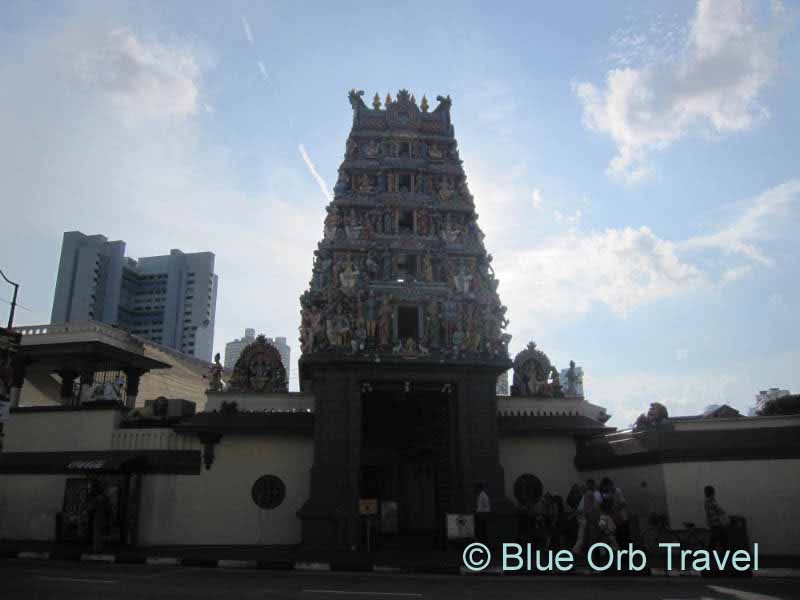
Singapore is an outstanding example of how people from diverse ethnic and religious backgrounds can live together in harmony, enjoying their differences, while at the same time supporting their commonality. There are many cities and countries throughout the world that could learn a lot here. One need only take a ride on the MRT to see people from all backgrounds in close proximity, interacting with one another on a friendly basis. Singapore actually showcases its diversity in its various cultural enclaves which comprise several of the downtown districts. Dating back to 1330, Chinatown is one of the largest and oldest Chinese communities in the world. It is home to a number of historic, cultural and architectural sites, not to mention the accommodations and dining experiences available there. Just across the Singapore River is Little India which features the Tamil culture and is a popular destination for visitors who appreciate curry, enjoy shopping and want to see some interesting temples. Rounding out the cultural panoply in Singapore is Arab Street. Perhaps you’ve heard the expression “The Arab Street” used to describe popular opinion in the Muslim world. Well this is the real thing…a neighborhood actually known as Arab Street, where you can experience the real Arabian culture, including ethnic cuisine, bargaining for your purchases in the souks, and Singapore’s largest mosque, the Sultan Mosque. With such a diverse array of cultures in Singapore, you’ll feel like you’ve had a quick trip around the world by the time you leave.
The Sri Mariamman Hindu Temple
4. Orchard Road
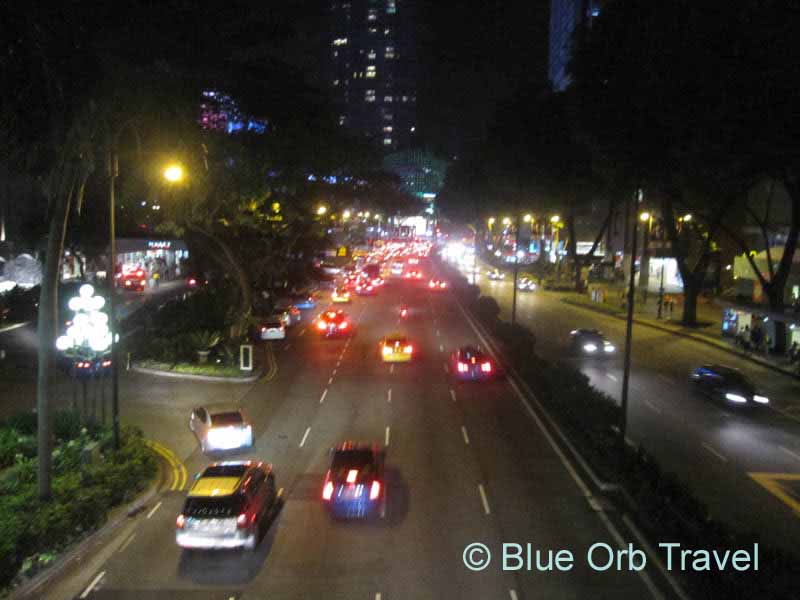
The Orchard Road area, known simply as Orchard by the locals, is one of my favorite spots in Singapore. As Singapore’s more homey answer to Tokyo’s Ginza, it is a hub of activity day and night with its shopping, entertainment, hotels, restaurants and parks. Now a one way street, it got its name back in the 1800s when it was the road that led to the orchards and plantations. Just take the MRT to the Orchard station and you’ll find yourself in the center of activity. Pedestrians will find it easy to navigate this tree-lined boulevard with its crossing bridges and walkways underneath the road. One could spend days wandering around this famous district, just browsing through the upscale department stores and shopping plazas and taking periodic refuge from the crowds in the Botanic Gardens, where admission is free.
Orchard Road at Night, Singapore
5. The Historic District
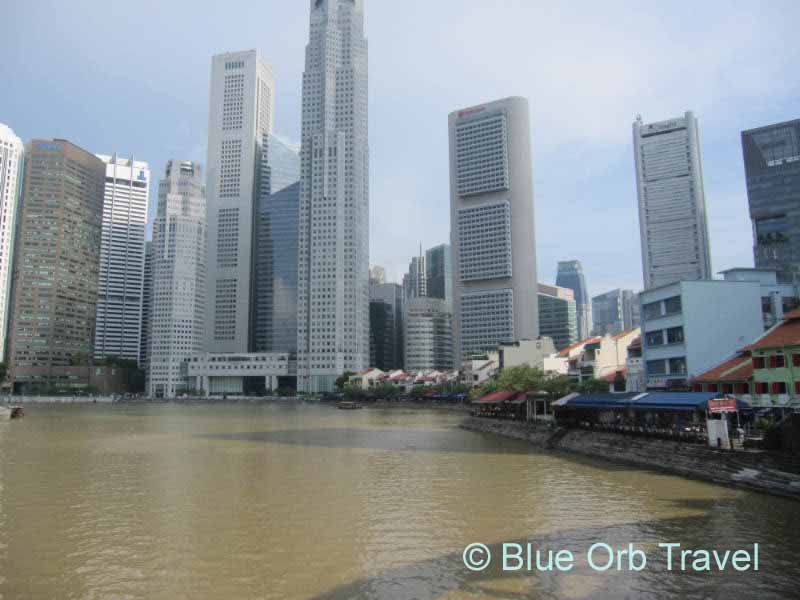
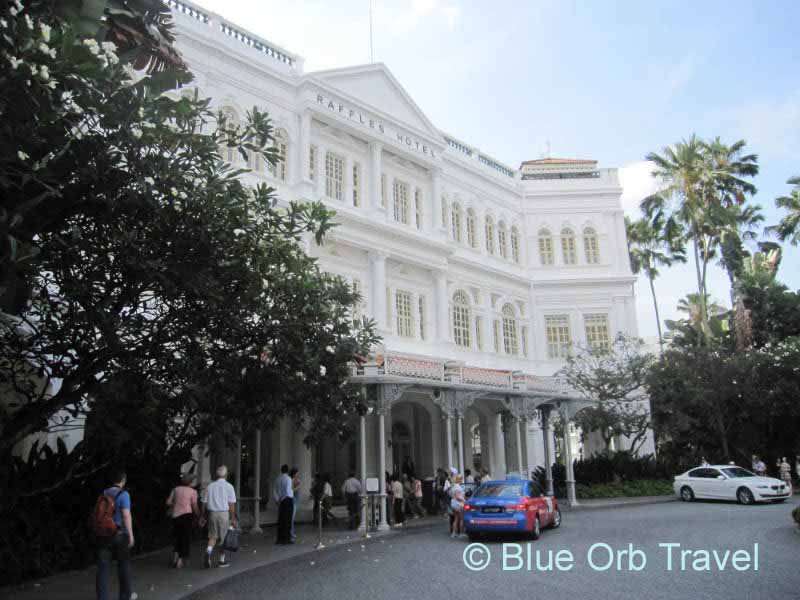
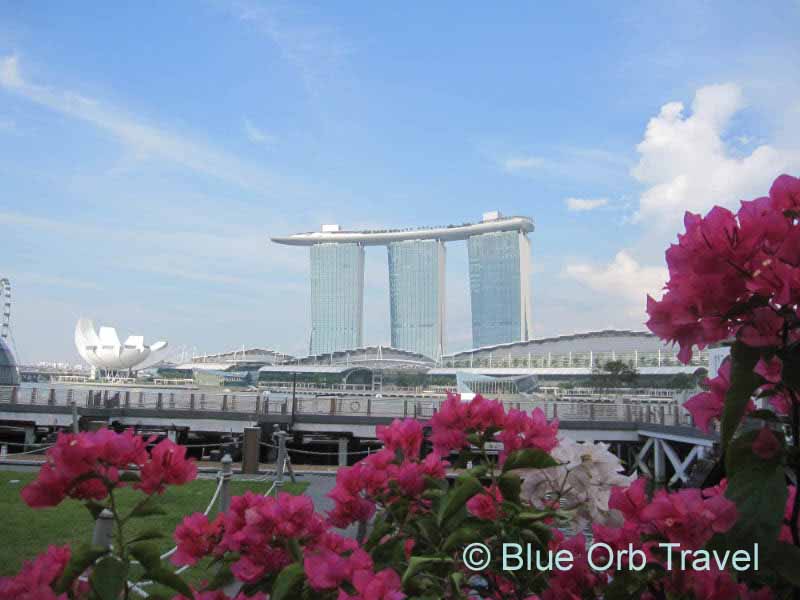
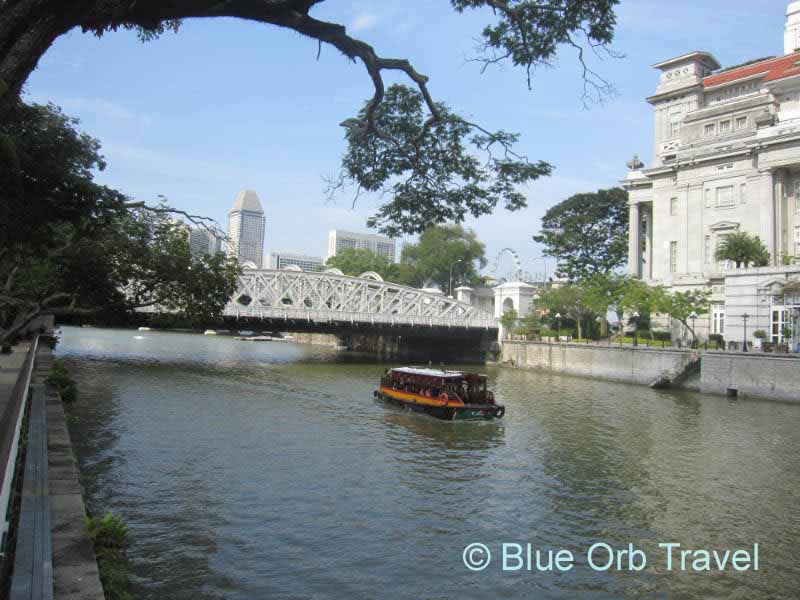
Considered the founder of modern Singapore, British statesman Sir Stamford Raffles sailed up the Singapore River in 1819 and developed a town plan for the future city-state that has endured to this day. Visitors can now get a glimpse of history by walking along the river from its outlet in Marina Bay all the way up to Clarke Quay. Before heading up river be sure to check out Clifford Pier, the original site of an old fishing village and stop by the Merlion Park with its statue spewing water from its mouth. Here you will also get a glimpse of the unbelievable Marina Bay Sands Resort, a series of three skyscrapers with what looks like a huge ship on top. Now going up the Singapore River, along the way you will see the Parliament House and Raffles Landing, the original landing site of Sir Stamford Raffles, now marked by his statue. A little farther north of the river are the St. Andrews Cathedral and the iconic Raffles Hotel. The Raffles is one of the most famous hotels in the world, patronized by the rich and famous including many literary giants and, thankfully, the hotel grounds are open to visitors. Finally reaching Clarke Quay, visitors will be delighted with the combination of historic buildings and modern pedestrian mall right in the heart of Singapore.
The Raffles Hotel, Singapore
6. Sentosa Island
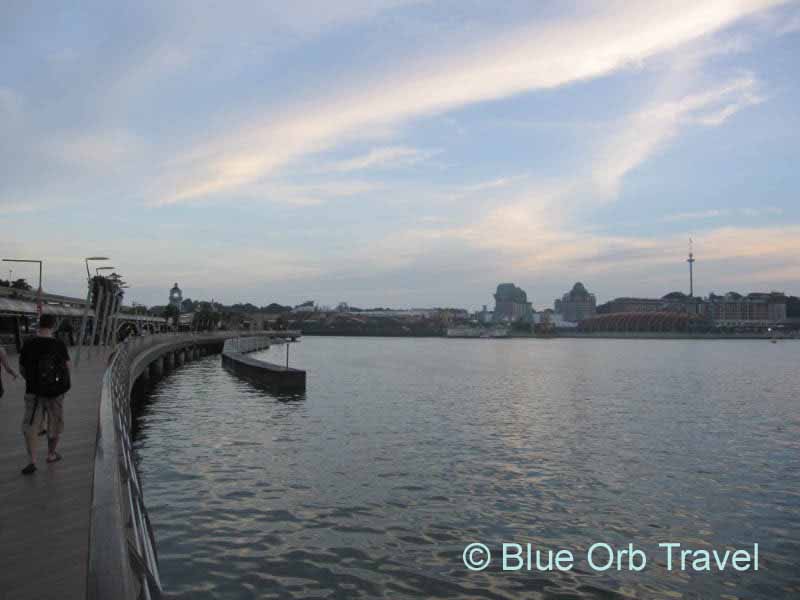
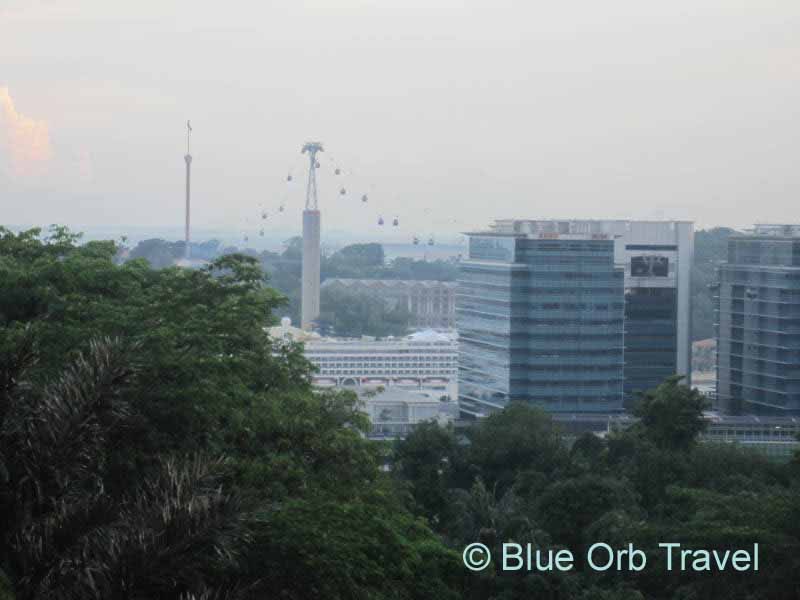
Sentosa is an island resort just south of downtown Singapore which features a mile long beach, five star hotels, golf courses and many other attractions suitable for all members of the family. Visitors can enter Sentosa by a spectacular, albeit expensive, cable car ride from Mount Faber, by public transportation or by walking across the new Sentosa Boardwalk, where the admission fee is one Singapore dollar. Other attractions on this popular resort island include a Butterfly Park, another, bigger Merlion Statue and, my favorite, the Underwater World which is an underground aquarium with a horizontal escalator that transports you through a glass tube surrounded by water. You’ll feel like you are swimming with the fish without getting wet! Sentosa is definitely worth seeing if you have time during your visit to Singapore.
Sentosa Boardwalk, Singapore
7. Architectural Splendor
For students of architecture, Singapore is a veritable encyclopedia of building styles, reflecting various cultures and periods, while at the same time based on utility and the best use of limited space. Within the short span of a few city blocks you will see everything from ultramodern skyscrapers to Art Deco construction to Colonial Period buildings. As you wander the city you will be impressed with the number of places of worship that demonstrate the great diversity of the city, including Chinese, Hindu and Sikh temples, Jewish Synagogues, Islamic Mosques and Christian Churches. Over the years that I have visited Singapore, it seems that the city has been in a constant state of construction, with new skyscrapers and ever more dazzling buildings like the Esplanade Theatres on the Bay going up all the time. Fortunately, the city fathers have a great respect for the past and make allowances for the preservation of historic structures. While a signature building representing the city-state of Singapore has yet to emerge, this beautiful metropolis has definitely taken its place among the great architectural destinations of the world.
The Marina Bay Sands Resort, Singapore
8. Festivals and Holidays
On my first trip to Singapore I had the good fortune to arrive at the time of the Chinese New Year celebration. The spectacular nighttime parade down Orchard Road is something I’ll never forget. I have also experienced the Festival of the Hungry Ghosts during which deceased relatives are said to return to the realm of the living and wander the earth for thirty days. While they are making their rounds, living relatives make food offerings to prevent the deceased from performing acts of mischief. Because of the rich diversity of Singapore there are many other festivals, events and holidays for tourists to experience. In addition to having most of the western holidays, Singaporeans also celebrate the Dragon Boat Festival, Teacher’s Day, Children’s Day and Hindu, Buddhist, Muslim and Christian holidays. Planning ahead is important because accommodations are harder to come by during these periods and costs are higher.
Cable Cars to Sentosa, Singapore
9. Temperate Climate
Singapore is located just 85 miles north of the Equator, so it’s not surprising that it would be hot and humid there. But ‘some like it hot’ and I happen to be one of them. With little variation in the temperature and steady rainfall throughout the year, there are no distinct seasons in Singapore. The wettest months are from November to January when it may rain for a time every day, usually in brief bursts in the afternoon, and the driest months are from May to July. Singapore is often described as having a tropical rain forest climate or having monsoon characteristics, but being a land of generally clement weather makes this a comfortable, pleasant place to visit year round. For those not used to humidity, you can seek refuge in almost any indoor facility, including the MRT, shopping arcades and underground walkways.
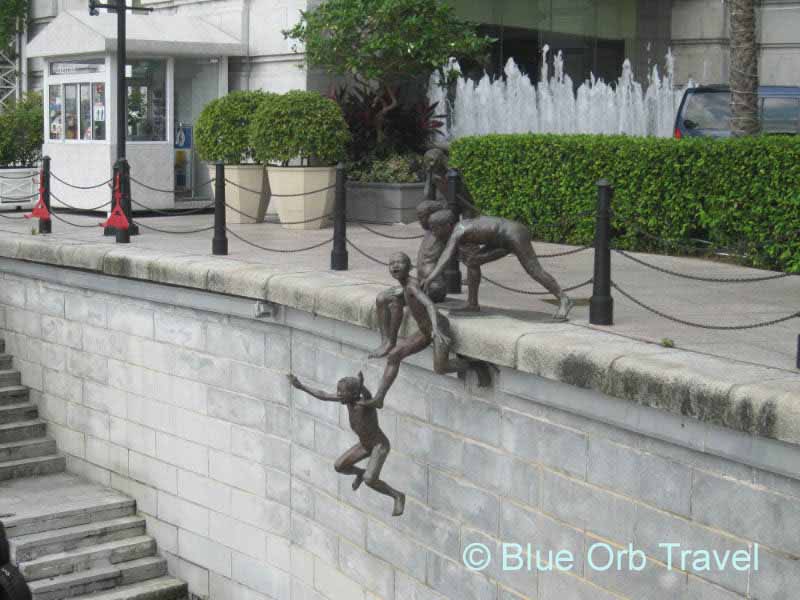
‘First Generation’ Bronze Statue on the Singapore River
10. Tiger Beer
I would be remiss if I did not mention one of Singapore’s most famous and popular products…Tiger Beer! While the name Singapore is derived from the Malay word Singapura, meaning Lion City, it is the tiger for which the city’s signature adult refreshment is named. And younger travelers will be happy to know that adulthood begins at age 18 in Singapore, at least where drinking is involved. In 1932 Tiger Beer became Singapore’s first locally brewed beer and it is now available in 60 countries worldwide. This pale lager comes in bottles with a strikingly attractive label which loses nothing in the translation when applied to souvenir tee-shirts and mugs. So, when you need a break from shopping and sightseeing on a warm afternoon in Singapore, what could be better than ducking into a pub and having a cold Tiger Beer!
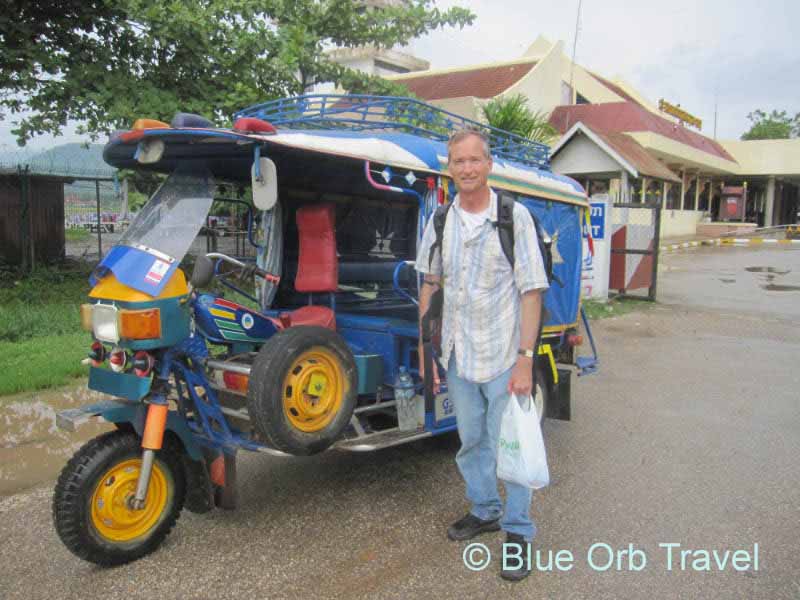
It was with some trepidation last May that I embarked on a three week trek through six countries in Southeast Asia…on my own! With nothing but a pack on my back I made my way through Singapore, Malaysia, Thailand, Laos, Vietnam and Cambodia, hitching a ride on everything from planes, trains, buses and boats to taxis, bicycles, motor scooters and tuk tuks (more on that later). Heading out into uncharted territory like that is all part of the fun and I think what motivates most adventure travelers. Little did I know how easy it would be and how smoothly I would be able to make connections and find accommodations. While I did do a lot of planning ahead of time, I made no reservations in advance, except for the first night in Singapore. The timing could not have been better, with fewer crowds after the peak season and perfect (albeit hot) weather just before the wet season which begins in June. In the end, I got to see some of the most popular tourist destinations in the world and met friendly, helpful people everywhere I went. This was truly the adventure of a lifetime.
Ha Long Bay, Vietnam
Bargain Hunter’s Paradise
Of the many things that make Southeast Asia a paradise on earth, none will be more appreciated by the value-minded traveler than the plethora of bargains waiting to be redeemed. As word gets out, it’s hard to say how long this will last, but for now savvy travelers like the many backpackers and students I encountered along the way are taking advantage of the low prices, reminiscent of the bargains available in Eastern Europe ten to fifteen years ago. On most evenings, the first hotel I walked into had a room available, sometimes for as little as $20, including breakfast! With the exception perhaps of Singapore, all of my accommodations were a great value for the money. My hotel in Hoi An, Vietnam even came with a bicycle! And traveling from one point to the next, whether by plane, train or bus, was unbelievably inexpensive. I actually traveled on a comfortable bus from Siem Reap, Cambodia to Bangkok, Thailand for $12. And how ‘bout this…dinner at a charming French restaurant in Luang Prabang, Laos for $7.50. I think you get the idea. Southeast Asia is a bargain hunter’s paradise and you’ll want to take advantage of it while it’s still possible.
The Petronas Twin Towers from My Hotel Room, Kuala Lumpur, Malaysia
Cultural Potpourri
Within the relatively small area of Southeast Asia, you will experience a variety of cultures and meet a lot of friendly, interesting people. Everywhere I went, folks went out of their way to be helpful and nice and many times where as interested in me as I was in them. Singapore is like a microcosm of the entire area, where people from many backgrounds, religions and cultures all live together in harmony. Malaysia is a moderate Islamic country that stands out as a shining example of what a Muslim country can be. I found the people of Malaysia to be very welcoming and also proud to show off the many interesting things about their beautiful country. Thailand is a thriving, modern constitutional monarchy and boasts the world’s longest ruling monarch. Thai and Chinese are the main ethnic groups there and Buddhism is the primary religion. In contrast, Laos, Vietnam and Cambodia are communist countries, but even the most observant visitor would be hard pressed to see any evidence of it. Instead, what you are more likely to notice is that these are burgeoning capitalist countries full of hopeful people. It was especially heart warming for me as an American to find how warmly I was greeted throughout Vietnam. So, if it’s culture you’re looking for, Southeast Asia is brimming with it.
Hoi An, Vietnam
World Heritage Sites Abound
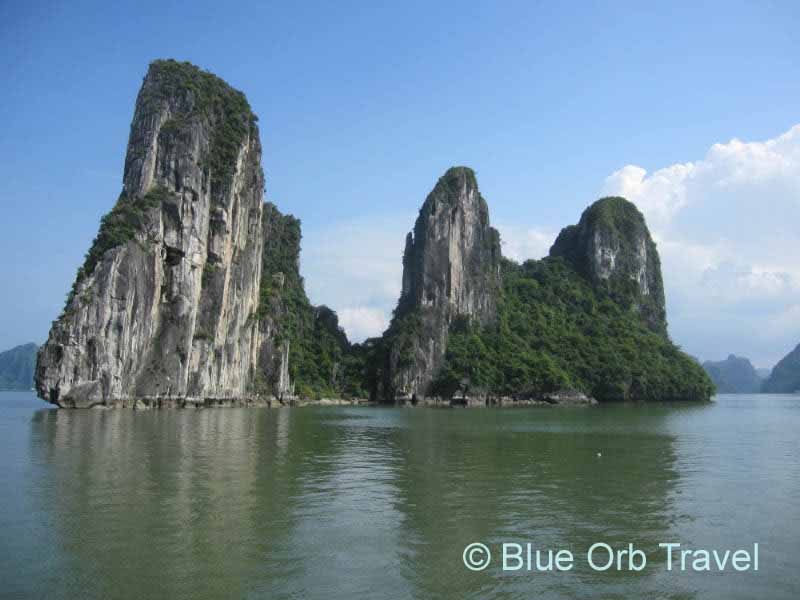
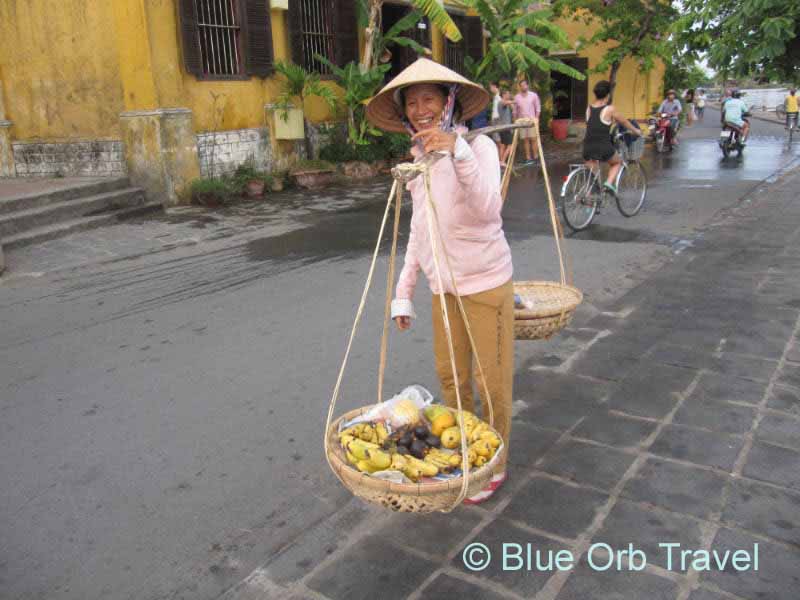
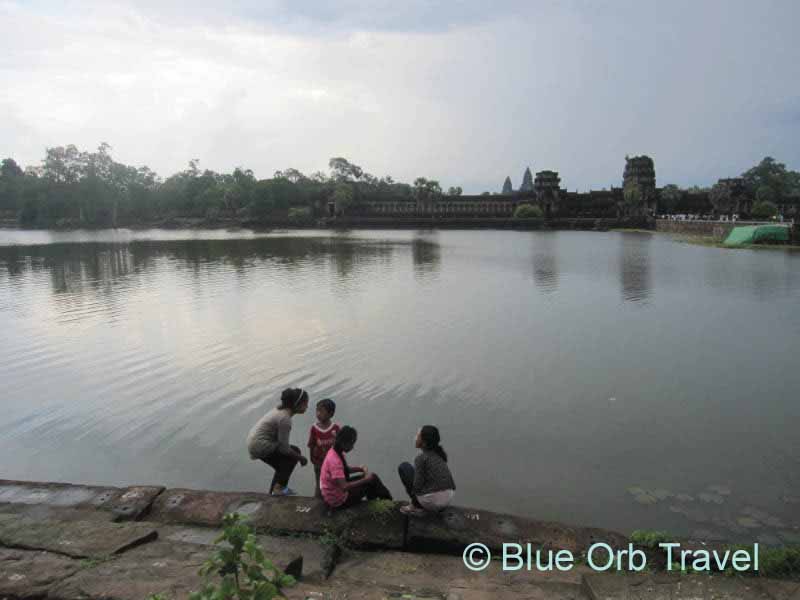
There are no less than 20 UNESCO designated World Heritage Sites in the six countries that I visited in Southeast Asia and among them are some of the most famous in the world. One of the highlights of my trip was seeing the temple complex at Angkor Wat in Cambodia, which had been on my bucket list since I was a kid. The historic trading city of George Town on the Straits of Malacca in Malaysia is another designated site and will give visitors a glimpse into the colonial era of Southeast Asia. Of the many World Heritage Sites located in Vietnam, there are two that you absolutely must plan to see during your swing through this beautiful country. Ha Long Bay, meaning Bay of Descending Dragons, is up north and about 100 miles east of Hanoi. Almost 2000 incredibly shaped islands dot this area in the Gulf of Tonkin and there are many tour boats waiting to take you out to see them. Midway down the long, narrow outline of Vietnam on the map is the ancient town of Hoi An. Much of this quaint little city has been preserved and it now attracts many visitors from around the world. Perhaps the most out of the way site I visited was the historic city of Luang Prabang located on the Mekong River in the northern mountains of Laos. Just when you think you are at the end of the world, you find yourself in a town full of interesting temples, charming French provincial architecture, great hotels and scrumptious dining. These fabulous World Heritage Sites alone should be enough to get you thinking about your trip to Southeast Asia.
Angkor Wat, Cambodia
Planning Your Trip
The best plane fares to and from Southeast Asia will be found using gateway cities like Singapore and Bangkok. To save time and money and avoiding backtracking, I purchased what is called an ‘open-jaw’ ticket, which means you arrive in one city and depart from another, Singapore and Bangkok, in my case. This enabled me to add a visit to Singapore and a trip up the Malay Peninsula onto the beginning of my itinerary. Then it was simply a matter of traveling the circuit from Bangkok up north to Laos and then down through Vietnam and finally across Cambodia back to Bangkok. It was actually fairly easy travel and half the fun was the variety of modes of transportation along the way. For travelers from the U.S. the only visa that should be arranged before the trip is for Vietnam. No visa is required for Singapore, Malaysia or Thailand and a visa on arrival can be obtained in Laos ($30) and Cambodia ($20). The money situation can seem a little intimidating at first, since each country has its own currency: Singapore dollars, Malaysian ringgits, Thai bahts, Laotian kips, Vietnam dongs, and Cambodian riels. Fortunately, in Laos, Vietnam and Cambodia the U.S. dollar is accepted almost everywhere, so I highly recommend taking plenty of cash including small bills like ones, fives and tens. There will be lots more information, tips and photos from my recent trip to Southeast Asia in upcoming articles on Blue Orb Travel, so I hope you will stay tuned and come back often.
From the historic gold laden foothills to the alpine lakes and forests of the high country, there are countless places of interest to visit in the Sierra Nevada Mountains of Northern California. Whether you enjoy recreation, sightseeing, relaxing or all of the above you will want to include a trek to this beautiful part of God’s creation on your next visit to the Golden State. Join us as we explore four treasures of the Sierra Nevada Mountains in Northern California. Yosemite and Lake Tahoe are the two well known crown jewels of the Sierras and, while Bishop and Lake Alpine may have fewer visitors, we’re sure you’ll want to know more about them, too. All four of these gems are an easy drive from San Francisco and well worth the trip.
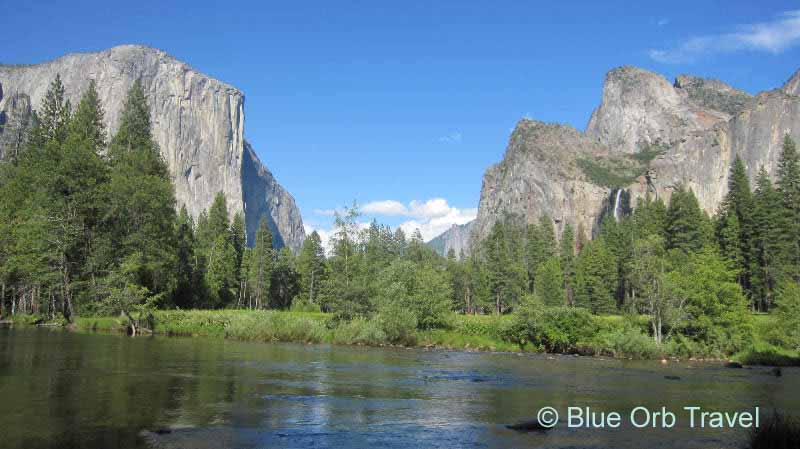
Yosemite National Park with El Capitan and Bridal Veil Falls
Yosemite National Park
Arguably the premier national park in the United States, if not the world,Yosemite National Park is a destination that every traveler should have on their list of must see places. To suit all manner of tastes, accommodations in Yosemite run the gamut from ‘tenting on the old campground’ to a $500 room at the elegant Ahwahnee Hotel. Whichever you choose, once you’re settled in and have stopped gasping at the breathtaking scenery you can begin exploring this magnificent valley. A river runs through it and at some point you should plan to float down the Merced River on a rented raft. Along the way you’ll pass Yosemite Falls, the highest waterfall in North America and sixth highest in the world, and El Capitan, one of the world’s largest granite monoliths and a favorite of extreme rock climbers. Bring your binoculars so you can look for them ascending the sheer face of this famous mountain. Later as you explore the valley by car you’ll want to visit the base of Bridal Veil Falls and Yosemite Falls, both of which are easily accessible on foot. History buffs won’t want to miss the Miwok/Paiute Indian Village, the Indian Caves and the several museums located in the valley. A visit to Camp Curry, the original camp established at the foot of Glacier Point in 1899 and now a hub of activity is a great way to end the day.
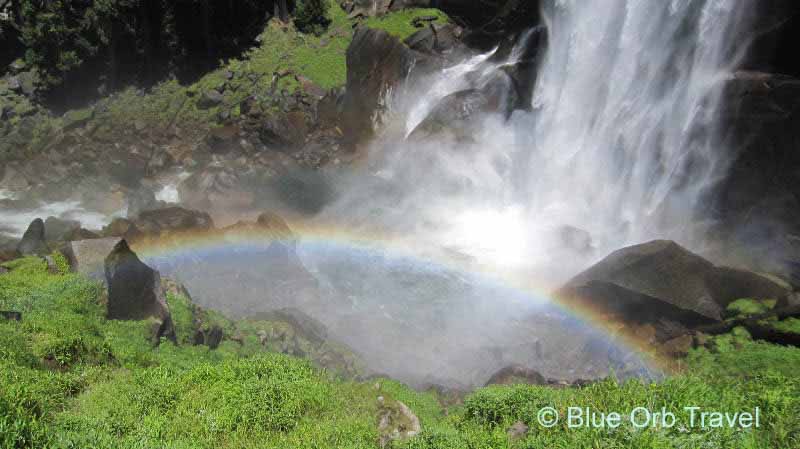
The Mist Trail to Vernal Falls, Yosemite
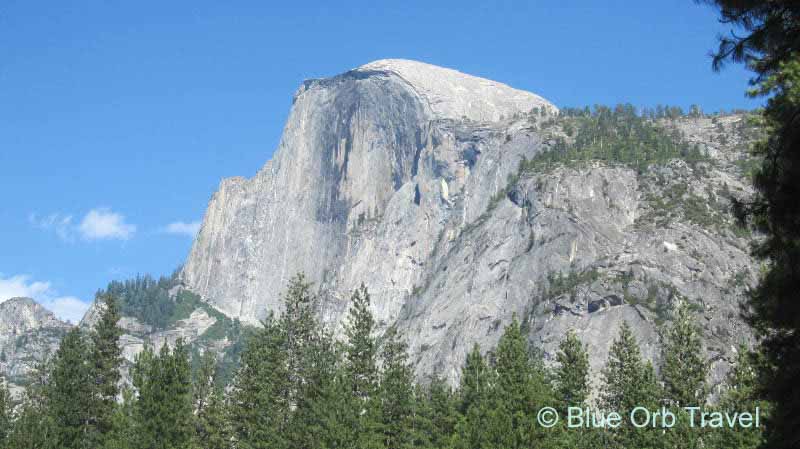
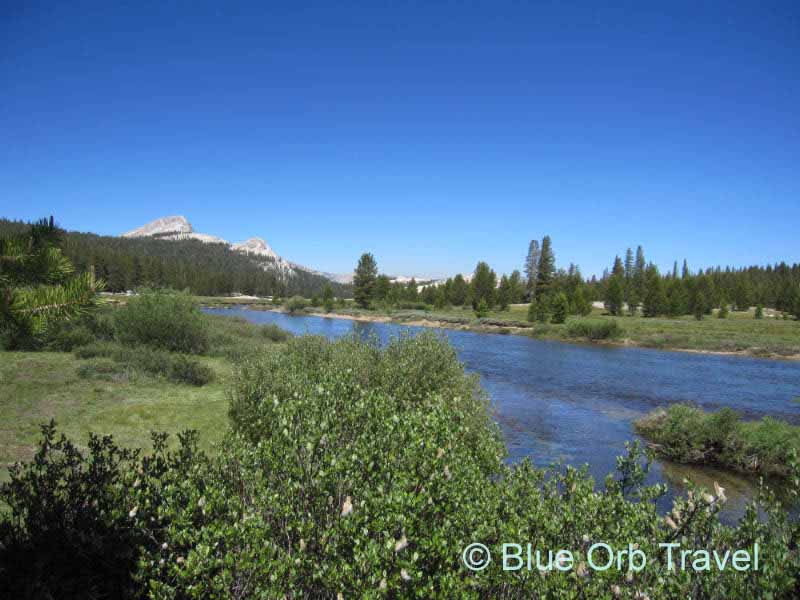
Hikers usually congregate at Happy Isles before heading up this part of the John Muir Trail. The first leg is the favorite Mist Trail to Vernal Falls, which is an ideal hike for families. For those in good shape who want to continue on up the trail, Nevada Falls is the next level and farther yet for the truly adventurous is the world famous Half Dome climb, an exhilarating experience enjoyed by visitors from around the globe. The 18 mile hike from Happy Isles to the top of Half Dome and back can be done in one day and I have actually done it twice. The final cable ascent up the slick back side of Half Dome is a thriller and has become so popular that you must now get a permit in advance to be one of the 400 hikers allowed to make the climb each day. If you’re not into hiking you can still drive up to the top of Glacier Point or to beautiful Tuolumne Meadows and Tenaya Lake. Just to give you some sense of the incredible beauty of Yosemite, I once witnessed a bus load of tourists from Switzerland oohing and awing as they stood transfixed by the scenery surrounding them while looking up from the valley floor.
Half Dome, Yosemite National Park
Bishop, California
The one and a half hour drive from Yosemite to Bishop just 75 miles to the southeast will take you through Tuolumne Meadows, past Tenaya Lake and over the infamous Tioga Pass. After coming down from the mountains into the little town of Lee Vining on the east side of the Sierras you’ll want to take a look at nearby Mono Lake and the otherworldly tufa formations that line its shores. If time permits you can take a peek at June Lake and Mammoth Lakes before arriving in Bishop, the only city in Inyo County. Calling it a city is a bit misleading, as it’s more like stepping into a little western town back in the 1950s. Located in the Owens Valley with the trout filled Owens River flowing through it, Bishop is a magnet for sports aficionados from around the country and the nearby ski resorts and trailheads to the Sierras only add to the draw. If you are lucky enough to be there on the 4th of July, you can join in with the locals for an awesome fireworks display at the Bishop Airport. And be sure to have lunch at the popular Erick Schat’s Bakkery and Deli on Main Street.
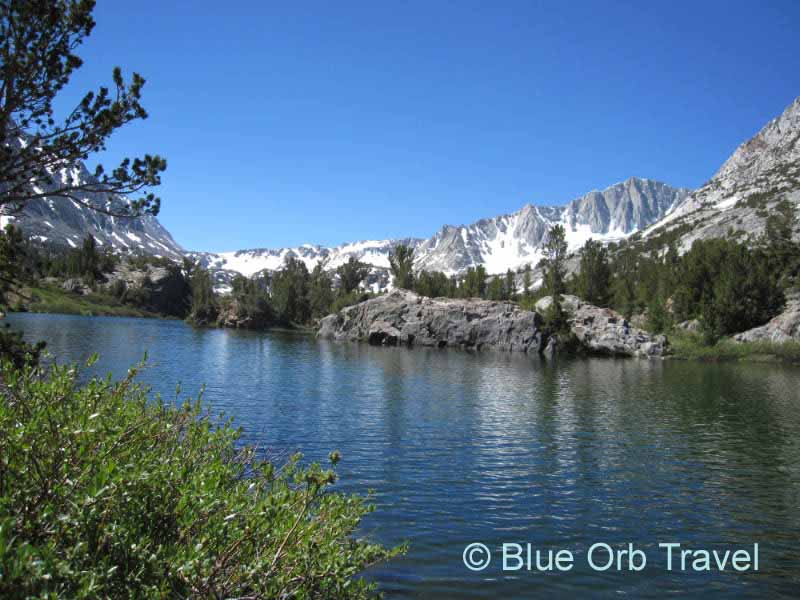
Long Lake Near Bishop, California
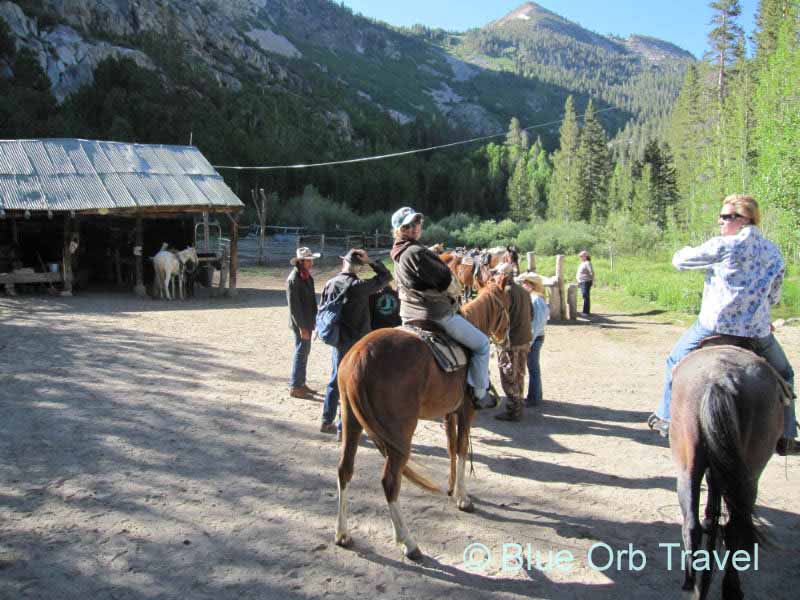
Ever thought of taking a horseback ride up into the mountains? Well, Rainbow Pack Outfitters (named for the Rainbow Trail) is a family friendly business located just outside of Bishop that can make your dream come true. I took the four hour guided ride with family and friends up to Long Lake and highly recommend this as a way to experience the back country from the comfort of the saddle. Some of the trail drop-offs can be a bit hair-raising, but the sure-footed horses know their way. If all this isn’t enough to get you to Bishop, how about this! Just an hour’s drive east of Bishop up in the White Mountains are the oldest known living (non-clonal) organisms on earth, the Bristlecone Pines. Some of these trees are nearly 5,000 years old and were just getting started around the time the Pyramids were being built in Egypt. While it is well worth the trip to see these national treasures, the road is steep and winding in places so large RVs and trailers should not attempt this climb. And an hour south of Bishop are the Alabama Hills with their unusual rock formations which you are sure to recognize from the many movies and television shows that were filmed there. With a combination of driving and hiking you can see the old stomping grounds of Gene Autry, Hopalong Cassidy and the Lone Ranger and might even get a glimpse of nearby Mt. Whitney, the tallest mountain in the lower 48 states.
Horseback Riding with Rainbow Outfitters, Bishop, California
Lake Tahoe
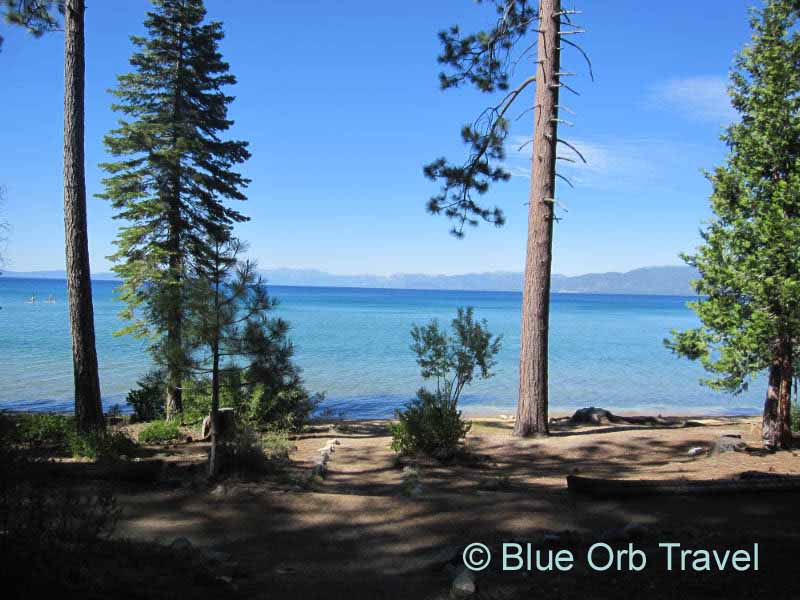
Farther north up the mountainous backbone of the western United States is the other crown jewel of the Sierra Nevada, Lake Tahoe. Located on the border of California and Nevada, Lake Tahoe is the largest alpine lake in North America and the second deepest lake in the United States. Completely surrounded by a stunning vista of mountains, Lake Tahoe is one of the most popular destinations for natives of the Golden West. It would literally require a book to describe all that this gorgeous lake and surrounding region have to offer, such as scenery, recreation, and sports, as well as entertainment and gambling at the North and South Shore state lines. While Squaw Valley was the site of the 1960 Winter Olympics, it is just one of many world class ski resorts that dot the area. It seems like just yesterday that I took my first shaky run down the slopes at Heavenly Valley when I was in high school! While there are many motels and hotels available for visitors to the Tahoe area, camping is an inexpensive, fun way to experience the great outdoors…and there is just something about the smell of the pines up in this part of the Sierras! I can recommend the Fallen Leaf Lake campground at South Lake Tahoe, where I stayed with family and friends last month and the nearby Camp Richardson beach, one of the most pristine, clean, safe and beautiful beaches I’ve seen in a long time.
Lake Tahoe, California
There are numerous side trips that visitors can take while visiting Lake Tahoe. Just 11 miles to the northwest is Donner Lake, where the ill-fated Donner Party spent the winter of 1846. If you like history, be sure to visit the Donner Memorial State Park and its Immigrant Trail Museum and explore the sites where their makeshift cabins were built by the lake and at nearby Alder Creek. About 60 miles east of North Shore Lake Tahoe is Reno, Nevada with its well-known casinos and entertainment. Just 26 miles south of Reno is the historic old silver mining town of Virginia City, where Samuel Clemens lived for a time and where he first began using his pen name of Mark Twain. While there you can visit Boot Hill and take a ride on the old steam train before stopping at the Bucket of Blood Saloon for a beer or a sarsaparilla.
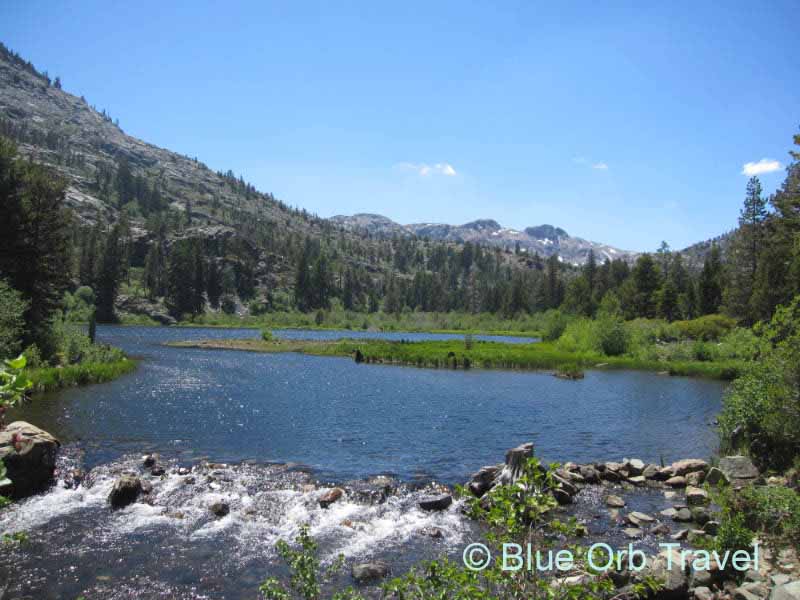
Lily Lake Near Lake Tahoe, California
Lake Alpine
The fourth gem in our Sierra Nevada treasure trove is Lake Alpine, located between Yosemite (3.5 hours or 144 miles to the south) and Lake Tahoe (just 1 hour or 50 miles to the north). If you’re looking for some of the same features as Yosemite and Tahoe, but without the crowds, this is a place you’ll want to check out. A study in contrasts, Alpine County is known for its high snow-covered peaks and its low population (just 1,175 in 2012). The nearby Bear Valley Ski Resort is responsible for a noticeable bump in the population during the winter. This area figured prominently in the westward migration to California just before and during the gold rush of the mid 1800s and is the site of an old immigrant trail. First explored by the likes of Kit Carson and John Fremont, Alpine County has retained its rugged wilderness ambience into the 21st Century.
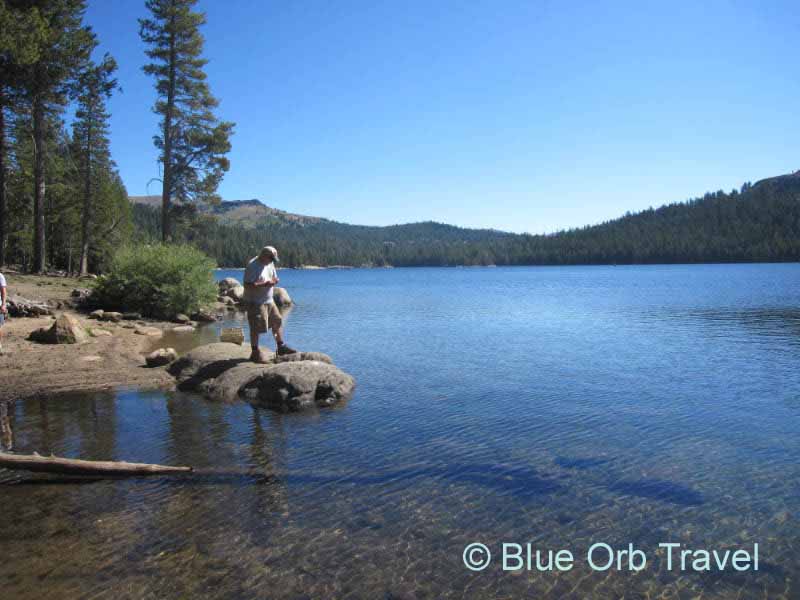
Fishing at Lake Alpine, California
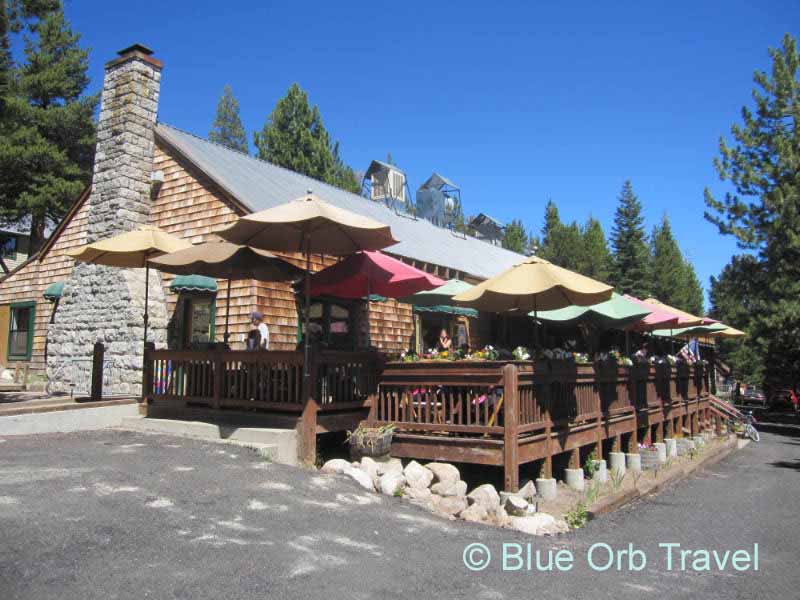
Lake Alpine itself was formed in 1892 with the damming of Silver Creek by miners. It has now become a year round destination for those who enjoy fishing, camping, hiking, biking and canoeing or winter sports such as skiing and snowshoeing. One of the nicest features of the area is the nearly two miles of paved trails around the lake, making it accessible to wheelchairs. Don’t let the name discourage you from going just up the road to visit lily covered Mosquito Lake, a favorite of fishermen. The Ebbett’s Pass National Scenic Byway extends east of Lake Alpine heading towards Markleeville and is a beautiful, albeit winding, drive through some untouched sierra scenery. At an altitude of nearly 9,000 feet, the pass is closed due to snow in the winter. If you’d like to stay to stay overnight you can either camp or stay at the Lake Alpine Resort, a charming lodge that dates back to the 1930s.
Lodge at Lake Alpine Resort, California
I hope you have enjoyed this whirlwind tour of four treasures of the Sierra Nevada and will be inspired to visit these mountain gems someday. Take a tip from John Muir, one of the first visitors to appreciate this part of the country:
“Climb the mountains and get their good tidings. Nature’s peace will flow into you as sunshine flows into trees. The winds will blow their own freshness into you, and the storms their energy, while cares will drop off like autumn leaves.”