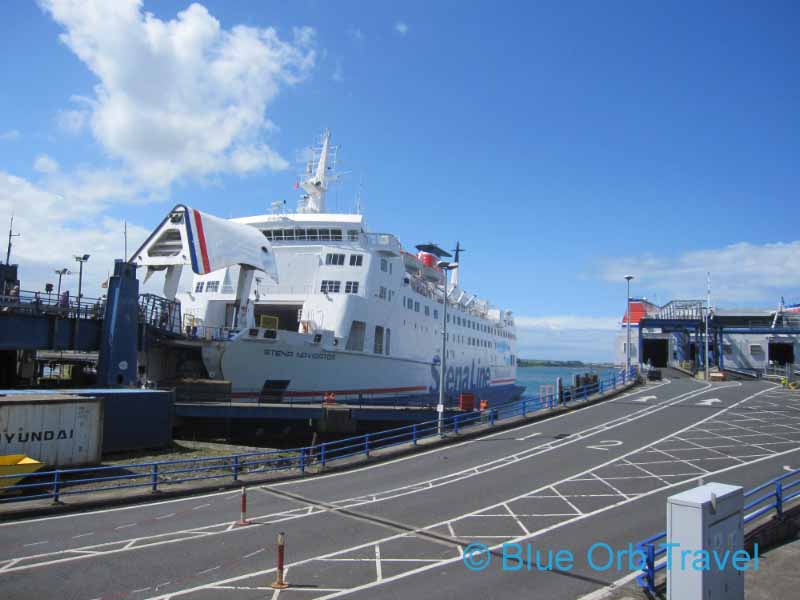
The six hour journey from Glasgow, Scotland to Belfast, Northern Ireland could not have been easier for me last May and was one of the best travel bargains of my trip. After a train excursion through England, Wales and Scotland I ended up in Glasgow, which turned out to be a great jumping off place for Ireland. I was able to buy a one way ticket for $29 at the Glasgow Central Train Station which covered the entire trip, including both rail and ferry, delivering me right to the Port of Belfast. The train went from Glasgow to Stranraer on the Scottish coast where we hopped on one of the Stena Line ferries.
Ferry from Scotland to Ireland
A Recent Change of Ports
After using the port of Stranraer for more than 150 years, the Stena Lines moved their operations five miles up the coast to just north of Cairnryan in November, 2011. This will not be a problem for those traveling in cars or tour buses as there is good road access to Cairnryan. Since the train does not go directly to Cairnryan, backpackers like me will now have to take a train from Glasgow to Stranraer and then catch a bus from Stranraer to Cairnryan or, perhaps more expeditiously, take a bus directly from Glasgow to Cairnryan.
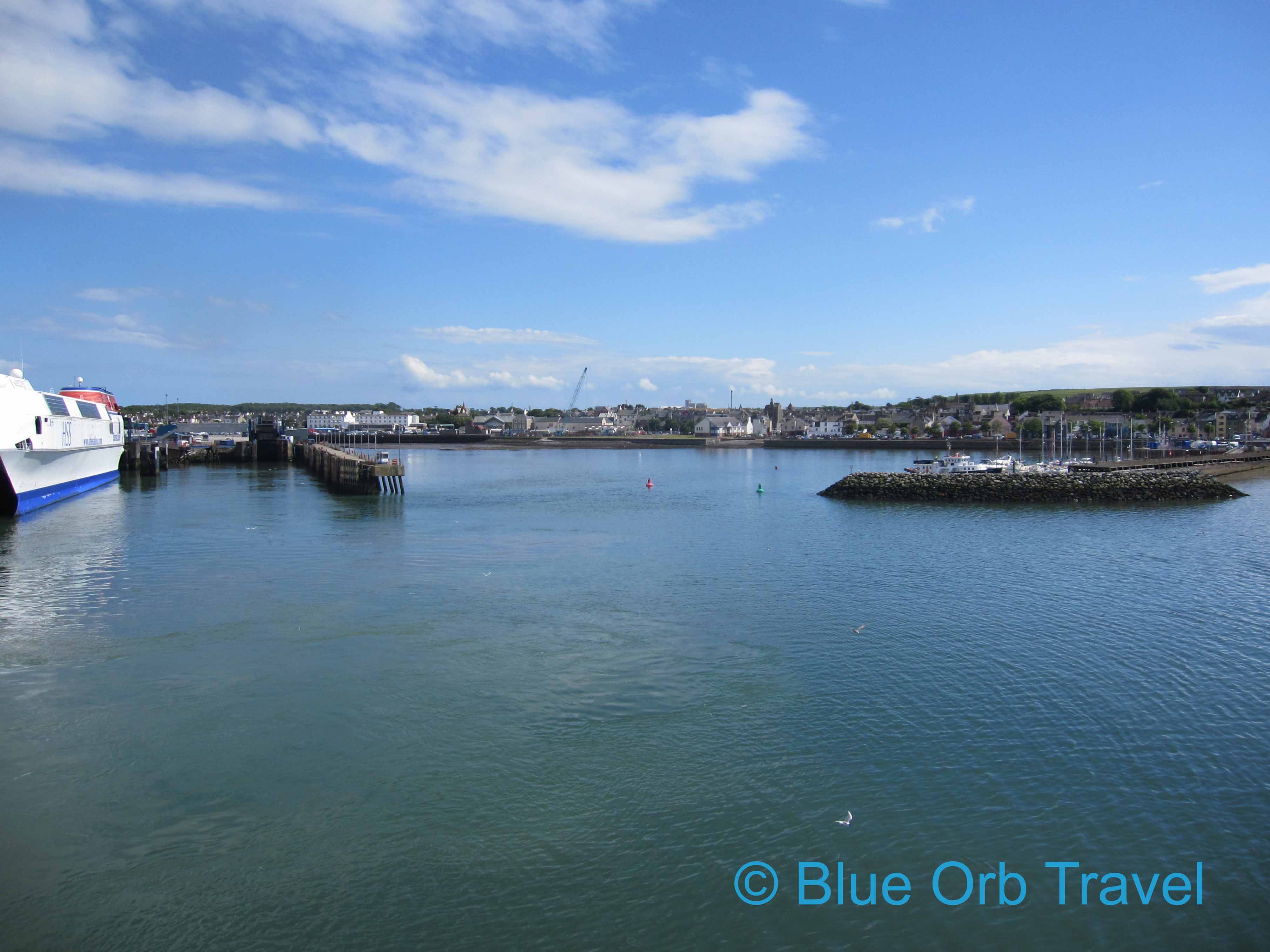
Leaving Stranraer, Scotland
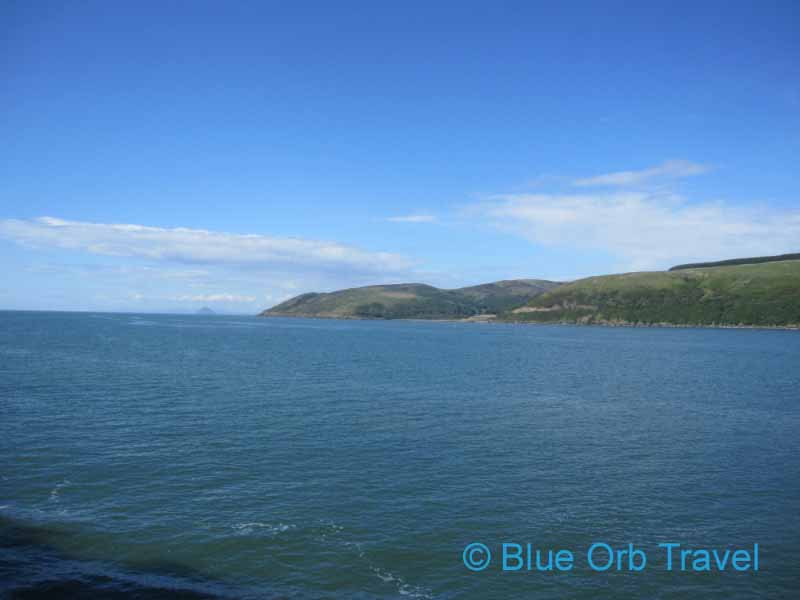
The Irish Sea
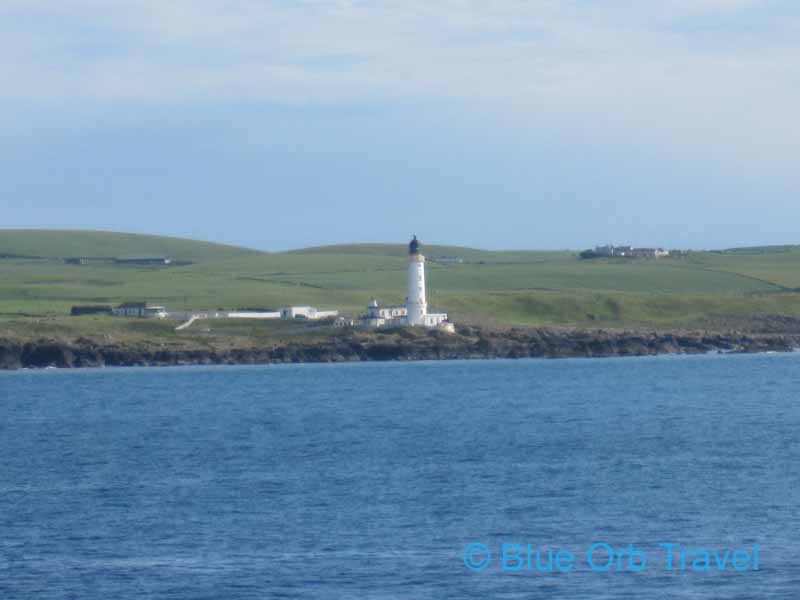
The ferry trip across the Irish Sea took three hours and while sailing out of Stranraer we had a great view of some beautiful Scottish coastal scenery along the natural harbor of Loch Ryan. That day the ferry was packed with youth soccer teams heading for a tournament in Ireland, so passengers were kept on their toes dodging the youthful travelers cavorting around the passageways playing hide and seek. Some passengers whiled away the hours watching a movie in the theater, but most seemed to spend the time enjoying the bar and restaurant. As a former sailor in the U.S. Navy, I spent most of the time out on the prow watching the waves and chatting with fellow travelers.
Lighthouse on Loch Ryan, Scotland
Getting into Belfast
The ferry to Belfast was about an hour late in sailing, so we didn’t arrive at the Port of Belfast until 7 PM. Since it is the busiest ferry port in Ireland, all the buses were full, but I was able to share a taxi into town with another solo traveler named Joe who I had met on the ferry along with three young ladies. Two Irish fellows already ‘in their cups’ by this time joined us at the last minute and entertained us with their proverbial ‘gift of gab’ along the way. This enjoyable two mile ride into the city center of Belfast with the seven of us squeezed into a small cab was my first introduction to the friendly Irish people and I must say, it set the tone for the next eight days of my trek through the Emerald Isle. Join me as I travel Ireland by train and bus from Belfast to Dublin.
After an exciting encounter with the Loch Ness Monster it was time to leave Inverness and head south for Glasgow, Scotland. For the first and only time during my three week trip throughout the United Kingdom and Ireland, the train was late…an hour and a half late! After finally getting underway, the nearly four and a half hour train ride, with the ticket costing $15, took us back again through the beautiful Cairngorms National Park, with stops in Perth, Gleneagles and Stirling, before arriving in Glasgow at 3:30 PM.
Glasgow, Scotland
Glasgow Patter
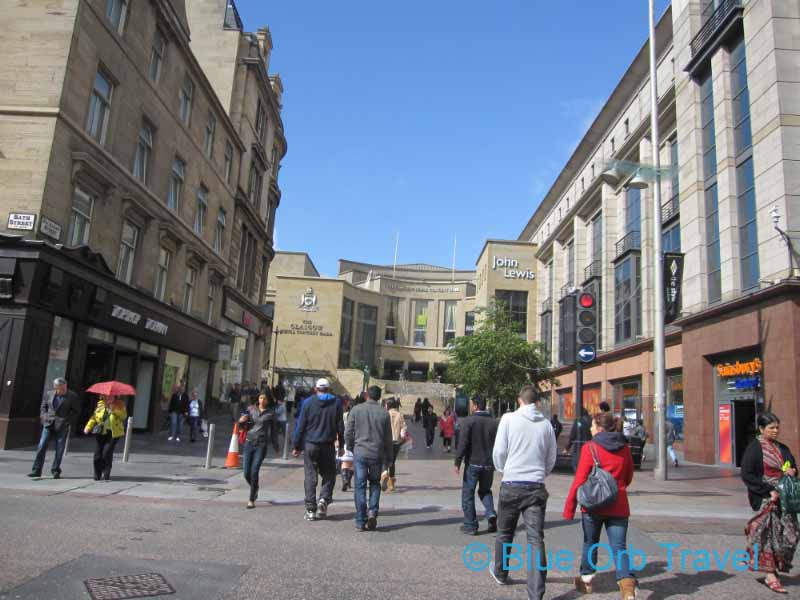
Glasgow is Scotland’s most populous city and its major sights are concentrated on the north side of the River Clyde. Its inhabitants are known as Glaswegians and even speak their own dialect, known as Glasgow patter. Jings Crivens. Help ma boab! This exclamation of distress is an example of the Glasgow Scots dialect which derives from both Highland and Irish influence, the latter resulting from the large number of Irish who immigrated to this area, particularly after the Irish Potato Famine of 1846-7. On a personal note, my great-great grandfather, Samuel Roe, who later added the ‘w’ to our name, was among those who emigrated from Ireland and settled in Scotland during this period.
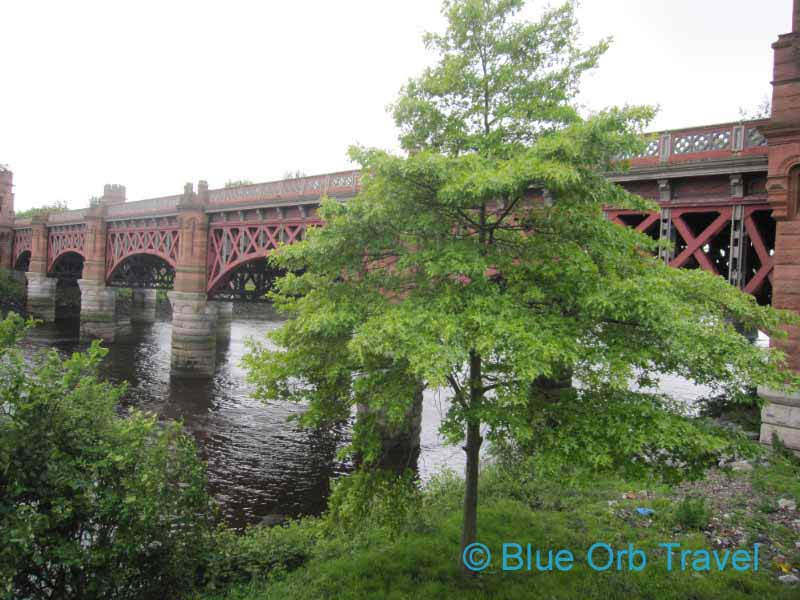
City Union Railway Bridge Built in 1899
On the River Clyde
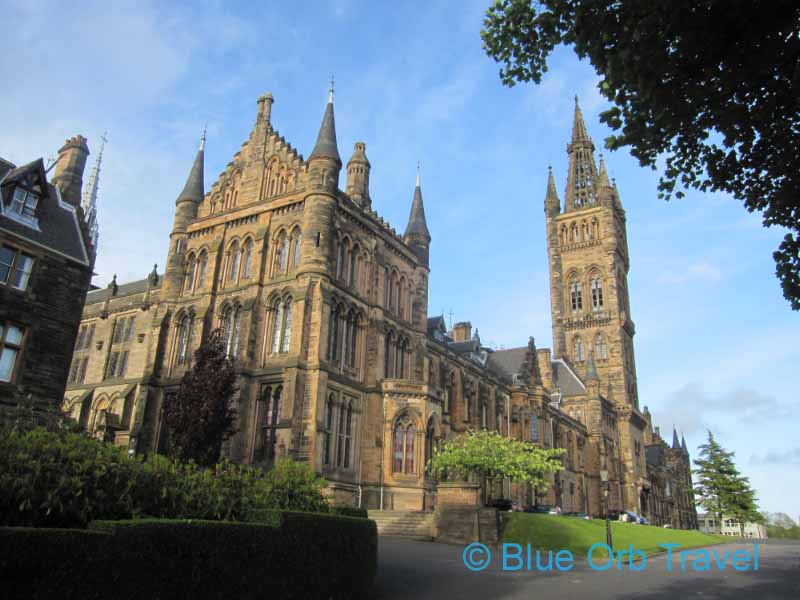
Due to its strategic location on the River Clyde, Glasgow has a long history dating back to prehistoric times. Through the years it has been an important industrial, shipping, trading and educational center. Not surprisingly, the Glasgow Central Station, built in 1879, is the busiest railway station in Scotland and is known for its unique architectural features, including the glass-walled bridge that crosses over Argyle Street. As one of the oldest universities in the English speaking world, Glasgow University is the pride of Scotland, ranking among the top 100 institutions of higher learning in the world. Founded in 1451, the splendid architecture of the main campus is befitting a university with a world class reputation that attracts top students from around the globe.
Glasgow University, Scotland
Many Sights to See
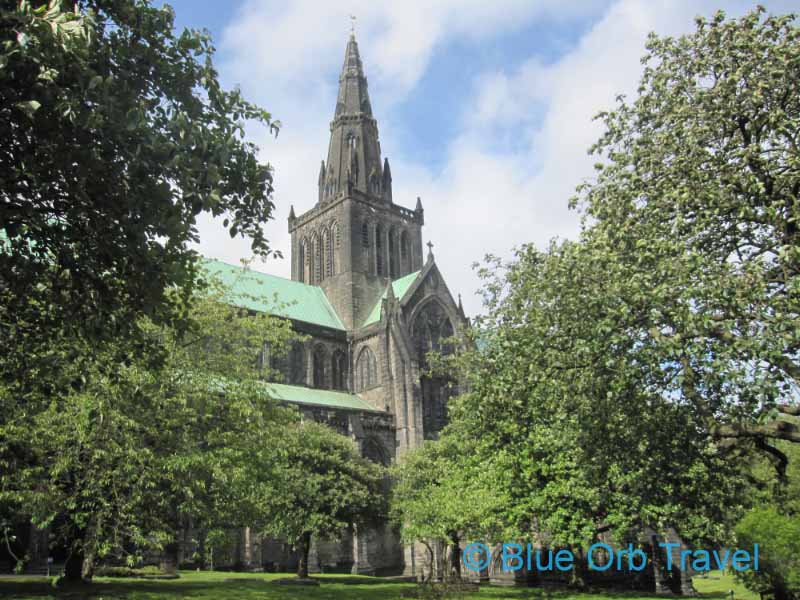
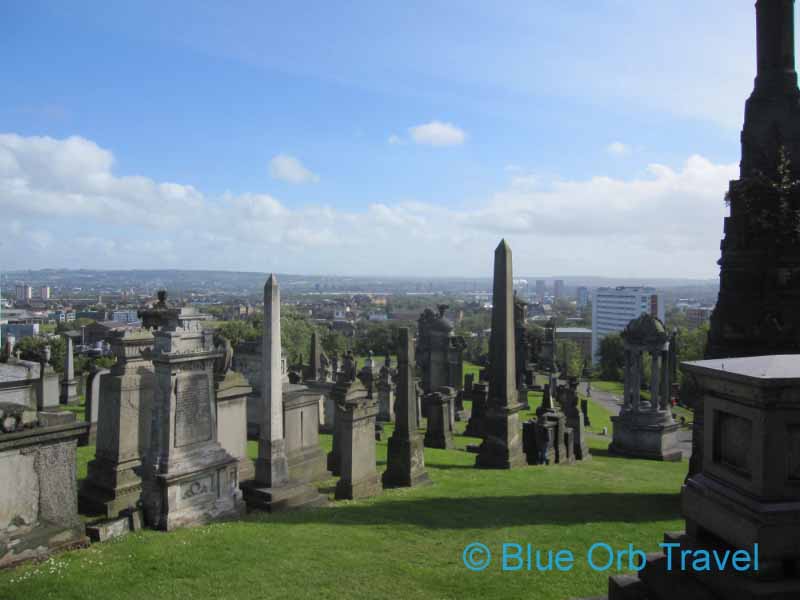
The Glasgow Cathedral with its gothic architecture is a short walk east from the center of the city. Built in the 12th Century, it is located on the site where the patron saint of Glasgow, Saint Mungo, built his church and where he now rests in the lower crypt. Directly behind the cathedral is the Necropolis, a cemetery opened in 1833 which contains an impressive number of monuments and affords an excellent view of the city…definitely worth the hike. Also on the east end of the city is Glasgow Green, the city’s oldest park dating back to 1450, located on the north side of the River Clyde. On the West end of the city, along with Glasgow University, is the Kelvingrove Park which straddles the River Kelvin just before its confluence with the River Clyde. Created in 1852 this verdant 85 acre park is a haven for wildlife and urban dwellers alike. As would be expected in a city with such a cultural and intellectual heritage, Glasgow has many museums, cathedrals and art galleries, many of which offer free admission to visitors.
Glasgow Cathedral, Scotland
Where I Stayed
Arriving in Glasgow late due to the delayed train, I didn’t have a lot of time to look for a place to stay. After all, my first priority was to get out and start exploring this beautiful city. Just a short walk from the train station, I found a vacancy at the Novotel Glasgow Centre for $107. While this was more than I usually like to pay, it was a very nice room with private bath and the location was ideal. Although it did not include breakfast, it did come with a complementary beer at the elegant bar that also served ‘spiced haggis nachos’. How’s that for an international combination!
Getting a glimpse of the Loch Ness Monster is at the top of the list of every visitor to Scotland and, of course, I was no exception. Inverness is a picturesque city up north in the Highlands and is the best jumping off place for an expedition to see Nessie. The train ride from Edinburgh to Inverness took us through Perth and the beautiful Cairngorms National Park in the heart of the Scottish Highlands…and the cost of the train ticket for this spectacular ride was only about $26. Arriving in Inverness in the early afternoon, I found a great bed and breakfast called the Winston Guest House straight away. It was located just across the bridge from town right on the River Ness and for about $74 I had a nice room with private bath and it came with a wonderful breakfast.
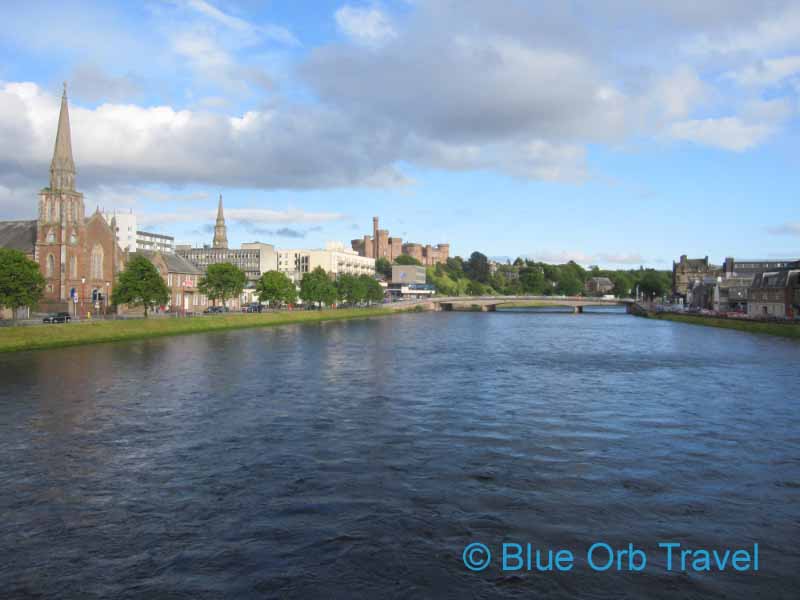
Inverness, Scotland on the River Ness
Loch Ness Connects to the North Sea
The River Ness flows north from Loch Ness through Inverness (which means mouth of the River Ness) and then empties into the Moray Firth on the North Sea about 8 miles to the north. With this close connection between Loch Ness and the North Sea, it is easy to understand how such a large sea monster came to reside in an inland lake. Both Loch Ness and the River Ness are large, as lakes and rivers go, accounting for the monster’s ability to navigate and thrive in these waters for so many years. It is an interesting fact that the first recorded sighting of the monster was actually in the River Ness in 565 AD.
The Spires of St. Andrew’s Cathedral Across the River Ness
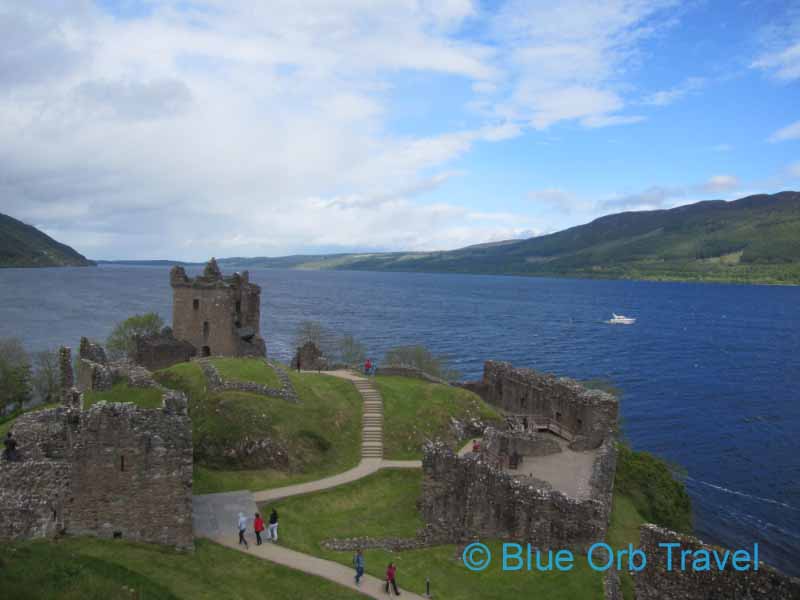
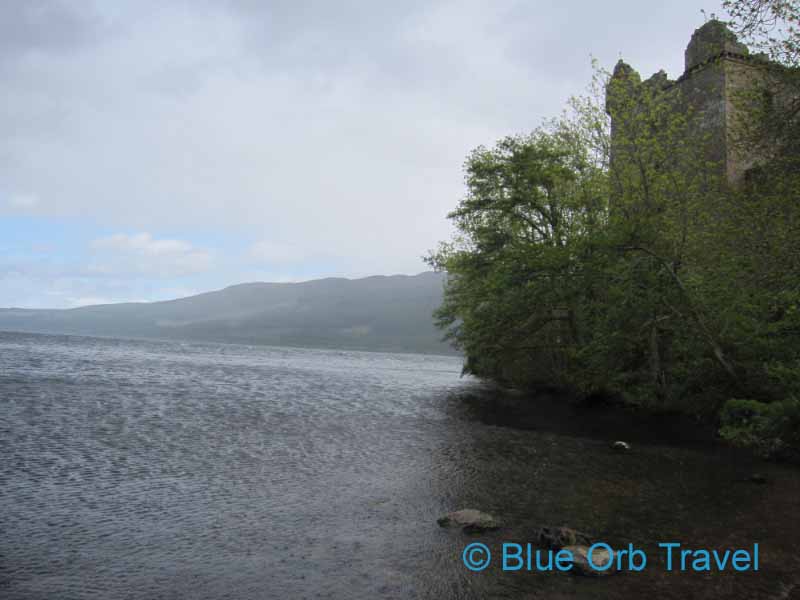
Urquhart Castle on Loch Ness
As soon as I had checked into my room I headed to the nearby bus station to purchase the $15 round trip City Link ticket from Inverness to Loch Ness. After a beautiful bus ride through the Scottish Highlands we arrived at Loch Ness and I disembarked near the Urquhart Castle Visitor Center since this is where most of the sightings of the Loch Ness Monster occur. To get close to the water’s edge from this location it is necessary to purchase the $9 entrance ticket to the castle and visitor center. I have to say, it was well worth the price of the ticket to have a chance to explore this fabulous old castle and take advantage of the breathtaking views of Loch Ness and the Great Glen, the large valley in which it lies. The Great Glen was formed by a geological fault that runs northeast-southwest through the Highlands, virtually dividing Scotland in half. Although much of the castle lies in ruins, visitors are allowed access to most areas and can even climb up into the main tower (Grant Tower) overlooking the water. Dating back to the 13th century, Urquhart Castle gives visitors an interesting look into what life was like in medieval Scotland.
Urquhart Castle on Loch Ness, Scotland
Venturing Down to the Water’s Edge
After exploring the castle and visitor center, I was anxious to hike down to the water’s edge for the best possible chance of seeing the Loch Ness Monster in the short time I had. Perhaps I should have been a little more concerned that none of the other visitors were venturing away from the safety of the high ground near the castle. When I reached the water I immediately noticed a boat offshore that looked like it might be carrying a group of scientists who were probing the waters. As I stood there searching for any sign of Nessie, I had the distinct feeling that something was watching me from beneath the water.
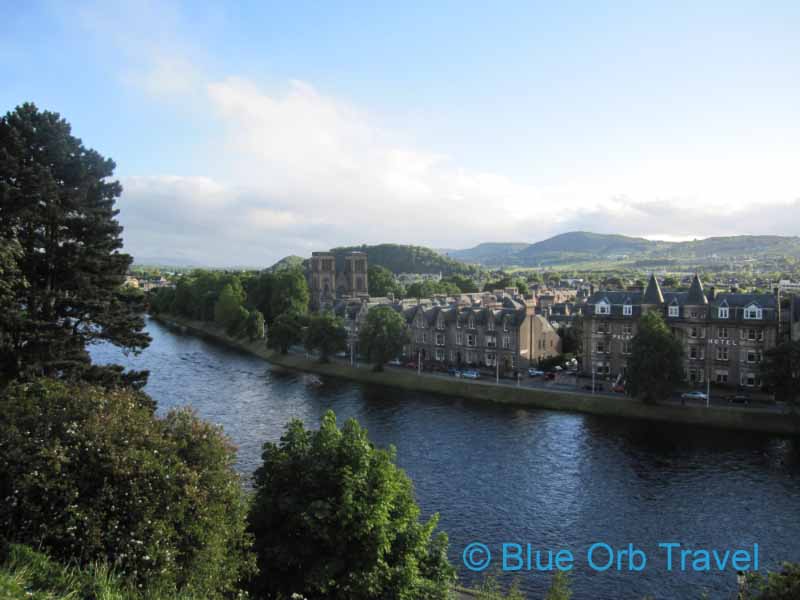
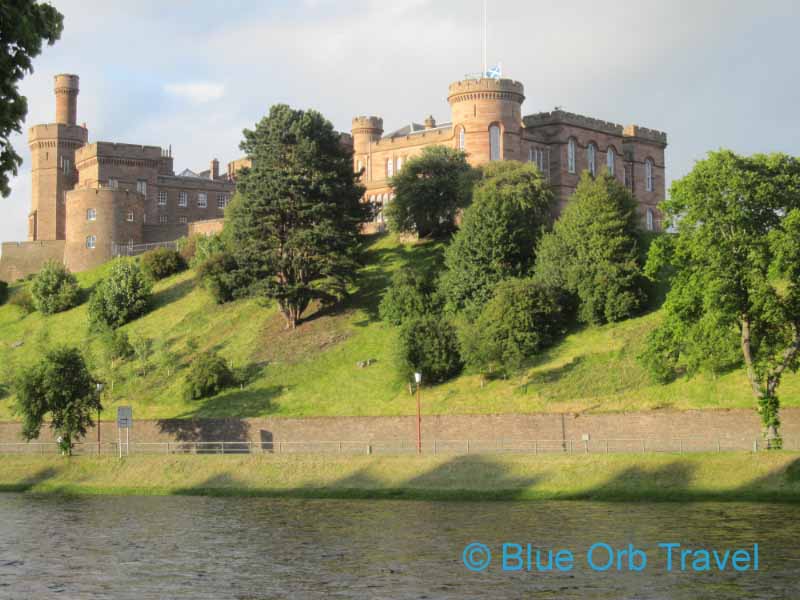
Inverness Castle, Inverness, Scotland
Nessie Makes an Appearance
For quite a while the water was completely still and I was beginning to think maybe this whole ‘Nessie thing’ really was just a legend. Then I heard someone climbing down the embankment behind me so I turned to see who it was, hoping to have some company during the rest of my stake out. I focused in on the face of a young woman just as her features were turning from excitement to horror. She suddenly turned around and ran back up the hill towards the castle screaming like a banshee. Hearing the sound of a loud splash, I swung back around to see what she must have seen and found the water churning with the motion caused by several large concentric rings of water ripples. I could barely make out a large dark area in the water, just as a large wave hit the rocky beach where I was standing. With my shoes and lower pants now wet, I scrambled back up to a perch near the foot of the castle and watched as the boat with the scientists quickly moved in for a closer look. I stood there transfixed, hoping for another chance to see the monster, and probably would have stayed much longer had it not been that the last bus back into Inverness left at 6 PM. Nonetheless, it was quite a thrill to have gotten that close to Nessie. I think maybe she’s had a bad rap all these years being called a ‘monster’. She actually seemed quite friendly and it was as though she just wanted to say ‘hello’.
Site of Loch Ness Monster Sighting Below Urquhart Castle
Inverness
Still reeling from my near-sighting of the Loch Ness Monster, I wandered around Inverness that evening in somewhat of a daze, checking out the many interesting sights. Considered the capital of the Highlands, Inverness has a number of historic landmarks, although some were destroyed during several of the ancient battles that took place nearby. In its earliest times Inverness was occupied by the Picts, a group of late Iron Age people who populated Northern Scotland. Several beautiful bridges cross the River Ness at Inverness and afford stunning views of the surrounding city. The Inverness Castle is perched on a hill overlooking the river and was built in 1835 on the site of an 11th century defensive structure. On the other side of the river from the castle and the main city is Saint Andrew’s Cathedral built of red stone and completed in 1869. A walk through the rest of Inverness reveals an impressive variety of architecture and historic buildings. While its location way up north in the Highlands of Scotland may discourage some visitors, I would definitely recommend making the effort to explore this beautiful city and surrounding region.
The two and a half hour train ride from York, England heading north to Edinburgh, Scotland took us through the cities of Durham and Newcastle and along the northeast coast of England, with the ticket costing about $42. The passing panorama of the countryside and the seaside from my window seat was breathtaking, but even the fleeting view of the beautiful Durham Cathedral and Castle couldn’t take my mind off the destination ahead. At 12 Noon the train arrived in Edinburgh and I stepped right out into the center of the capital of Scotland and into the homeland of my father’s family. I had the rest of the day and evening to explore one of the most beautiful cities in the world and locate the childhood homes of each of my grandparents.
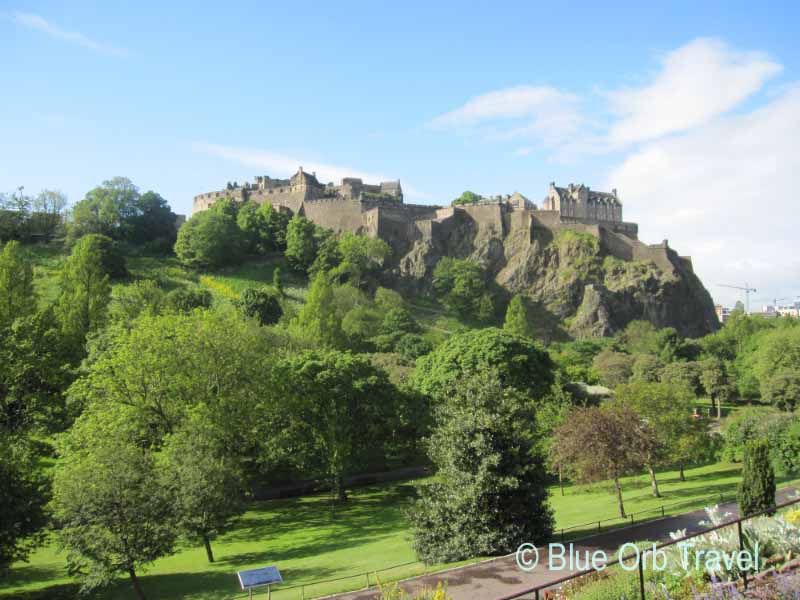
Edinburgh Castle, ScotlandThe Princes Street Gardens, Edinburgh, Scotland
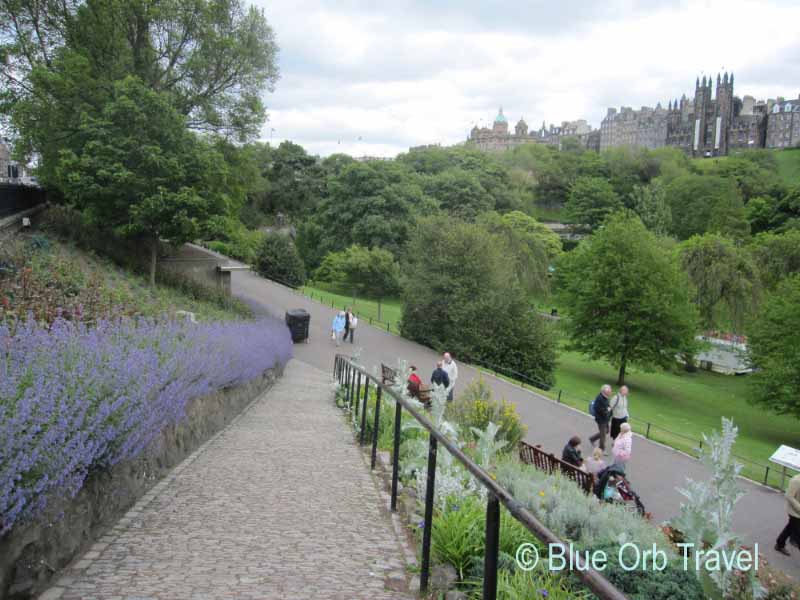
The Princes Street Gardens
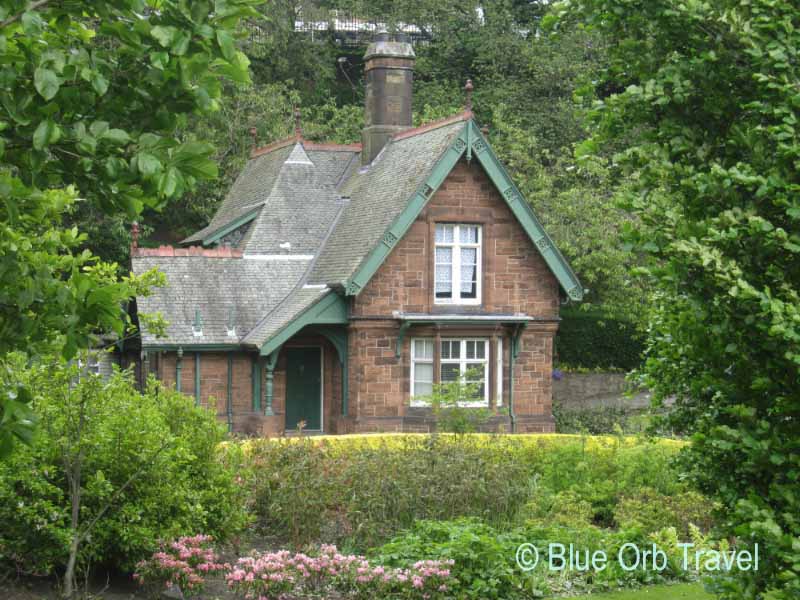
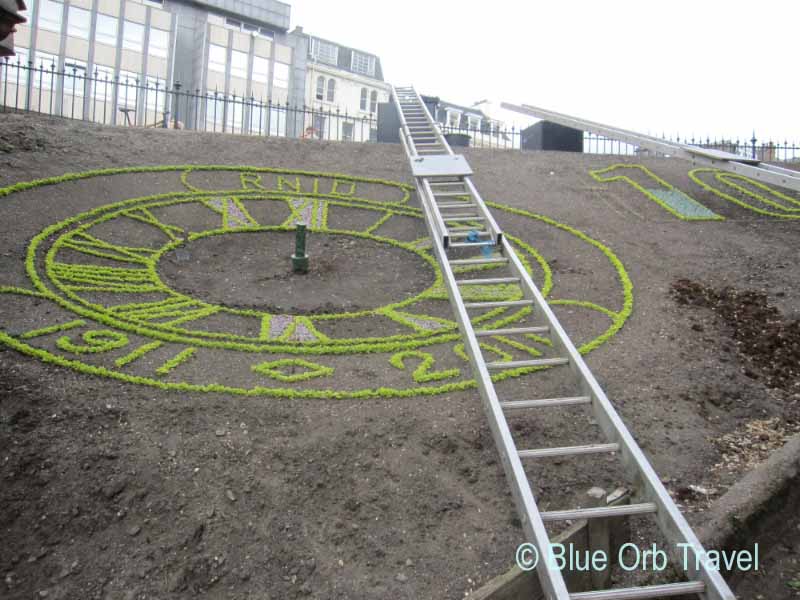
Even before looking for a place to stay, I wanted to see the superintendent’s ‘lodge’ in the Princes Street Gardens where my grandfather had lived as a child. His father (my great grandfather) was the superintendent of the gardens around the turn of the last century and in 1903 helped design and build the famous floral clock that’s still telling time to the delight of visitors right in the heart of Edinburgh. The gardens were created in 1820 after the polluted waters of Nor Loch were drained, leaving a valley between Princes Street and the old town. The Princes Street Gardens are just a short walk from the train station and within minutes I located the cottage, recognizing it from a picture that I had of my grandfather and his brother standing out in front as children. This charming ‘wee hoose ‘mang the heather’ looks directly up at the imposing Edinburgh Castle towering over the other end of the gardens. It truly was an exhilarating experience to return to my roots.
The Superintendent’s Cottage, Princes Street Gardens, EdinburghThe Floral Clock, Edinburgh, Scotland
Getting Oriented in Edinburgh
The City of Edinburgh is located just inland from the Firth of Forth (or estuary of the River Forth) which empties into the North Sea with port access to this wide river at Leith and Rosyth. The massive nearby Firth of Forth Bridge was an engineering marvel at the time it was completed in 1890 and is still the second longest bridge of its kind in the world. Back to Edinburgh…Princes Street, named to commemorate King George III’s two oldest sons, is the main thoroughfare in the city and is home to many great hotels and top tier shopping establishments which line the north side of the street. The train station, visitor center and several significant monuments, such as the massive, gothic Scott Monument, commemorating Scottish author Sir Walter Scott, are located along the south side of Princes Street. Looking south across the Princes Street Gardens in the valley below visitors are treated to a panoramic view of the old town and Edinburgh Castle.
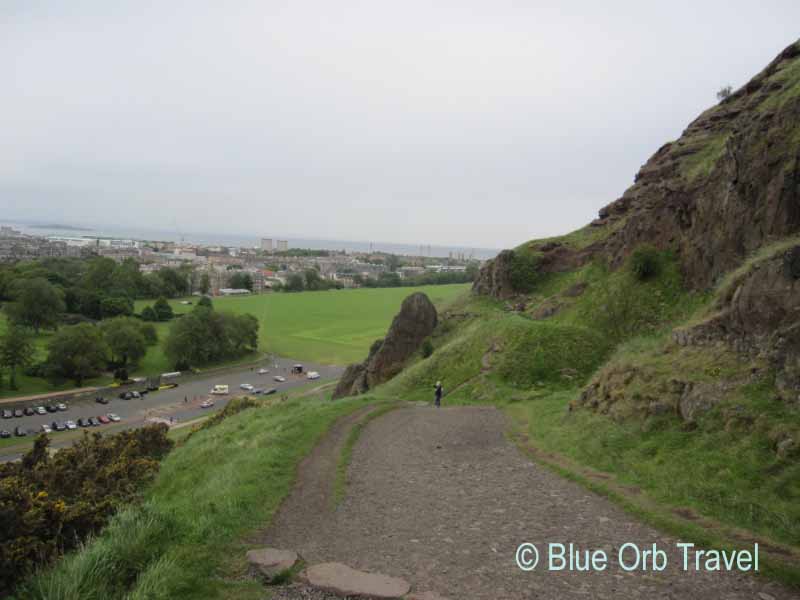
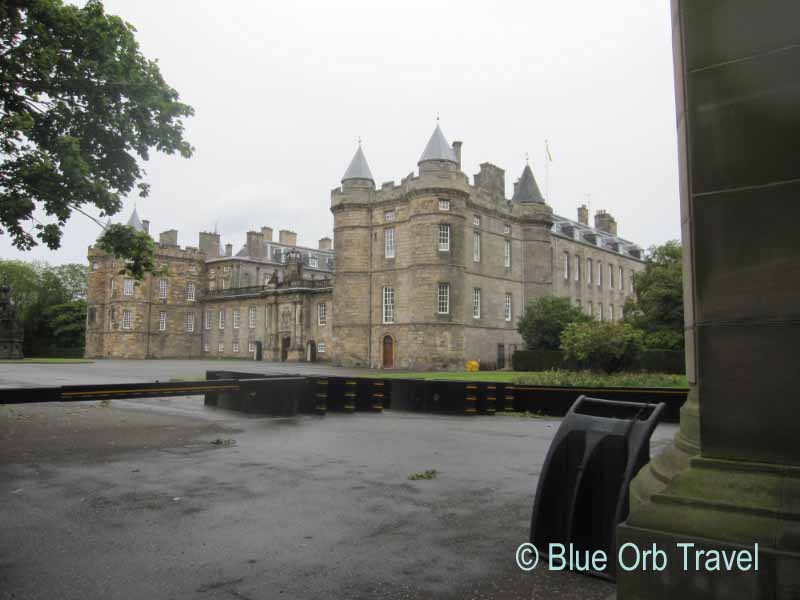
Hiking the Salisbury Crags, Edinburgh, ScotlandHolyrood Palace, Edinburgh, Scotland
The Frederick House Hotel
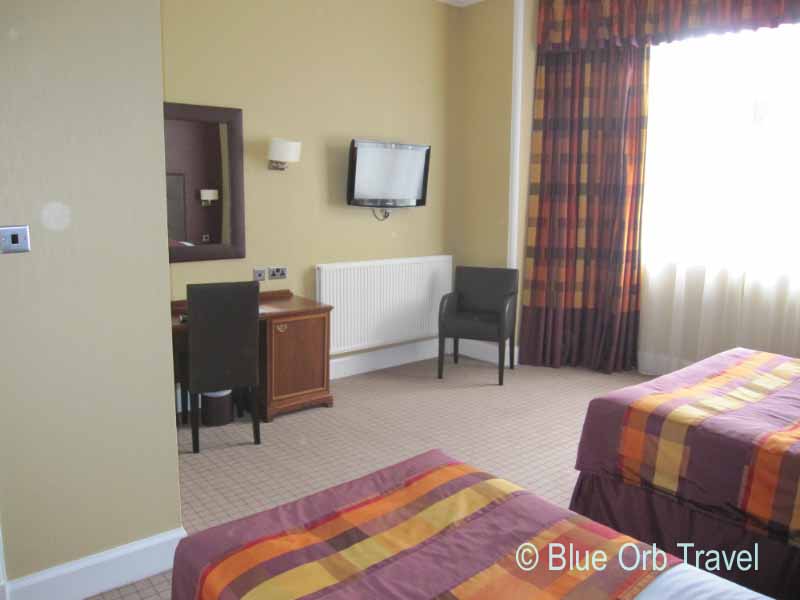
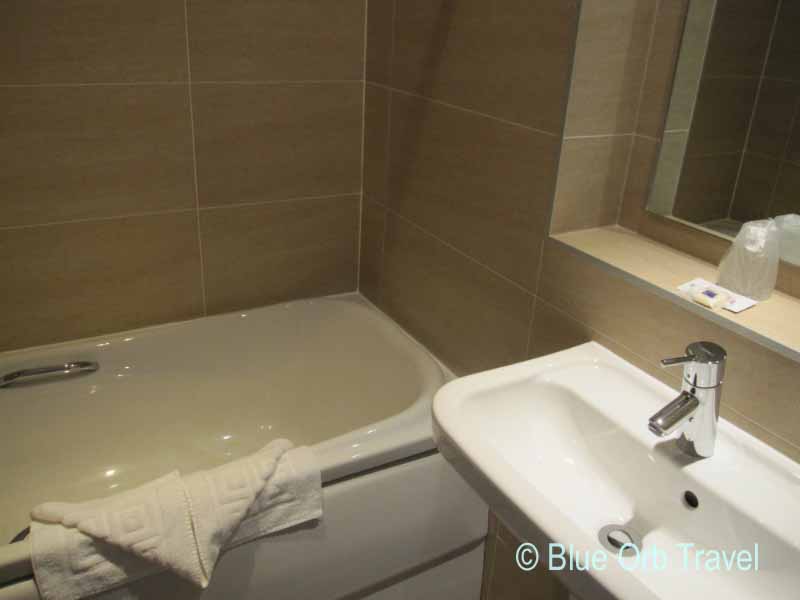
After a quick stop at the visitor center I headed across Princes Street looking for a place to stay. Edinburgh is one of the most popular tourist destinations in the world and finding a hotel for a reasonable price there can be daunting. Everyplace I tried was fully booked until I came upon the Frederick House Hotel on a side avenue off the north side of Princes Street, just opposite the gardens. The minute I walked in I knew I was in a first class hotel. I was greeted by several friendly staff members who let me know that they had a room available for $113, including a full breakfast at the Café Rouge across the street. This was the most I paid for a hotel on this trip, but it was well worth it and the location could not have been more convenient. The room was huge and beautifully appointed and the private bath was elegant. If you are looking for a great place to stay in Edinburgh, Scotland, I can highly recommend the Frederick House Hotel.
The Frederick House Hotel, Edinburgh, ScotlandThe Frederick House Hotel, Edinburgh, Scotland
The Royal Mile
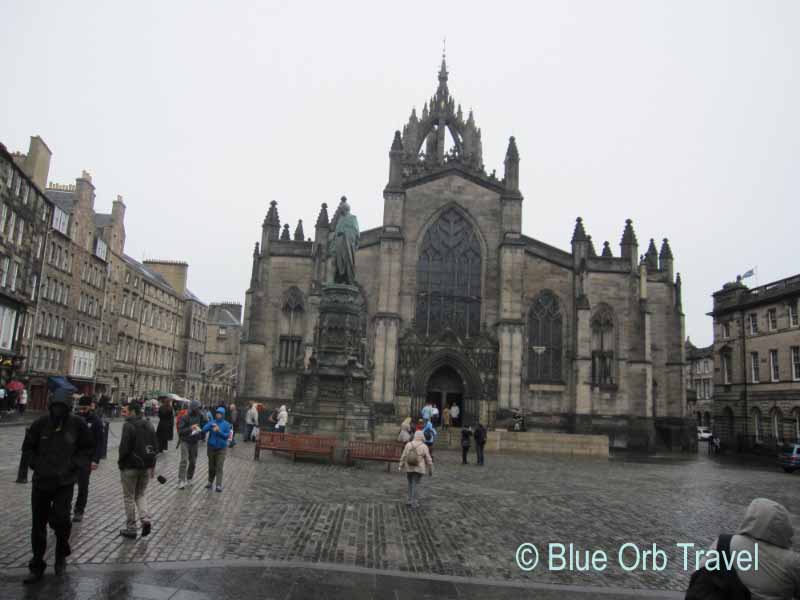
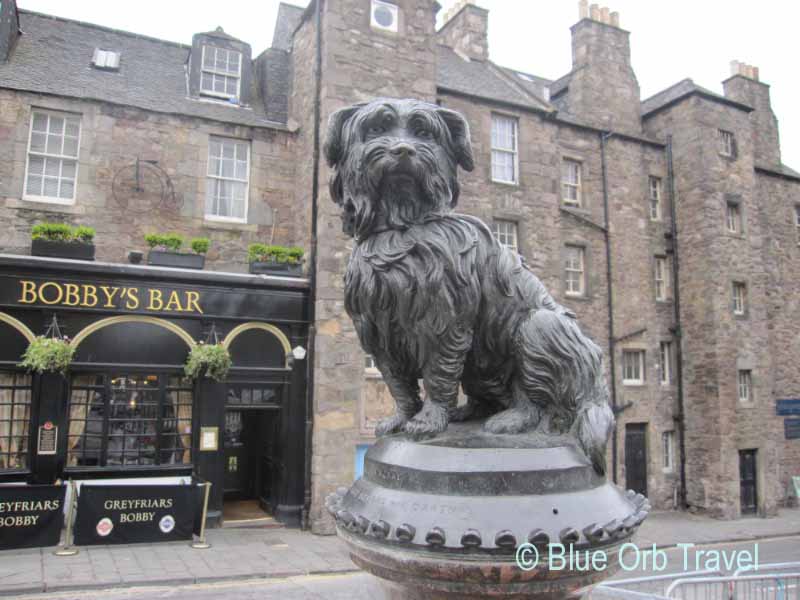
While Edinburgh is a hilly city, it is easily walkable for the reasonably fit visitor. With map in hand, I set out on a four hour walking tour starting at the high point of Edinburgh Castle and continuing east down High Street, also known as the Royal Mile because it ends at Holyrood Palace. Along the way are many interesting sights including museums, pubs and well preserved historic buildings. St. Giles Cathedral, located about one third of the way down The Royal Mile, dates back to the 14th century and is considered the ‘Mother Church of Presbyterianism’. Be sure to take a side trip going south on the elevated street known as George IV Bridge to visit the statue of Greyfriars Bobby. This loyal Skye Terrier is said to have spent his last 14 years sitting by his master’s grave in Greyfriars Kirkyard until he himself died in 1872. At the bottom of the Royal Mile is the new, ultra modern Scottish Parliament and Holyrood Palace. The Palace of Holyrood House is best known as the home of Mary, Queen of Scots (1542-1587). Holyrood Park boasts many hiking trails and if you still have enough energy left, climb the trail up the Salisbury Crags for a great view of the entire area.
St. Giles Cathedral…Mother Church of PresbyterianismGreyfriars Bobby, Edinburgh
The Oak Inn Pub in Corstorphine
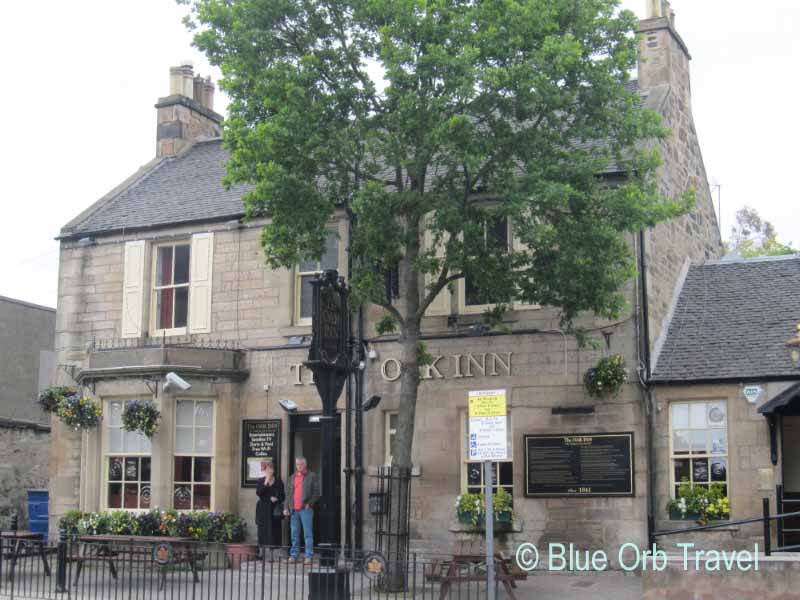
Having visited my grandfather’s childhood home earlier in the day, it was now time to find my grandmother’s home, which I knew to be a pub outside of Edinburgh. In the late afternoon I caught the bus for Corstorphine, a suburb of Edinburgh, and asked the driver if he knew of the Oak Inn. He replied, “Aye, Laddie, we’ll be goin’ right past it and I’ll let you know when to get off!” It turns out it was located right on St. Johns Road, the main thoroughfare heading into Edinburgh, and I would have easily recognized it from pictures I’d seen. My grandmother’s parents ran the Oak Inn as a pub and road house at the turn of the last century before immigrating to the United States. The current proprietors run a popular modern pub there now and were happy to show me around when I explained my connection to the inn. It was quite an experience to imagine what the place must have been like back when my grandmother played around there as a little girl. I ordered a delicious homemade steak pie and a cold glass of beer at the Oak Inn, before walking back to Edinburgh on a beautiful May evening. Be sure to check out the Oak Inn in Corstorphine if you want to experience a genuine Scottish pub and mingle with the friendly locals.
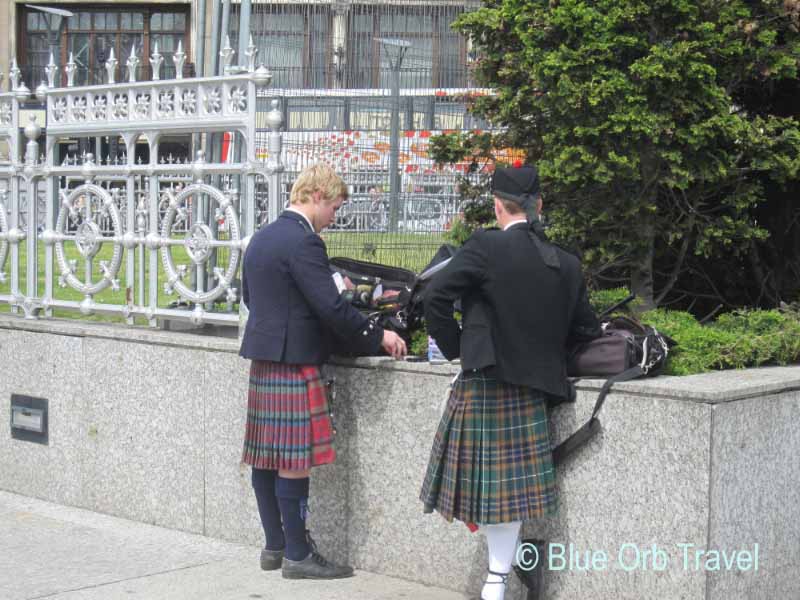
The Oak Inn, Corstorphine, My Grandmother’s Childhood HomeA Couple of Lads Getting Ready to Play Their Bagpipes in Edinburgh, Scotland
A Train Ride Through the Pennines to York, England
My three day sojourn through Wales had come to an end, so on the morning of May 26, I boarded the train at the tiny Conwy station platform bound for York in Northern England. The ticket cost $57 and the five hour ride took us through some interesting cities like Chester, Manchester and Leeds. We then continued on through the beautiful countryside of the Pennines, a low mountain range running north-south, sometimes described as the backbone of England. Known for its outdoor activities, wild life and national parks, this sparsely populated area of England is definitely worth a separate visit, especially since it is traversed in the north by Hadrian’s Wall.
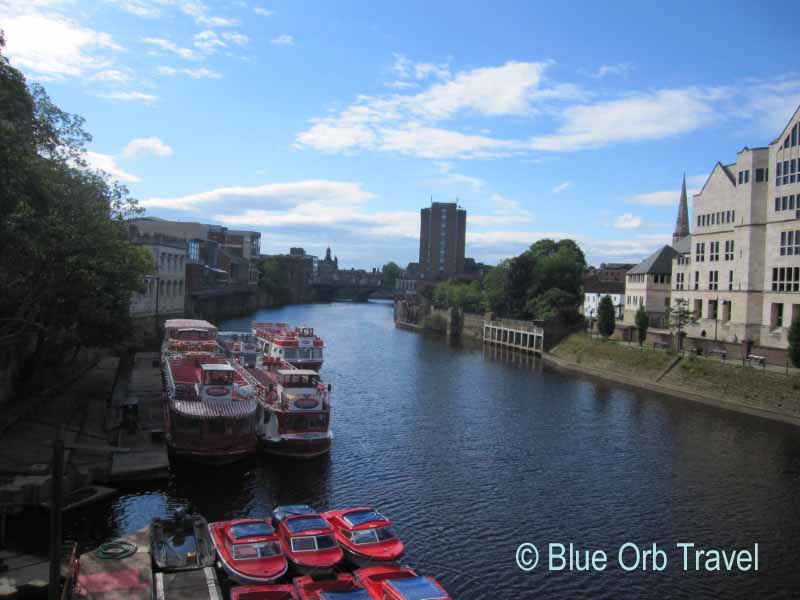
York on the River Ouse
Dogs, Dukes and Pudding
I had never ventured into the Yorkshire counties (there are several) on my previous visits to England, probably because they are somewhat distant from the more ‘touristy’ areas near London. The city of York is actually located in Northern Yorkshire County, which is the largest county in the UK. Before my visit to York, I thought I knew the main things for which the city was known. I knew that Yorkies or Yorkshire Terriers are popular dogs throughout the world, that Yorkshire pudding was made from a baked batter which is usually served with roast beef and gravy, and, of course I knew of the inimitable Sarah Ferguson, the Duchess of York and Prince Andrew, the Duke of York. I was soon to find out that York has much more to offer than dogs, Dukes and pudding.
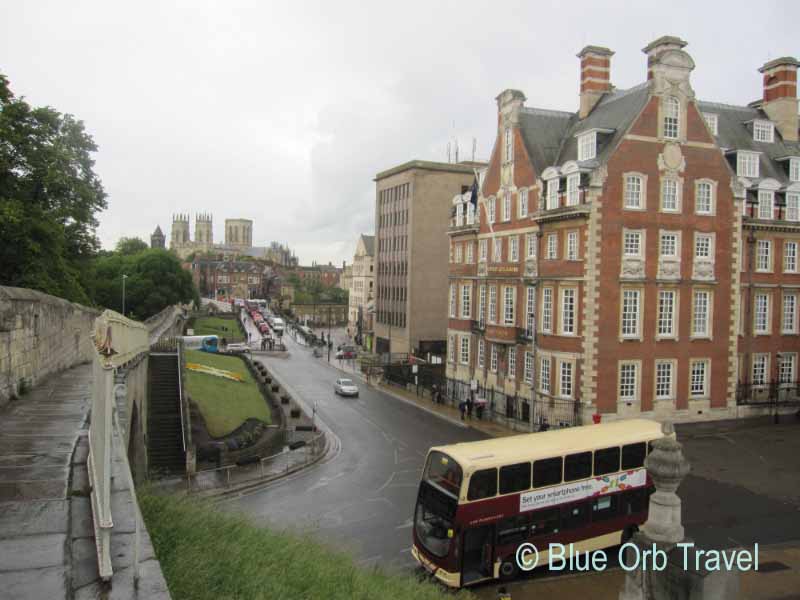
Old Town Walls of York, England
Two Thousand Years of History
Although there is archeological evidence of early settlers in the area dating back as far as 7000 BC, York was actually founded by the Romans in 71 AD. With nearly two thousand years of recorded history behind its belt, there are reminders of its glorious past almost everywhere the curious tourist cares to explore. Raided by Vikings, captured by William the Conqueror, and burdened by the dubious distinction as the birthplace of Guy Fawkes, York is a treasure trove for the history buff. Surrounded by medieval walls, York is located at the confluence of the River Ouse and the River Foss. It is just a short walk from the train station to the old town walls, beyond which lies a real treat for even the most sophisticated traveler.
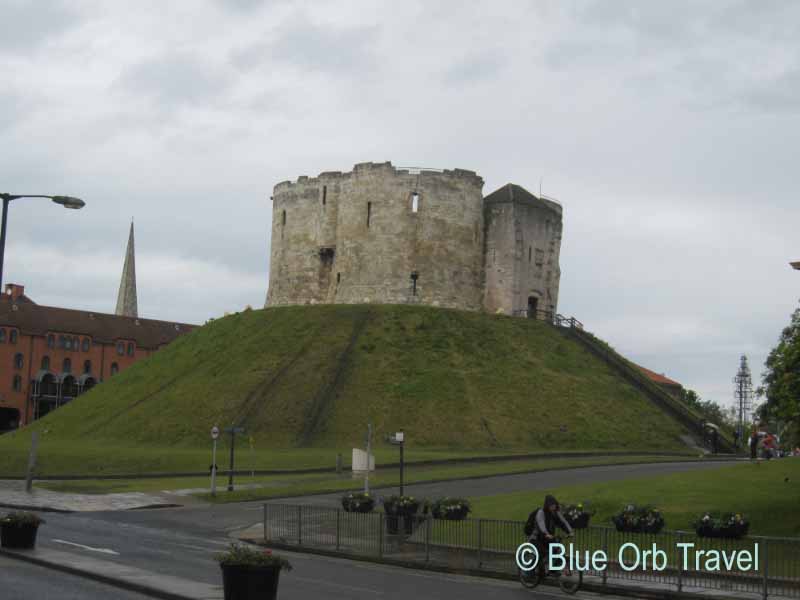
Clifford’s Tower, York Castle, England
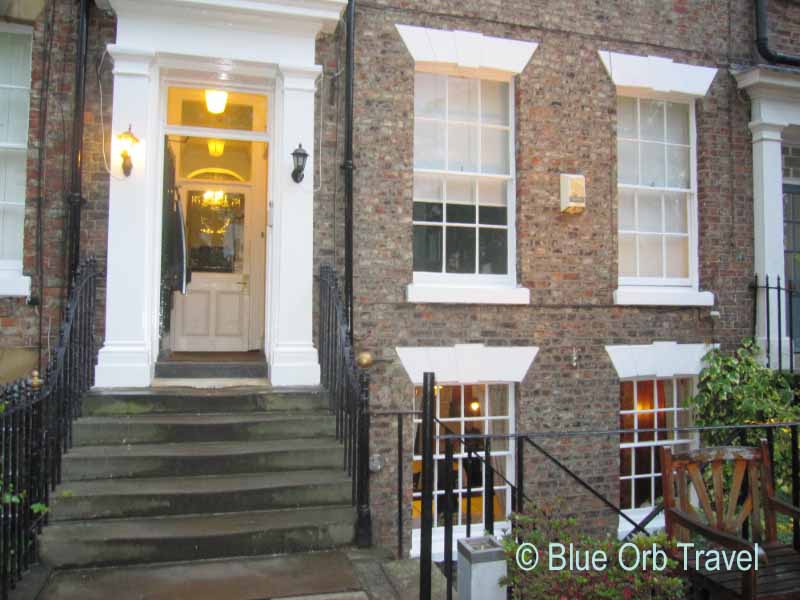
The Blossoms York Guest House
Just outside the town walls there are a number of Bed and Breakfast establishments located along Bootham and Clifton Streets, as well as along several other nearby avenues. I found a nice room with private bath including breakfast for $70.00 at the Blossoms York Guest House on Clifton Street, which was about a five minute walk from town. The place was filled with well-behaved children visiting York on a school outing and I enjoyed meeting some of the teachers and chaperones with the group. Internet service was available and free and it was great to be able to connect with home.
The Blossoms York Guest House, York, England
Around the Town
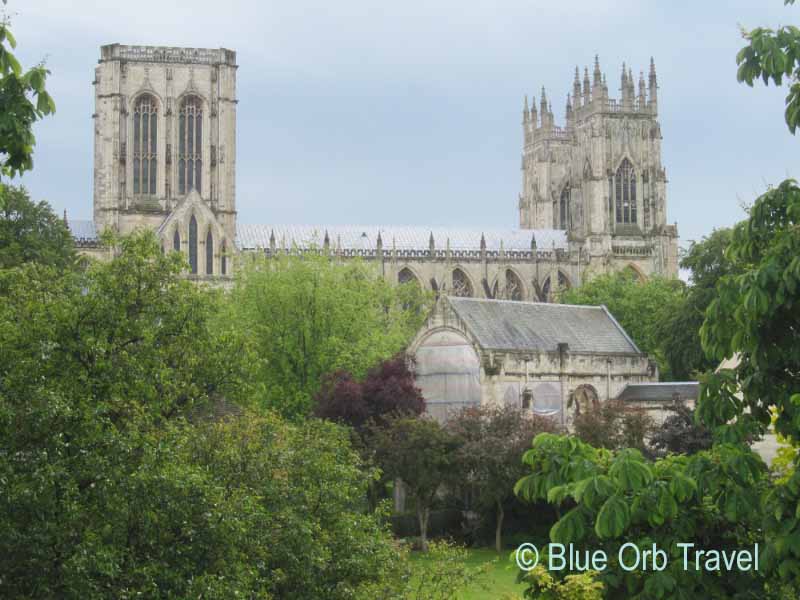
Setting out to explore the city by 4 PM, I soon found myself on a circuitous trek around the town at the top of the old medieval walls, descending from this lofty vantage point at intervals along the way to mingle with the crowds and explore the many sights below. Without question, the most prominent landmark in York is York Minster. Completed in 1472, it is one of the largest Gothic cathedrals in Northern Europe. The gorgeous stained glass windows should not be missed and visitors will want to make every effort to get inside to take in the beauty of these remarkable works of art. Nearby is the Treasurer’s House, also dating back to medieval times, with its classic architecture and beautifully manicured gardens.
York Minster, York, England
World Class Museums
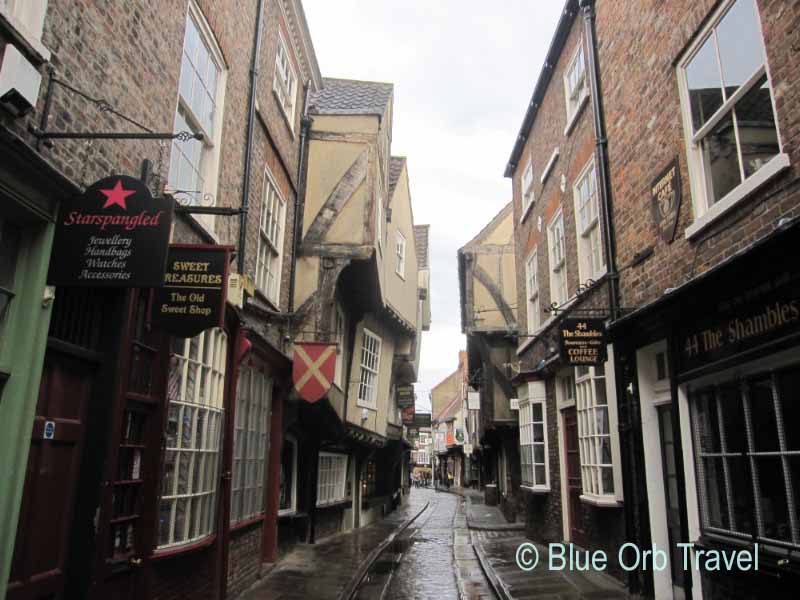
There are several world class museums in York, including the Jorvik Viking Centre and the York Castle Museum. Climbing enthusiasts can ascend the steep stairway to the top of Clifford’s Tower, the last remaining vestige of York Castle, for another view of the city below. Visitors will also want to see the Fairfax House dating to the early 1700s and the Roman Baths, recently uncovered beneath a pub. Fans of Harry Potter will enjoy seeing The Shambles, a network of old streets dating back to the 14th century with overhanging wood frame buildings. Astute observers will recognize it as Diagon Alley in the Harry Potter films. Just outside the walls along the River Ouse are the beautiful Museum Gardens with its Norman Abbey ruins. While all of this was easily seen in a few hours on foot, as usual, I left plenty of reasons to return to York someday. The National Railway Museum near the train station will be at the top of that list.
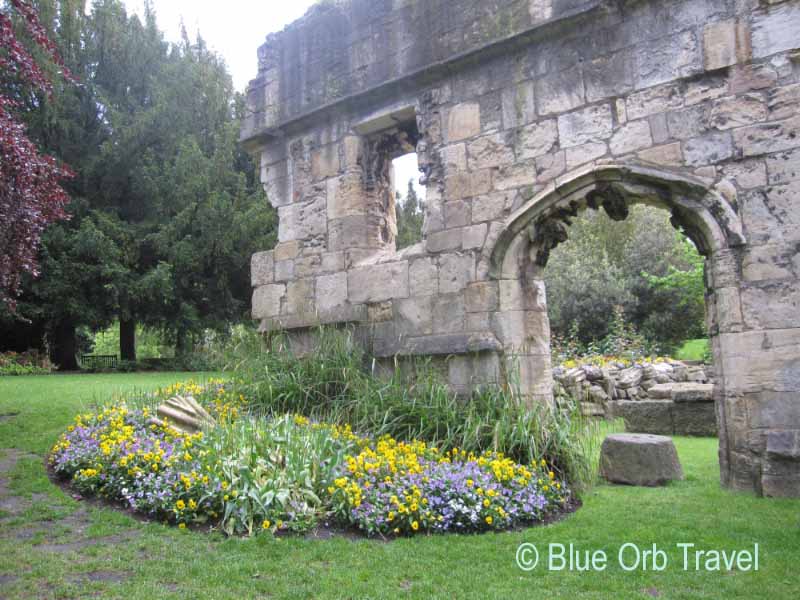
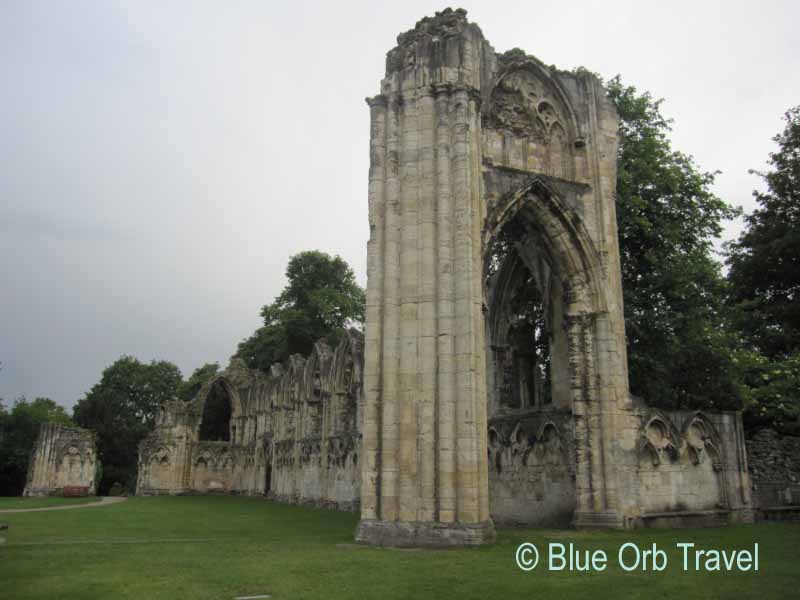
The Shambles, York, England…Keep an Eye Out for Harry Potter!The Museum Gardens, York, EnglandNorman Abbey Ruins, York, England
After 20 inches of torrential rainfall within the span of a few days, the Cinque Terre on the Italian Riviera was hit by massive flooding and mud flows on October 25, 2011. The Cinque Terre, which means ‘five lands’ is a series of five picturesque villages clinging to the rugged Ligurian Coast of Northern Italy. Even those who have not had the pleasure of visiting the Cinque Terre have undoubtedly seen travel pictures of these famous villages. Arguably one of the most beautiful places in the world, it has in recent years become an extremely popular destination for travelers from across the globe. The eight mile Cinque Terre Hike between the villages is now an almost obligatory pilgrimage for any traveler worth his salt.
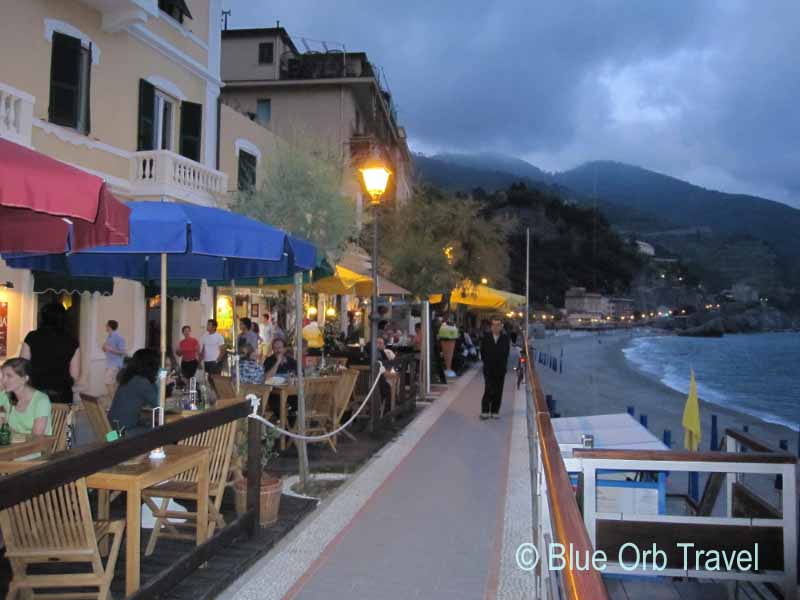
Monterosso, Italy on the Cinque Terre
Streets Buried Under Rocks and Mud
Monterosso and Vernazza, the two northern-most villages, were the hardest hit. The narrow streets were buried under 12 feet of rocks and mud, cars were overturned and the harbors were filled with debris. This natural disaster is said to have claimed ten lives and there are reports of others who are missing. Initially, roads and rail lines were closed, making access by sea the only connection to the area. About 500 Italian troops have been dispatched to the region to assist the local inhabitants with clean up. Investigations into the cause of this disaster are ongoing, but over-building has been suggested as a possible culprit.
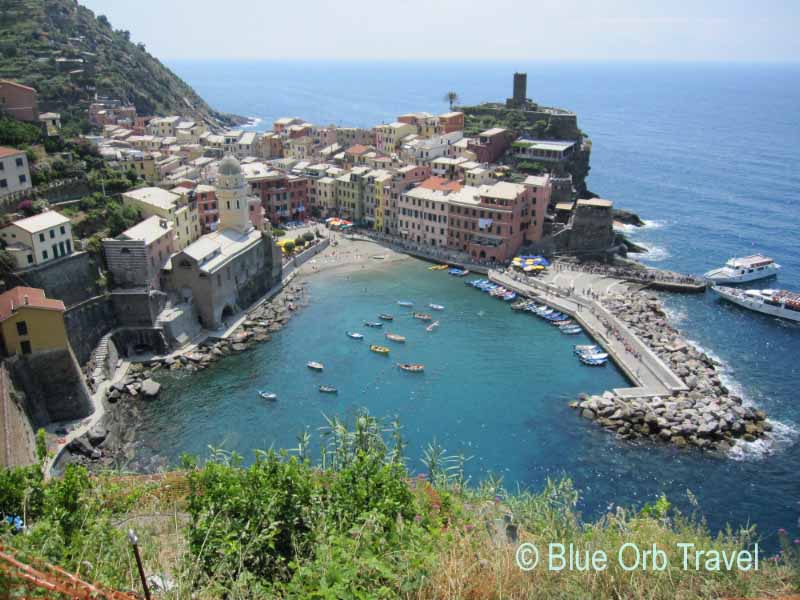
Vernazza, Italy on the Cinque Terre
The Resilient Italian People
Our hearts go out to the citizens of the Cinque Terre during this difficult time. No strangers to natural disasters (earthquakes and volcanic eruptions come to mind), the resilient Italian people will be able to dig out from under the debris and restore the charm and beauty of the Cinque Terre to its antediluvian state. Travelers with the Ligurian Coast of Italy on their itinerary should check with their agents for information about possible changes to their travel plans. The trails of the Cinque Terre Hike are likely to be closed for some time, but it is our hope that visitors will soon be able to safely return to the ‘five lands’ of the Italian Riviera.
Video Footage of Vernazza Flooding Captured by a Tourist