Trepidation

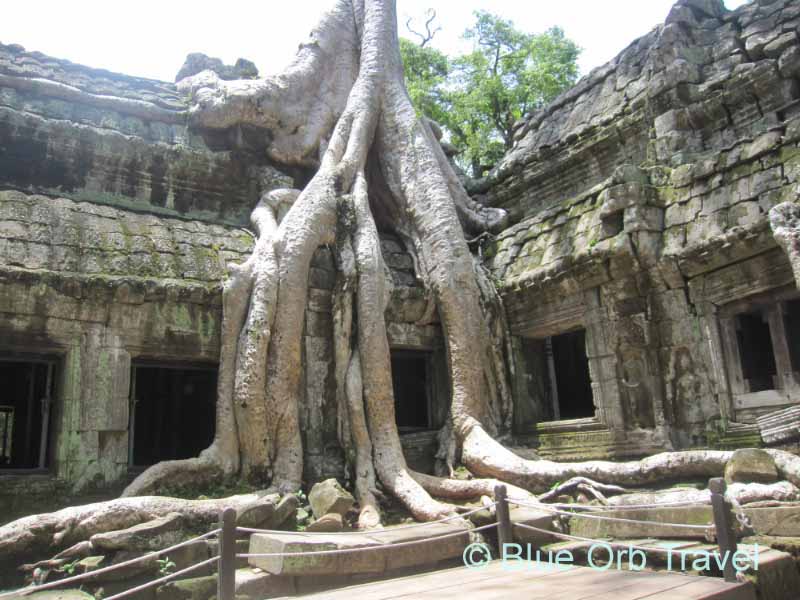
Tree Growing from Ta Prohm Temple Ruins at Angkor Wat, Cambodia

Intro to Indochina

Laos, Vietnam and Cambodia

          Having made my way up the Malay Peninsula from Singapore to Bangkok, it was now time to continue my journey into uncharted territory.  Laos, Vietnam and Cambodia had long been on my bucket list of must-see destinations, but it was with some trepidation that I contemplated the logistics of traveling through the rugged countryside, crossing multiple borders into communist countries, and arranging suitable transportation and lodging, all the while grappling with several different languages.  As I was soon to discover, my concerns were all for naught.  I was able to easily navigate my way through some of the most beautiful country on earth, inhabited by some of the friendliest folks I have ever encountered in my travels throughout the world.  In upcoming articles we’ll visit the cities of Vientiane and Luang Prabang in Laos; Hanoi, Hoi An and Saigon in Vietnam; and Phnom Penh and Siem Reap in Cambodia.  We’ll also explore two fabulous UNESCO World Heritage Sites, Ha Long Bay and Angkor Wat.
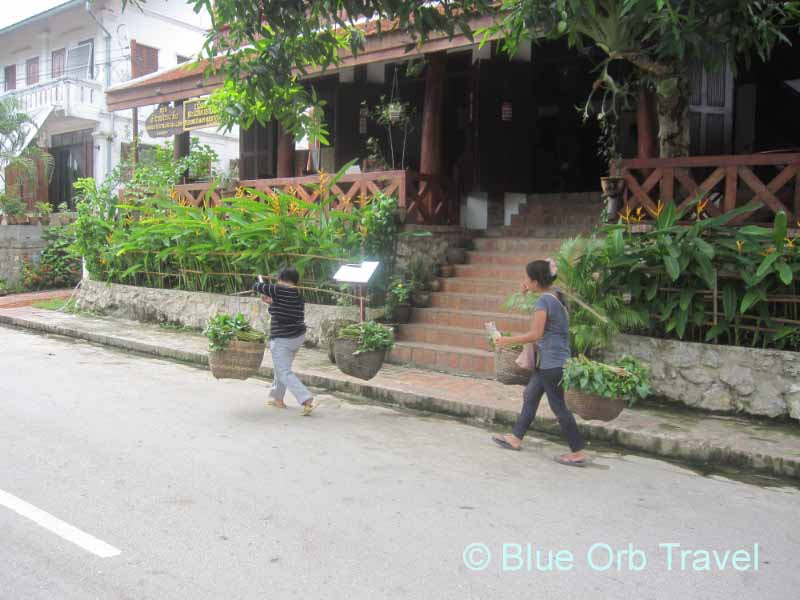
The Charming Colonial City of Luang Prabang, Laos

History and Culture

          Historically, Indochina refers to the three countries of Laos, Vietnam and Cambodia on the Southeast Asian peninsula.  This region was known as French Indochina during the period when these countries were colonies of France from about 1884 to 1954.  The Kingdoms of Laos and Cambodia were granted independence from France in 1949, but Vietnam would have a much longer journey to becoming the country it is today.  The Indochina War was largely a conflict between France and the Viet Minh in the north of Vietnam and began in 1946 shortly after the end of World War II.  It ended in 1954 with the partition of Vietnam into North and South.  Enter the Americans one year later and the rest, as they say, is history!  While the peoples of Indochina are quite separate from those of both India and China, the name Indochina can be attributed to the location of this region between these two larger countries.  While each of the three countries comprising today’s Indochina is ethnically diverse, the Khmers can be identified as the majority in Cambodia and the Kinh (Viet) in Vietnam.  Laos, on the other hand, is a much more diverse conglomeration of many tribes and languages.
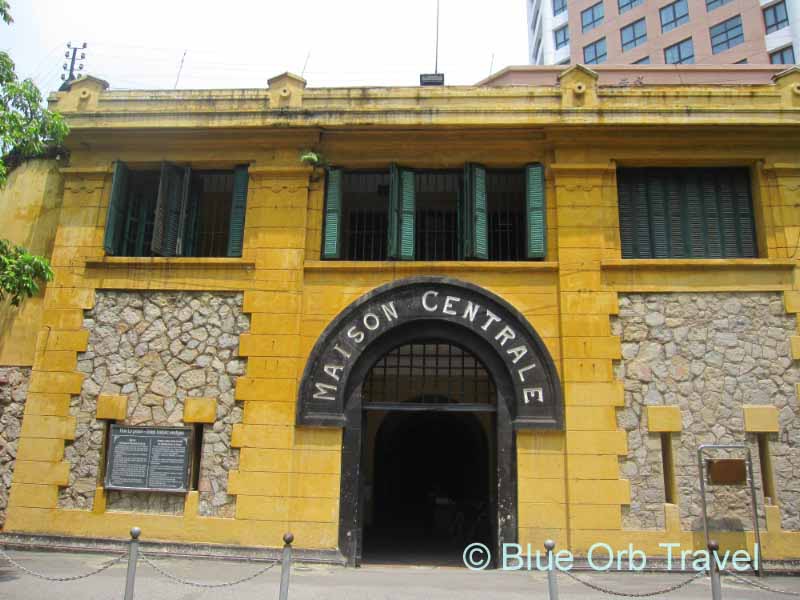
Hoa Lo Prison Known as the Hanoi Hilton, Vietnam

Indochina Itinerary

          The major sights of Laos, Vietnam and Cambodia can easily be covered by taking a circular route beginning and ending in the gateway city of Bangkok, Thailand.  I traveled in a clockwise direction, starting with the overnight train ride from Bangkok to Vientiane, Laos.  What I thought would be a complicated border crossing over the Friendship Bridge at Nong Khai into Laos turned out to be quite simple and went exactly according to how it was described in The Man in Seat 61.  You can purchase a visa on arrival for Laos there for $35.  After an overnight in Vientiane, I took the 11 hour bus ride through the beautiful northern hill country of Laos to the incredibly charming UNESCO World Heritage City of Luang Prabang on the Mekong River.   To save time and avoid the long, arduous bus ride over the mountains to Hanoi, I took the one hour flight from Luang Prabang to Hanoi the following day on Lao Airlines for $150.  Arriving in Vietnam by plane also enables travelers to purchase a visa on arrival rather than applying for a visa in advance which is required at land border crossings.  After two nights in Hanoi and a day trip to Ha Long Bay I took the overnight train to the ancient city of Hoi An via Da Nang for $45.  Again to save time, I took the one hour flight the following day from Da Nang to Saigon on Vietnam Airlines.  After a one day visit to Saigon I took a bus to Phnom Penh, Cambodia for $20 and was able to purchase a visa on arrival at the border for $25.  The following day I took the five hour bus ride to Siem Reap for $12.00.  After two days in Siem Reap with ample time to explore Ankor Wat, I completed the final leg of my circuitous journey by taking the nine and a half hour bus ride back to Bangkok for another $12.  Hopefully, these details will be helpful for those planning an independent sojourn through Indochina.

Tree Growing from Ta Prohm Temple Ruins at Angkor Wat, Cambodia

  Bargain Hunter’s Paradise

          Hurry!  These prices won’t last!  At the risk of sounding like the proverbial used car salesman, I can’t stress enough that the price for everything from hotels to restaurants to transportation and shopping are incredibly low throughout Indochina, making it a true bargain hunter’s paradise.  It’s no wonder that frugal students and backpackers flock to this region every year to take advantage of the great deals.  Imagine a wonderful hotel with a pool and a fabulous breakfast for $50 or a delightful meal in a French restaurant for $7.  Or how ‘bout a comfortable minibus ride from Cambodia to Thailand for $12 or a souvenir tee shirt for $1.  As word gets out, prices are sure to go up, so if you are thinking of a trip to Indochina, now might be the time.  In future articles we will explore this region in greater detail, so be sure to check back with us here at Blue Orb Travel for some great information on what to see and where to stay during your visit.
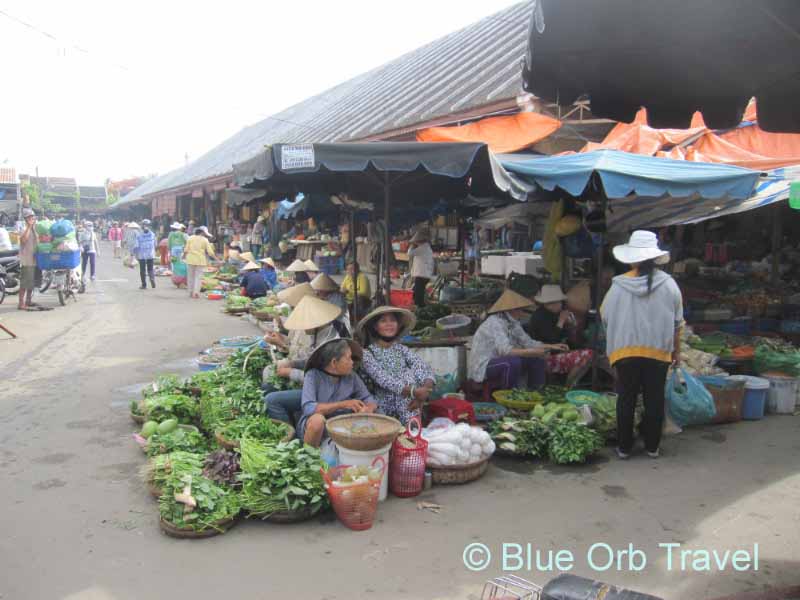
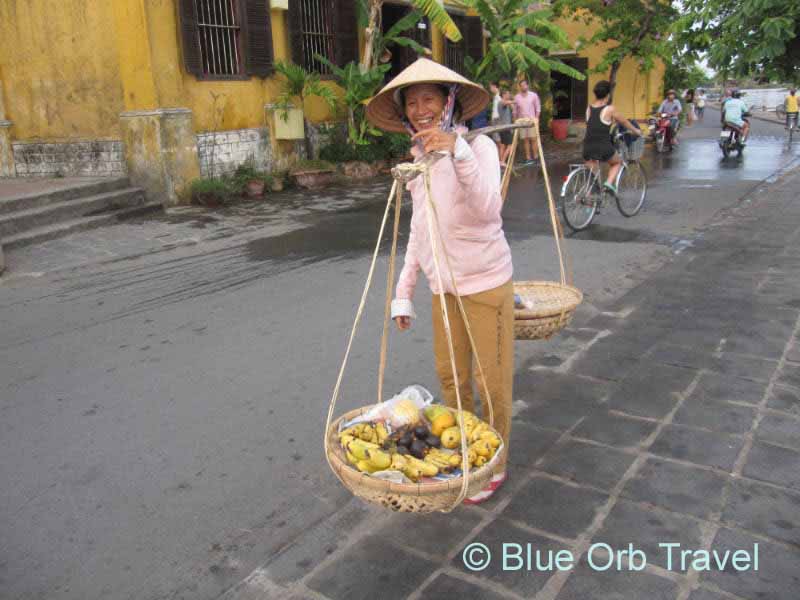
Market in Hoi An, Vietnam

Intro to Indochina Read More »

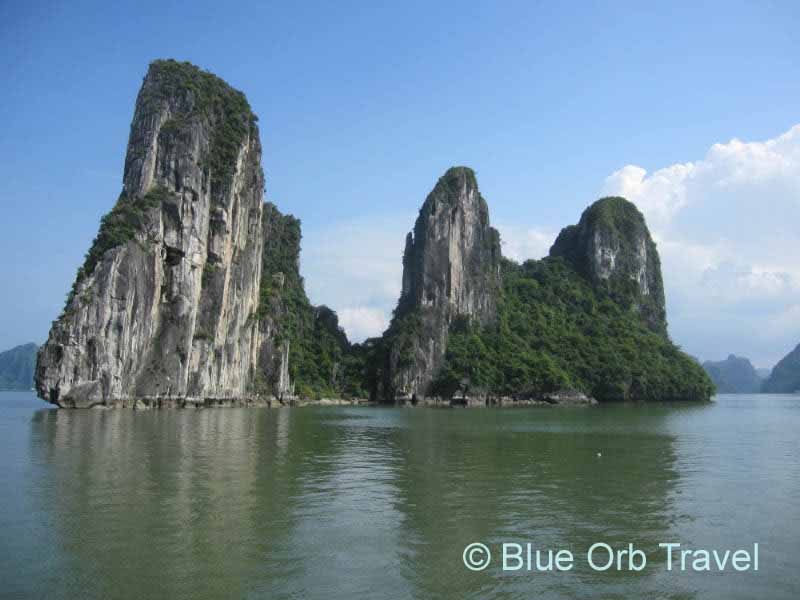
Ha Long Bay, Vietnam

Backpacking through Southeast Asia

Adventure of a Lifetime

          It was with some trepidation last May that I embarked on a three week trek through six countries in Southeast Asia…on my own!  With nothing but a pack on my back I made my way through Singapore, Malaysia, Thailand, Laos, Vietnam and Cambodia, hitching a ride on everything from planes, trains, buses and boats to taxis, bicycles, motor scooters and tuk tuks (more on that later).  Heading out into uncharted territory like that is all part of the fun and I think what motivates most adventure travelers.  Little did I know how easy it would be and how smoothly I would be able to make connections and find accommodations.  While I did do a lot of planning ahead of time, I made no reservations in advance, except for the first night in Singapore.  The timing could not have been better, with fewer crowds after the peak season and perfect (albeit hot) weather just before the wet season which begins in June.  In the end, I got to see some of the most popular tourist destinations in the world and met friendly, helpful people everywhere I went.  This was truly the adventure of a lifetime.

Ha Long Bay, Vietnam

Bargain Hunter’s Paradise

          Of the many things that make Southeast Asia a paradise on earth, none will be more appreciated by the value-minded traveler than the plethora of bargains waiting to be redeemed.  As word gets out, it’s hard to say how long this will last, but for now savvy travelers like the many backpackers and students I encountered along the way are taking advantage of the low prices, reminiscent of the bargains available in Eastern Europe ten to fifteen years ago.  On most evenings, the first hotel I walked into had a room available, sometimes for as little as $20, including breakfast!  With the exception perhaps of Singapore, all of my accommodations were a great value for the money.  My hotel in Hoi An, Vietnam even came with a bicycle!  And traveling from one point to the next, whether by plane, train or bus, was unbelievably inexpensive.  I actually traveled on a comfortable bus from Siem Reap, Cambodia to Bangkok, Thailand for $12.  And how ‘bout this…dinner at a charming French restaurant in Luang Prabang, Laos for $7.50.  I think you get the idea.  Southeast Asia is a bargain hunter’s paradise and you’ll want to take advantage of it while it’s still possible.

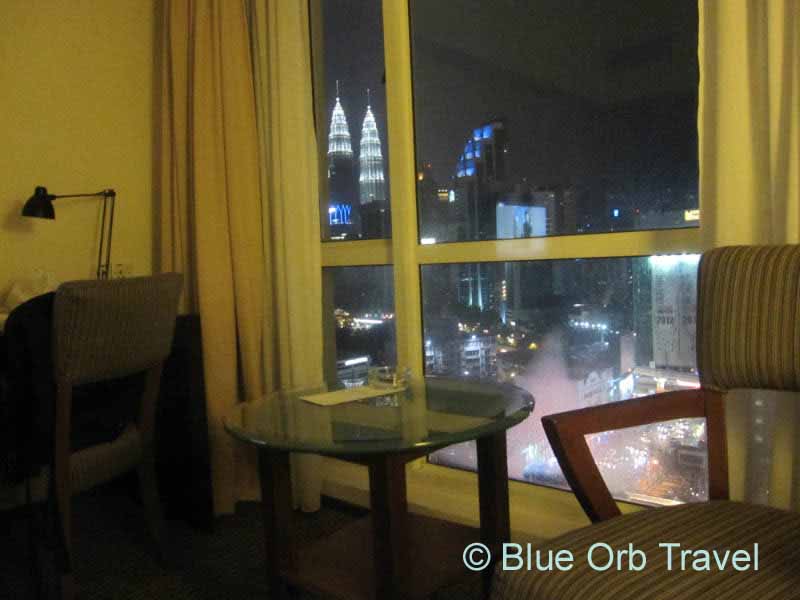
The Petronas Twin Towers from My Hotel Room, Kuala Lumpur, Malaysia

Cultural Potpourri

          Within the relatively small area of Southeast Asia, you will experience a variety of cultures and meet a lot of friendly, interesting people.  Everywhere I went, folks went out of their way to be helpful and nice and many times where as interested in me as I was in them.  Singapore is like a microcosm of the entire area, where people from many backgrounds, religions and cultures all live together in harmony.  Malaysia is a moderate Islamic country that stands out as a shining example of what a Muslim country can be.  I found the people of Malaysia to be very welcoming and also proud to show off the many interesting things about their beautiful country.  Thailand is a thriving, modern constitutional monarchy and boasts the world’s longest ruling monarch.  Thai and Chinese are the main ethnic groups there and Buddhism is the primary religion.  In contrast, Laos, Vietnam and Cambodia are communist countries, but even the most observant visitor would be hard pressed to see any evidence of it.  Instead, what you are more likely to notice is that these are burgeoning capitalist countries full of hopeful people.  It was especially heart warming for me as an American to find how warmly I was greeted throughout Vietnam.  So, if it’s culture you’re looking for, Southeast Asia is brimming with it.

Hoi An, Vietnam
Hoi An, Vietnam

World Heritage Sites Abound

          There are no less than 20 UNESCO designated World Heritage Sites in the six countries that I visited in Southeast Asia and among them are some of the most famous in the world.  One of the highlights of my trip was seeing the temple complex at Angkor Wat in Cambodia, which had been on my bucket list since I was a kid.  The historic trading city of George Town on the Straits of Malacca in Malaysia is another designated site and will give visitors a glimpse into the colonial era of Southeast Asia.  Of the many World Heritage Sites located in Vietnam, there are two that you absolutely must plan to see during your swing through this beautiful country.  Ha Long Bay, meaning Bay of Descending Dragons, is up north and about 100 miles east of Hanoi.  Almost 2000 incredibly shaped islands dot this area in the Gulf of Tonkin and there are many tour boats waiting to take you out to see them.  Midway down the long, narrow outline of Vietnam on the map is the ancient town of Hoi An.  Much of this quaint little city has been preserved and it now attracts many visitors from around the world.  Perhaps the most out of the way site I visited was the historic city of Luang Prabang located on the Mekong River in the northern mountains of Laos.  Just when you think you are at the end of the world, you find yourself in a town full of interesting temples, charming French provincial architecture, great hotels and scrumptious dining.  These fabulous World Heritage Sites alone should be enough to get you thinking about your trip to Southeast Asia.

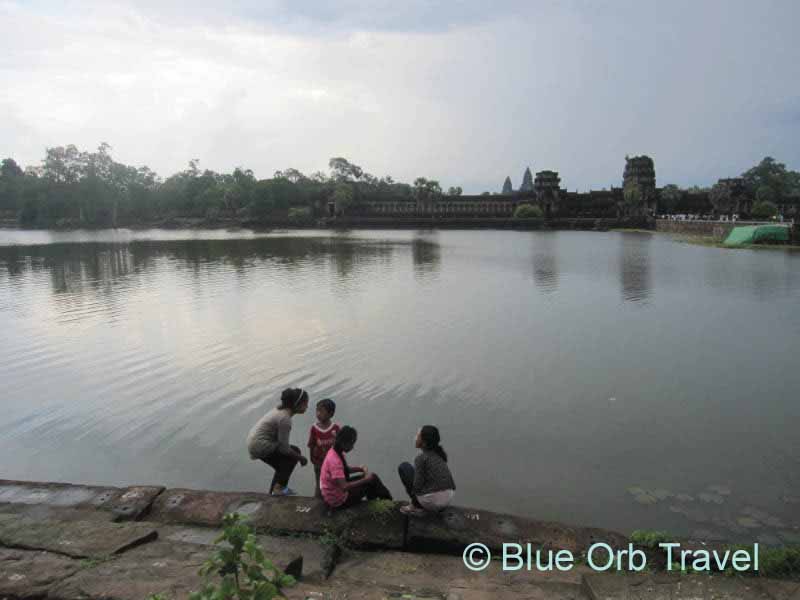
Angkor Wat, Cambodia

Planning Your Trip

          The best plane fares to and from Southeast Asia will be found using gateway cities like Singapore and Bangkok.  To save time and money and avoiding backtracking, I purchased what is called an ‘open-jaw’ ticket, which means you arrive in one city and depart from another, Singapore and Bangkok, in my case.  This enabled me to add a visit to Singapore and a trip up the Malay Peninsula onto the beginning of my itinerary.  Then it was simply a matter of traveling the circuit from Bangkok up north to Laos and then down through Vietnam and finally across Cambodia back to Bangkok.  It was actually fairly easy travel and half the fun was the variety of modes of transportation along the way.  For travelers from the U.S. the only visa that should be arranged before the trip is for Vietnam.  No visa is required for Singapore, Malaysia or Thailand and a visa on arrival can be obtained in Laos ($30) and Cambodia ($20).  The money situation can seem a little intimidating at first, since each country has its own currency: Singapore dollars, Malaysian ringgits, Thai bahts, Laotian kips, Vietnam dongs, and Cambodian riels.  Fortunately, in Laos, Vietnam and Cambodia the U.S. dollar is accepted almost everywhere, so I highly recommend taking plenty of cash including small bills like ones, fives and tens.  There will be lots more information, tips and photos from my recent trip to Southeast Asia in upcoming articles on Blue Orb Travel, so I hope you will stay tuned and come back often.

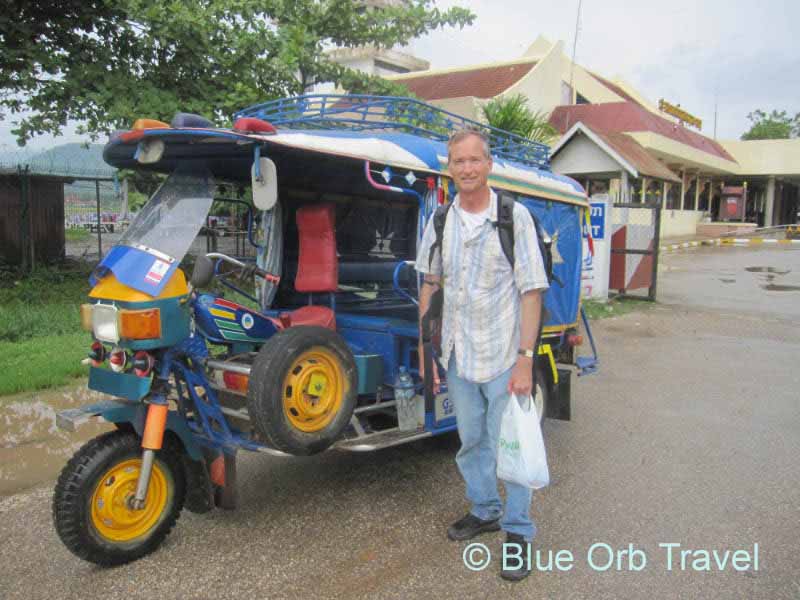
Tuk Tuk in Luang Prabang, Laos

Backpacking through Southeast Asia Read More »

Beijing Hutong

First Day In Beijing

First Day in Beijing         

          It was with some trepidation that I arrived at the Beijing Airport around 8 PM on the evening of May 25, 2010.  After all, it was a new country for me and I didn’t speak any Chinese and finding my hostel tucked away in a hutong (narrow alleyway) in the middle of one of the biggest cities in the world would be like finding a needle in a haystack.  All I knew was that it was near the Temple of Heaven.  After buying enough yuan (basic unit of the ‘peoples money’) at the airport to get a bus ticket, I soon found myself heading into the city.

          Right from the get-go my fears were allayed by the helpful, friendly people I met everywhere I went.  The bus was full of locals, but I spotted someone in a seat towards the front of the bus, who looked like he might also be a visitor. 

          “Do you know which bus stop would be the closest to the Temple of Heaven?”, I ventured to the elegant looking black gentlemen wearing a tailored suit.  He replied in beautiful English, explaining that he was a businessman from Africa and that he was in the same boat as I was.  As we poured over a huge map of the city together in the dim light of the bus, a young Chinese lady sitting across the aisle came to our aid. 

          She had overheard our conversation and said, “I live near the Temple of Heaven.  Get off with me and we can share a taxi”.  I was in business!  After helping the other gentleman find his bus stop, she and I got off in the middle of a huge boulevard.  She hailed a taxi and once again we were whisking our way through the streets of Beijing.  She introduced herself as Liang and explained that she was an attorney, returning from a business trip abroad.  I gave her the address of my hostel and it seemed like she spoke for the longest time to the driver.  She then directed him through the maze, pointing first down this street, then down another.  The streets became narrower and narrower, although still filled with pedestrians at this late hour, until suddenly there it was, looming over the little shops surrounding it, The Far East International Hotel.  Even after directing the driver to go far out of her way, Liang would not let me pay for my share of the taxi.  She gave me her card with her phone number in case I needed any assistance during my trip.  I had met my first friend in China. 

          The staff at the hostel greeted me as though they were waiting just for me and soon had me safely ensconced in my room.  After the long flight, I certainly didn’t need any rocking that night.  This was just the beginning of a nearly three week encounter with some of the most friendly people I have ever met.  I was off to a great start.  Tomorrow I would conquer Tiananmen Square and the Forbidden City.

Travel Tips

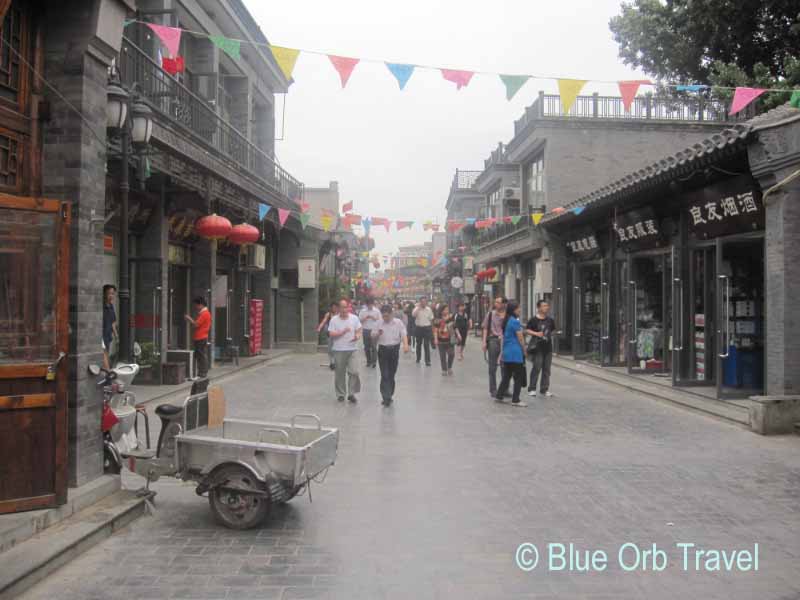
          The Far East International Hotel is both a hotel and a hostel.  It is part of the vast network of hostels that are part of Hostelling International.  I highly recommend that every value-minded traveler join Hostelling International.  The annual membership fee is free for youth under 18, $28.00 for adults from age 18-54 and $18.00 for seniors age 55 and above.  I booked my first three nights in Beijing in advance using their website (see links) and had a private room with bath for a total cost of about $86.00 for all three nights!  The hostel is located in the heart of the city in one of the quaint hutongs that Beijing is famous for.  It is within walking distance of Tiananmen Square, the Forbidden City, the Temple of Heaven and many of the other must-see sights in Beijing.  I felt safe and comfortable in this area and enjoyed the experience of living in close proximity to the citizens of this great city.

Beijing Hutong
Beijing Hutong

First Day In Beijing Read More »