Mso

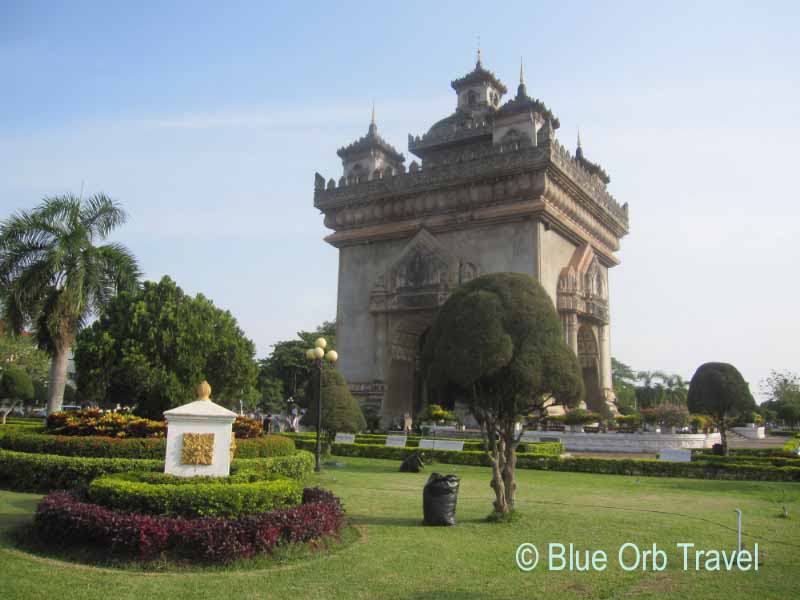
The Victory Gate, Vientiane, Laos

Vientiane, Laos

A Quiet Capital City

          Compared with the capital cities of other countries, Vientiane may seem a little quiet and sleepy to first time visitors, but beneath its placid façade is a vibrant metropolis teeming with friendly inhabitants and interesting sights.  Many tourists will arrive at Nong Khai after the 15 hour overnight train ride from Bangkok, Thailand (Train 69), as I did. The cost for a lower berth was about $24.
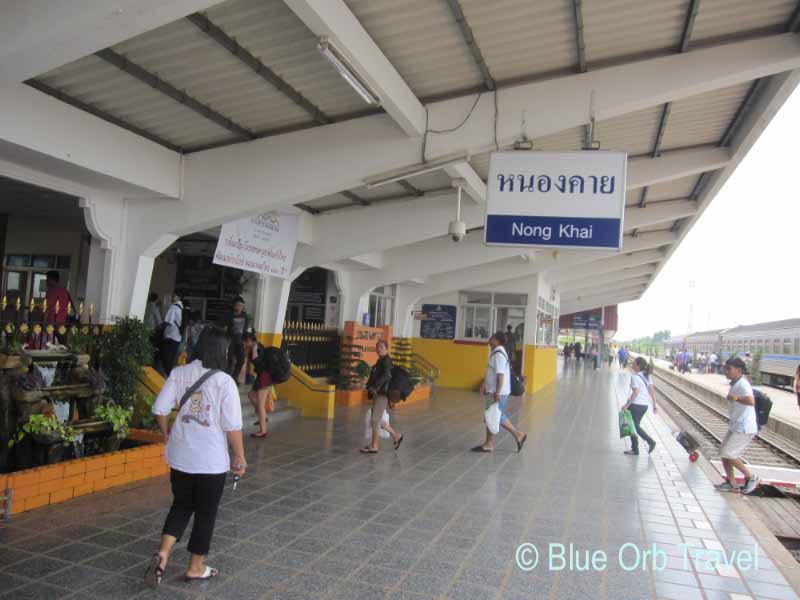
Arriving at the Nong Khai, Thailand Railway Station on the Laotian Border

          Then, for about 64 cents you can purchase a connecting train ticket for the 15 minute ride to Thanaleng by way of the Friendship Bridge over the Mekong River into Laos.  You will exit Thai immigration and then purchase a visa on arrival for Laos in Thanaleng for $35.  From there I took a minivan into Vientiane with seven other travelers who I met on the train, which cost us each about $3.  So, what I thought would be a complicated border crossing turned out to be quite easy and it was fun for those of us traveling on the same train to find our way together.  Once in the city, you can easily walk to many of the major sights and the others can be reached by tuk-tuk or on a rented bicycle.
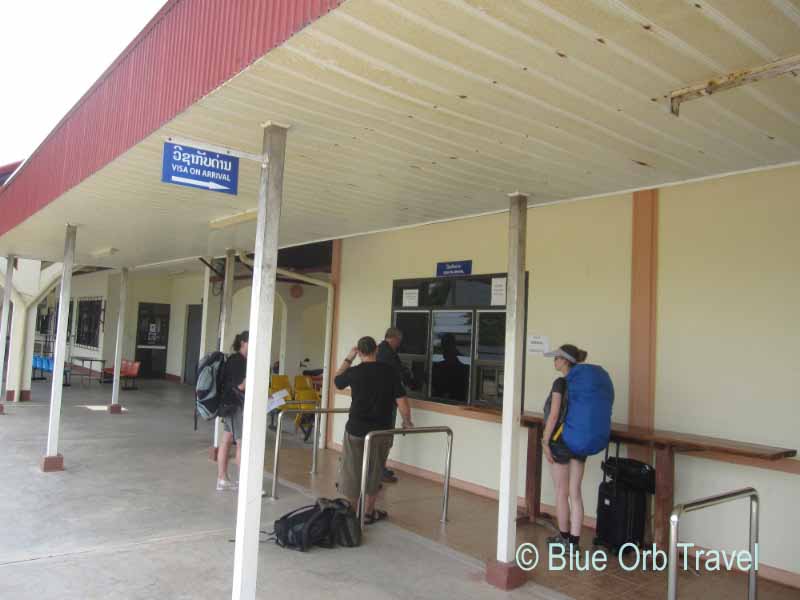
Getting a 'Visa on Arrival' at Thanaleng, Laos
Getting a ‘Visa on Arrival’ at Thanaleng, Laos

Tuk-Tuk Tour

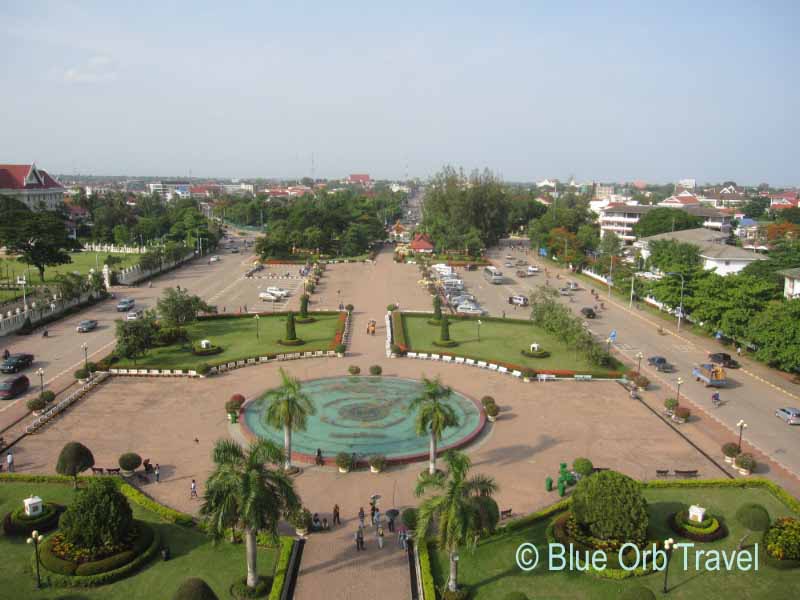
          Vientiane lies on the eastern side of the Mekong River across from Thailand which flanks the western bank.  As soon as I reached the center of town I found a great little hotel (see below) and then went to the bus station to purchase my ticket to Luang Prabang for the following day.  Chores out of the way, I finally had time to get excited about being in a new country for the first time.  Most of the important sights can be reached on foot from the central area of Vientiane.  The two exceptions are the Victory Gate or Patuxai and the temple complex at Phra That Luang, which are best reached by tuk-tuk.  Set in the middle of the wide Lane Zang Avenue, the Victory Gate is an impressive structure reminiscent of the Arch de Triumph in Paris.  Although it is made of cement, the form and architectural details make for an interesting, if somewhat imposing structure.  Completed in 1968 using U.S. government funds originally meant to build an airport, it features four arches and five towers.  For about 40 cents you can purchase a ticket to climb the 158 steps to the top for a spectacular view of the surrounding area, including the nearby Ministry of Justice and the Prime Minister’s office.

The Victory Gate, Vientiane, Laos

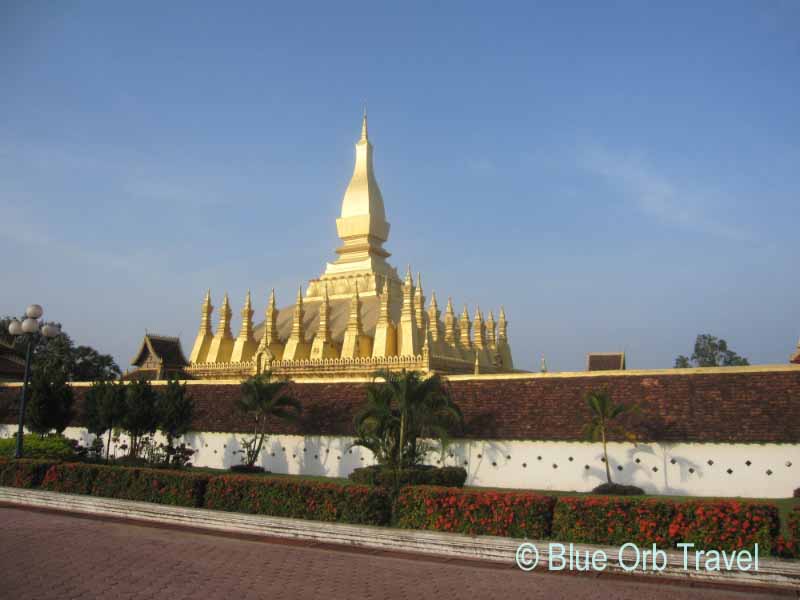
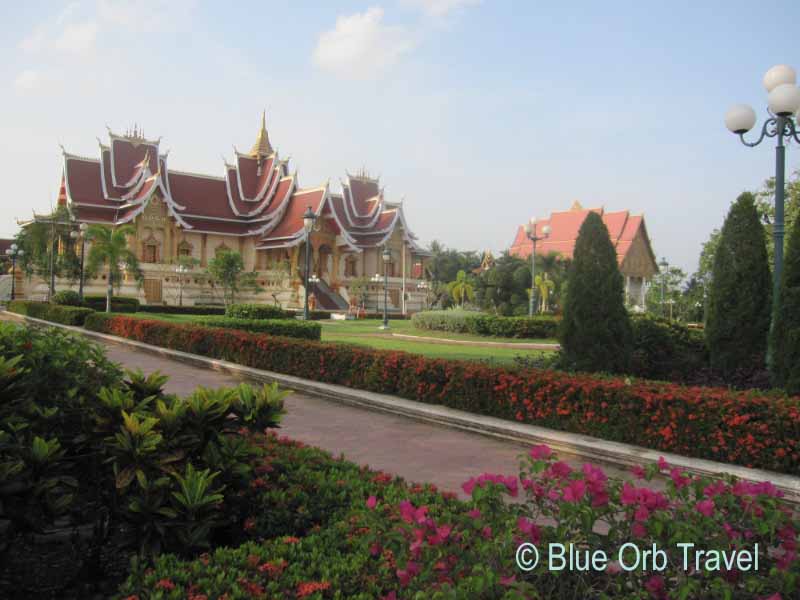
          Continuing farther out from the city center in a northeasterly direction you will come to the Buddhist temple complex of Phra That Luang.  The main building is a spectacular gold leaf structure built in 1556, which is the national symbol of Laos.  Surrounding sights include the Golden Reclining Buddha and a number of other beautiful temples.  In my opinion, the Victory Gate and the temple complex of Phra That Luang are the two ‘must see’ sights in Vientiane.
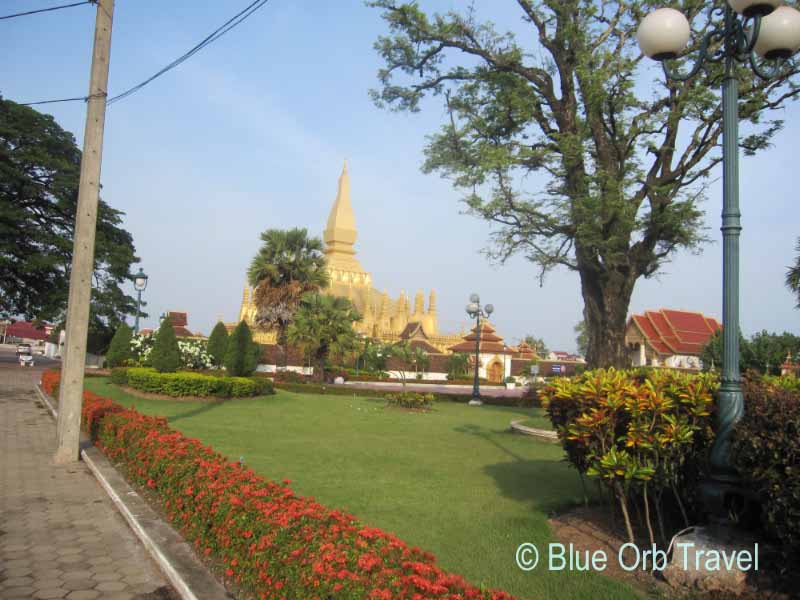
Phra That Luang Buddhist Temple, Vientiane, Laos

The River Promenade

          Many of the attractions of interest to tourists, including hotels, restaurants and shopping can be found back towards the center of town, along the Mekong River.  Several important sights are in this region as well.  The Presidential Palace is worth a look, as is the old temple of Wat Si Saket.  But for my money, the River Promenade is the place to be for mingling with the locals and just getting the feel of life in Laos.
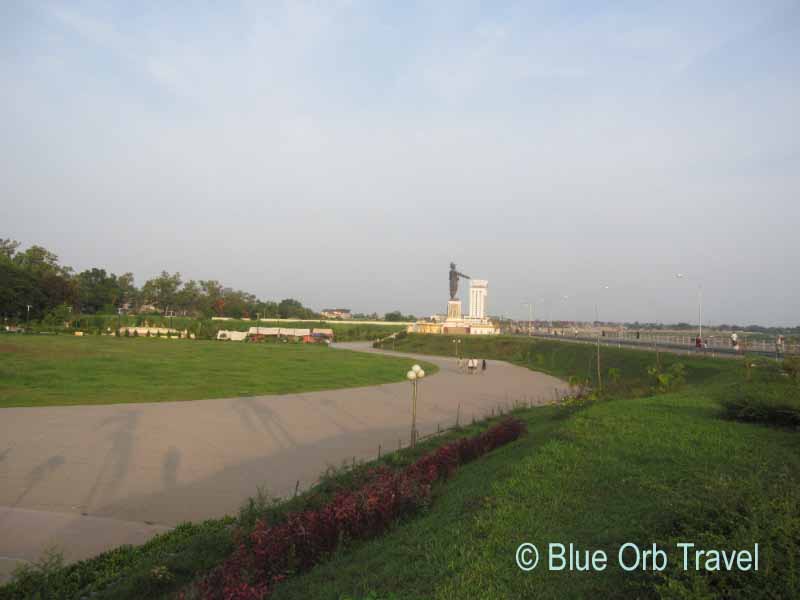
The Mekong River Promenade with King Chao Anouvong Statue

           Especially after dark, the area comes alive with people…couples on a stroll, kids playing soccer, or families picnicking.  It’s fun to check out the street vendors peddling their wares and to go window shopping for a restaurant, trying to decide upon one of the many excellent choices.  But by about 11 PM they ‘roll up the sidewalks’ in the sleepy city of Vientiane and all becomes quiet once again.
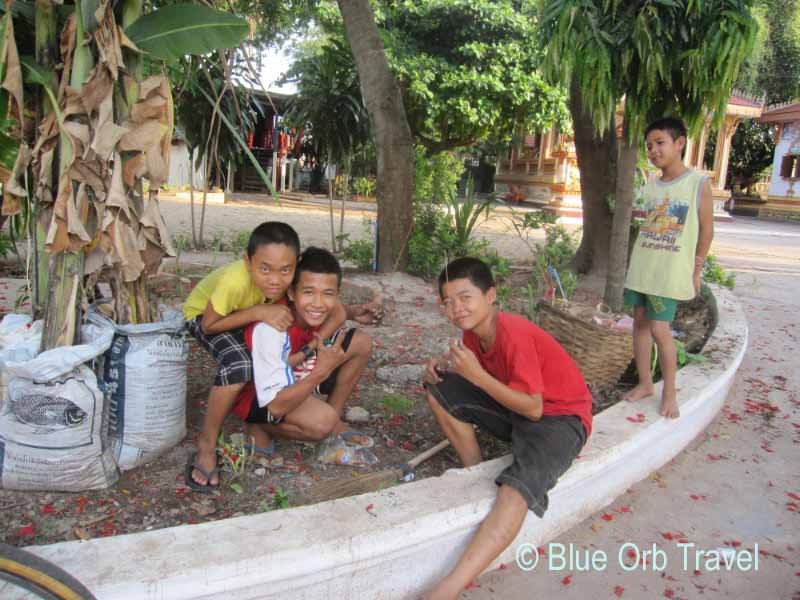
Playful Boys Hamming It Up for the Camera, Vientiane, Laos

Eating and Sleeping

          The very first hotel I checked on arriving in the center of town turned out to be a winner.  The Mixok Inn (not to be confused with the Mixok Guesthouse) had a nice room with air conditioning, private bath, TV and free Wifi for $19.  And that included breakfast!  It is just a short walk to all the attractions and activities along the River Promenade, including the night market.  The hotel has a tour desk where I was able to arrange a ride to the bus station for the following morning.  Free public parking is available nearby and the airport is but a ten minute drive away.  The staff members were friendly and helpful and the facility was clean and secure.  The Mixok Inn was a bargain and ticked all the boxes on my list of required features for an awesome accommodation.
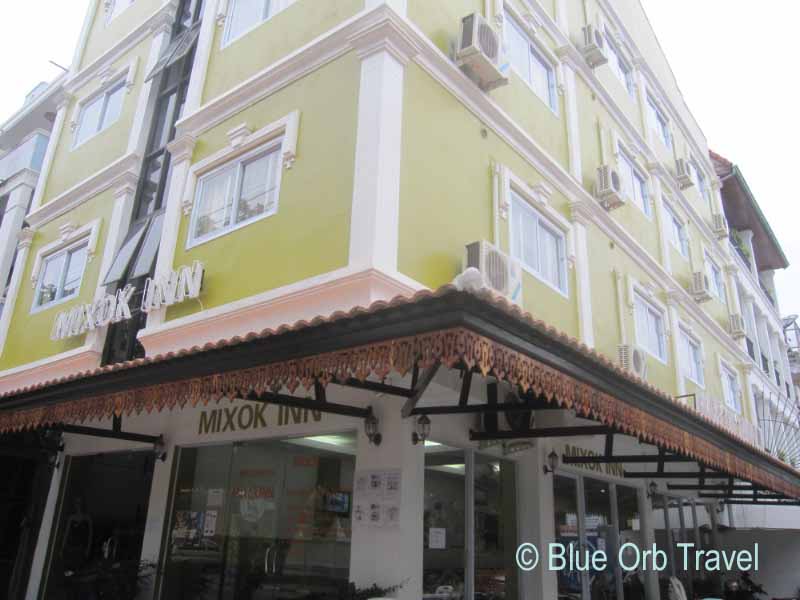
The Mixok Inn, Vientiane, Laos

           In the evening I had a wonderful dinner of pizza and Tiger Beer at an outstanding French restaurant, the Cote d’Azur, for a very reasonable $10.  The ambiance and open air feel of the restaurant right on the River Promenade made for a very pleasant dining experience.  I can highly recommend both the Mixok Inn and the Cote d’Azur if you are looking for a great place to stay and a wonderful place to eat in Vientiane, Laos.  Both provide an excellent value for your money.
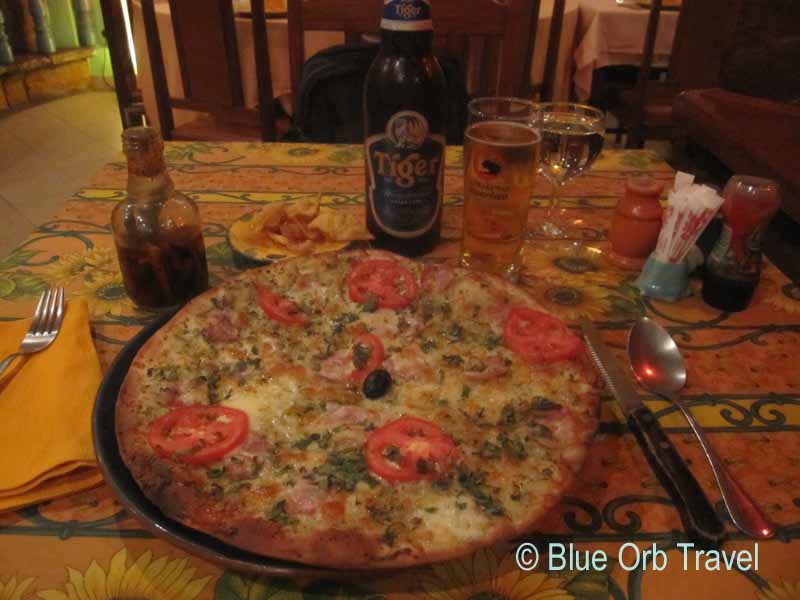
Pizza and Tiger Beer at the Cote d' Azure Restaurant, Vientiane, Laos
Pizza and Tiger Beer at the Cote d’ Azure Restaurant, Vientiane, Laos
View from the Victory Gate, Vientiane, Laos
Phra That Luang Buddhist Temple, Vientiane, Laos
Buddhist Temple on the Grounds of Phra That Luang, Vientiane

Vientiane, Laos Read More »

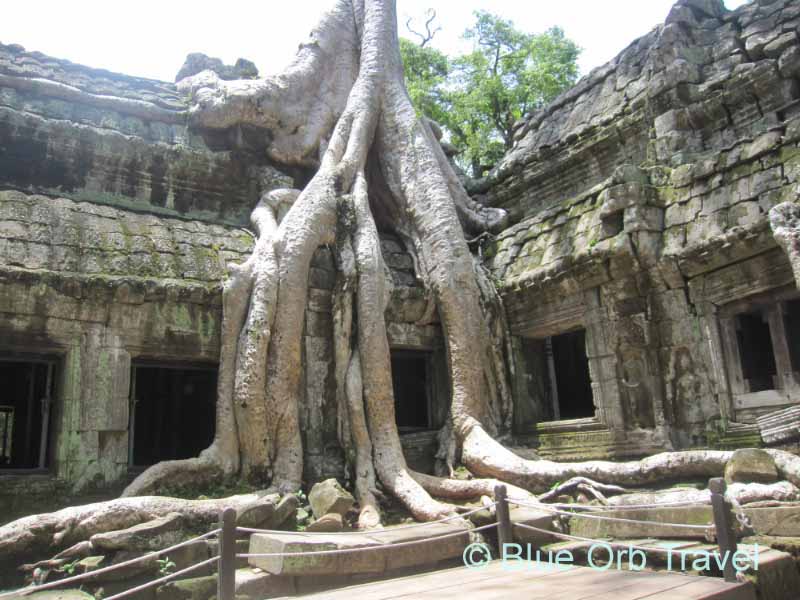
Tree Growing from Ta Prohm Temple Ruins at Angkor Wat, Cambodia

Intro to Indochina

Laos, Vietnam and Cambodia

          Having made my way up the Malay Peninsula from Singapore to Bangkok, it was now time to continue my journey into uncharted territory.  Laos, Vietnam and Cambodia had long been on my bucket list of must-see destinations, but it was with some trepidation that I contemplated the logistics of traveling through the rugged countryside, crossing multiple borders into communist countries, and arranging suitable transportation and lodging, all the while grappling with several different languages.  As I was soon to discover, my concerns were all for naught.  I was able to easily navigate my way through some of the most beautiful country on earth, inhabited by some of the friendliest folks I have ever encountered in my travels throughout the world.  In upcoming articles we’ll visit the cities of Vientiane and Luang Prabang in Laos; Hanoi, Hoi An and Saigon in Vietnam; and Phnom Penh and Siem Reap in Cambodia.  We’ll also explore two fabulous UNESCO World Heritage Sites, Ha Long Bay and Angkor Wat.

The Charming Colonial City of Luang Prabang, Laos

History and Culture

          Historically, Indochina refers to the three countries of Laos, Vietnam and Cambodia on the Southeast Asian peninsula.  This region was known as French Indochina during the period when these countries were colonies of France from about 1884 to 1954.  The Kingdoms of Laos and Cambodia were granted independence from France in 1949, but Vietnam would have a much longer journey to becoming the country it is today.  The Indochina War was largely a conflict between France and the Viet Minh in the north of Vietnam and began in 1946 shortly after the end of World War II.  It ended in 1954 with the partition of Vietnam into North and South.  Enter the Americans one year later and the rest, as they say, is history!  While the peoples of Indochina are quite separate from those of both India and China, the name Indochina can be attributed to the location of this region between these two larger countries.  While each of the three countries comprising today’s Indochina is ethnically diverse, the Khmers can be identified as the majority in Cambodia and the Kinh (Viet) in Vietnam.  Laos, on the other hand, is a much more diverse conglomeration of many tribes and languages.

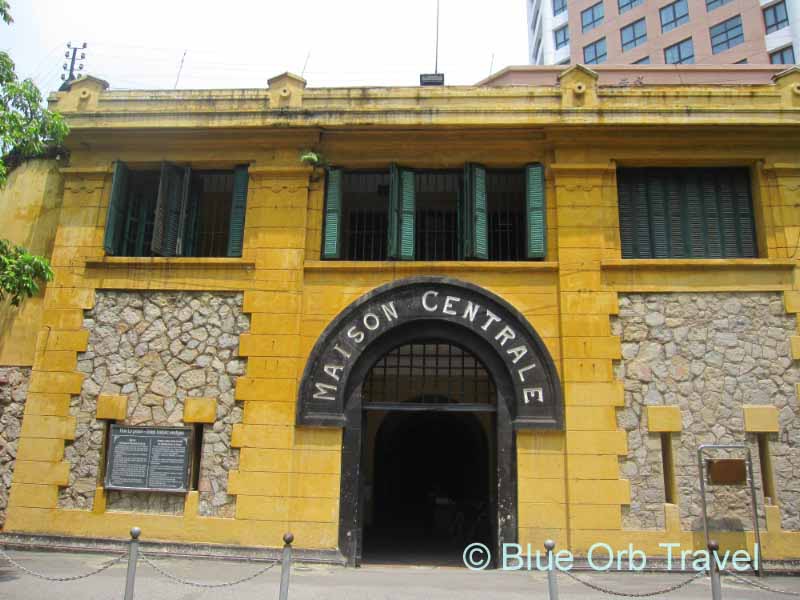
Hoa Lo Prison Known as the Hanoi Hilton, Vietnam

Indochina Itinerary

          The major sights of Laos, Vietnam and Cambodia can easily be covered by taking a circular route beginning and ending in the gateway city of Bangkok, Thailand.  I traveled in a clockwise direction, starting with the overnight train ride from Bangkok to Vientiane, Laos.  What I thought would be a complicated border crossing over the Friendship Bridge at Nong Khai into Laos turned out to be quite simple and went exactly according to how it was described in The Man in Seat 61.  You can purchase a visa on arrival for Laos there for $35.  After an overnight in Vientiane, I took the 11 hour bus ride through the beautiful northern hill country of Laos to the incredibly charming UNESCO World Heritage City of Luang Prabang on the Mekong River.   To save time and avoid the long, arduous bus ride over the mountains to Hanoi, I took the one hour flight from Luang Prabang to Hanoi the following day on Lao Airlines for $150.  Arriving in Vietnam by plane also enables travelers to purchase a visa on arrival rather than applying for a visa in advance which is required at land border crossings.  After two nights in Hanoi and a day trip to Ha Long Bay I took the overnight train to the ancient city of Hoi An via Da Nang for $45.  Again to save time, I took the one hour flight the following day from Da Nang to Saigon on Vietnam Airlines.  After a one day visit to Saigon I took a bus to Phnom Penh, Cambodia for $20 and was able to purchase a visa on arrival at the border for $25.  The following day I took the five hour bus ride to Siem Reap for $12.00.  After two days in Siem Reap with ample time to explore Ankor Wat, I completed the final leg of my circuitous journey by taking the nine and a half hour bus ride back to Bangkok for another $12.  Hopefully, these details will be helpful for those planning an independent sojourn through Indochina.

Tree Growing from Ta Prohm Temple Ruins at Angkor Wat, Cambodia

  Bargain Hunter’s Paradise

          Hurry!  These prices won’t last!  At the risk of sounding like the proverbial used car salesman, I can’t stress enough that the price for everything from hotels to restaurants to transportation and shopping are incredibly low throughout Indochina, making it a true bargain hunter’s paradise.  It’s no wonder that frugal students and backpackers flock to this region every year to take advantage of the great deals.  Imagine a wonderful hotel with a pool and a fabulous breakfast for $50 or a delightful meal in a French restaurant for $7.  Or how ‘bout a comfortable minibus ride from Cambodia to Thailand for $12 or a souvenir tee shirt for $1.  As word gets out, prices are sure to go up, so if you are thinking of a trip to Indochina, now might be the time.  In future articles we will explore this region in greater detail, so be sure to check back with us here at Blue Orb Travel for some great information on what to see and where to stay during your visit.

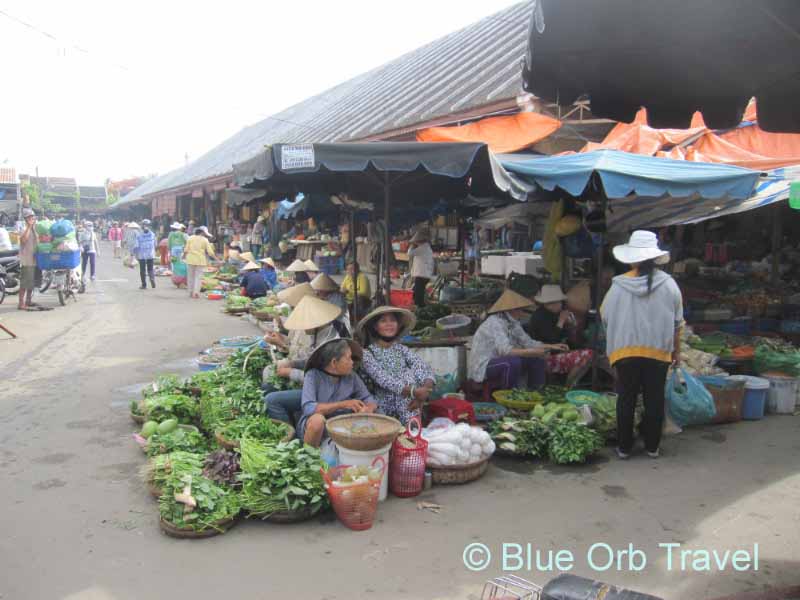
Market in Hoi An, Vietnam

Intro to Indochina Read More »