Clock Tower

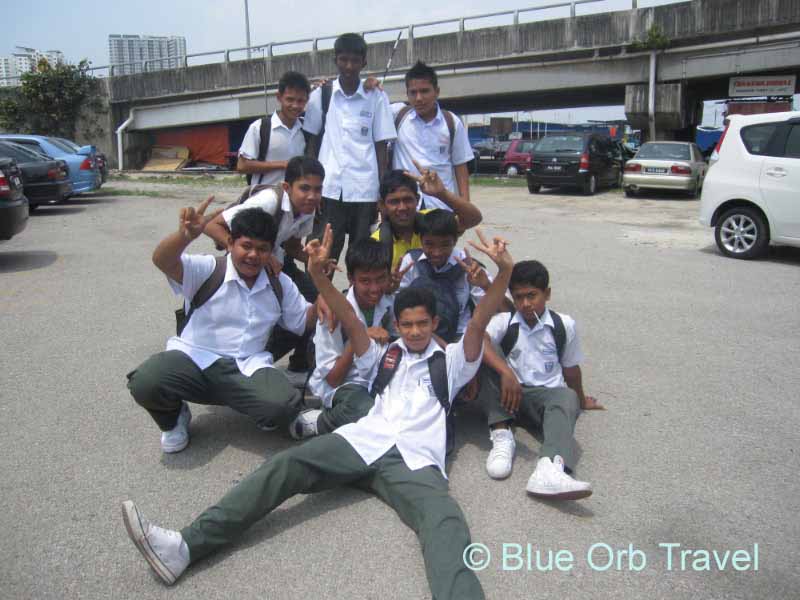
School Boys in Penang, Malaysia

Georgetown, Malaysia

Georgetown, Malaysia…A World Heritage Site

And you thought Georgetown was a chic district in Washington, D.C.!  Named after King George III, the Malaysian version was founded as a trading post for the British East India Company in 1786.  It is now the capital of the state of Penang in Malaysia and is considered the most livable city in that country.  Located on Penang Island just off the northwest coast of peninsular Malaysia, it is easily accessible by ferry and is a worthwhile stop on your journey up the Malay Peninsula from Singapore to Bangkok.  Designated as a UNESCO World Heritage Site because of its unique cultural and architectural features, Georgetown offers visitors a kaleidoscope of Islamic, British Colonial and Malay treasures.
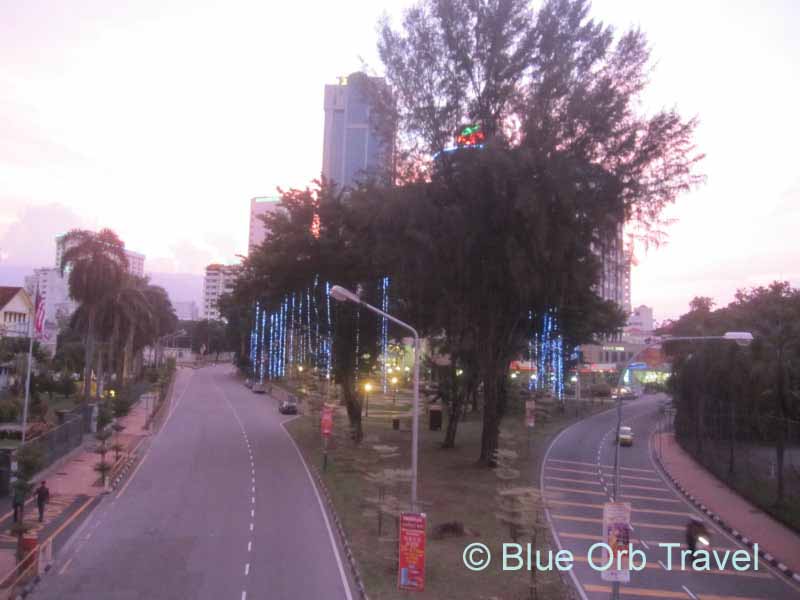
Evening Street Scene, Georgetown, Malaysia
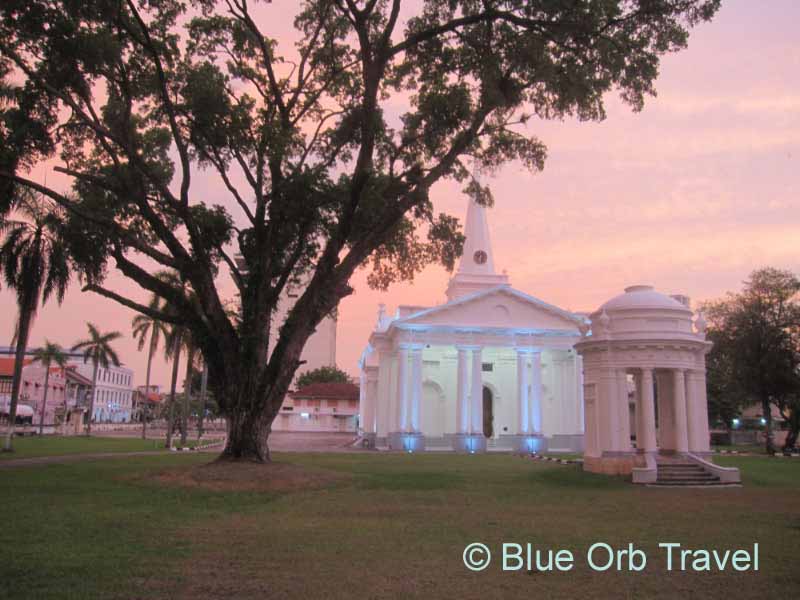
St. George's Church, Georgetown, Malaysia
St. George’s Church, Georgetown, Malaysia

Easily Walkable

Anyone in reasonably good physical condition should be able to easily walk to the major sights in Georgetown.  I began my walking tour at the Hotel Sentral, a great place to stay which will be featured in our next Awesome Accommodations article.  My first stop was the nearby Komtar shopping complex, which also houses the main bus terminal, located at the center of the city.  The 65 story Komtar tower is the largest building in Penang and has four floors dedicated to a shopping mall with two department stores and many shops…a great place to look for some unique gifts and souvenirs.  Some of the most popular items sought by tourists are Batik, a handcrafted fabric with elegant designs highly prized by fashionistas, ceramic pottery, beaded shoes for women and capal, the traditional Malay sandals for men.
School Boys in Penang, Malaysia
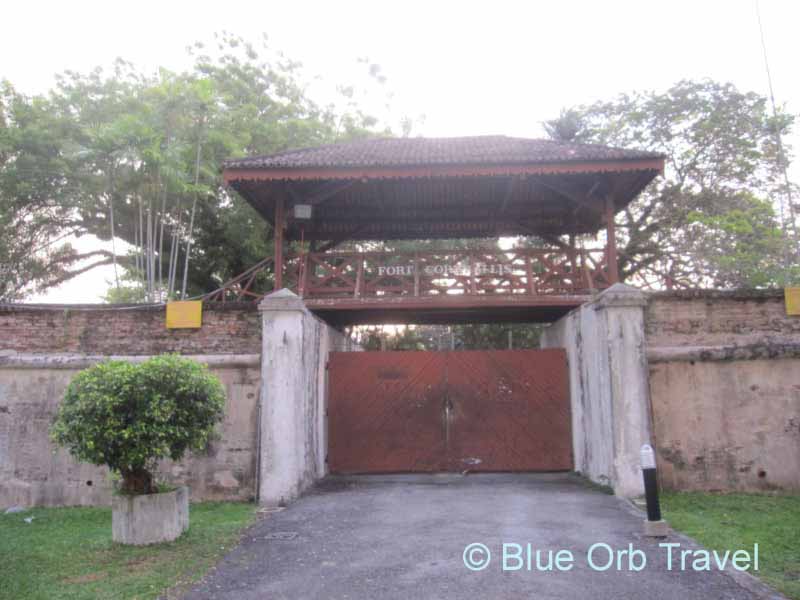
Fort Cornwallis, Georgetown, Malaysia

Many Historic Sites

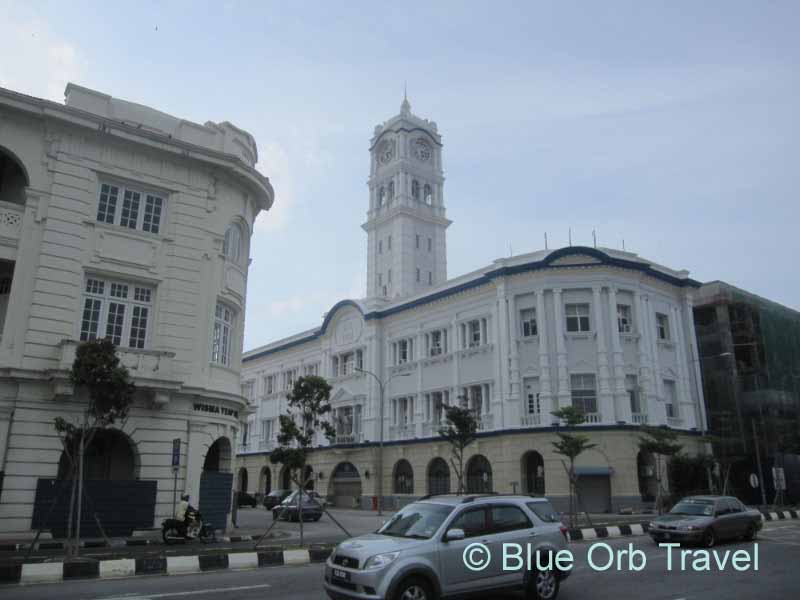
Heading east toward the waterfront you will come to the Ferry Terminal on the coastal road known as Weld Quay where you can catch a boat to Butterworth on the mainland.  In this area you will find a conglomeration of architecture, including modern high-rises, Chinese temples and shops and historic European trading houses.  The nearby Malayan Railway Building with its clock tower is a classic example of the heritage buildings that dot Georgetown.  A little farther along is the Queen Victoria Diamond Jubilee Clock Tower and the remnants of Fort Cornwallis.  The fort served as a British military and administrative conclave as far back as the 1700s.  Heading west along the waterfront you will come to the Esplanade, a large grassy park often filled with boys flying kites.  Looking across the green you will see the City Hall and Town Hall, both historic buildings dating back to the 1800s which help make Georgetown a world heritage site.  Interspersed along your walking tour you will see many other historic treasures, including St. George’s Church built in 1818, the old colonial Court House Building, the Cheong Fatt Tze Mansion and the Kapitan Kling Mosque.  If time permits, you’ll want to visit the Penang Islamic Museum and the Penang Museum and Art Gallery.  As you can see, Georgetown on Penang Island off the coast of Malaysia is a cornucopia of culture that you will not want to miss during your visit to this beautiful country.
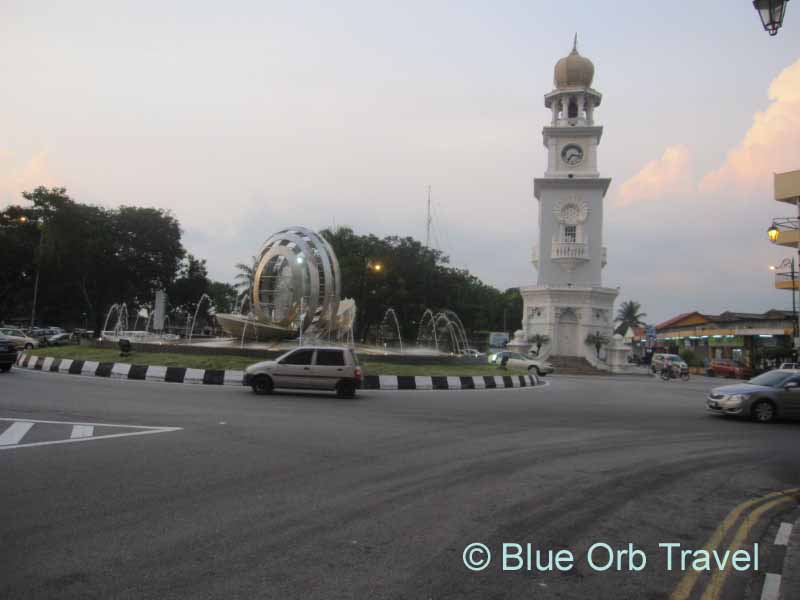
Queen Victoria Jubilee Clock Tower, Georgetown
Colonial Building in Historic Center, Georgetown

Georgetown, Malaysia Read More »
Cork, Ireland

History, Culture and Architectural Splendor

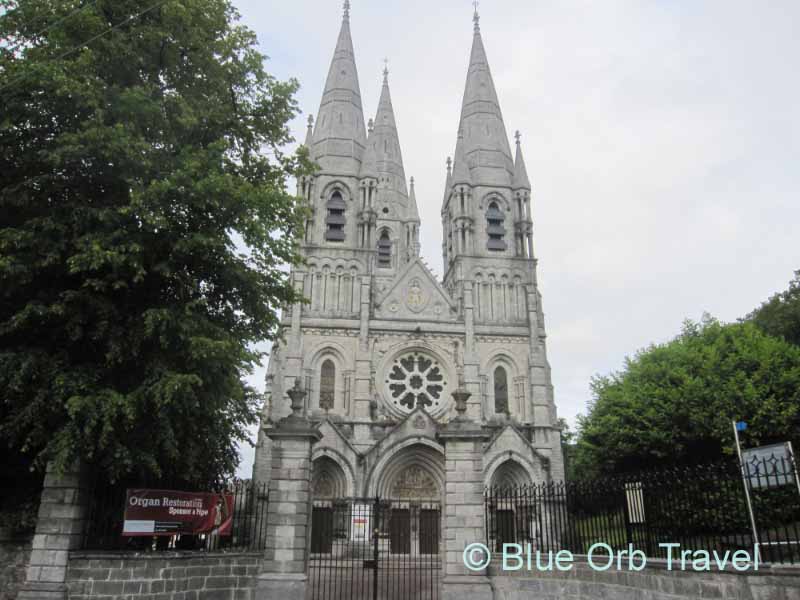
The city of Cork in southern Ireland is a major seaport and the third most populous city in Ireland.  The name ‘Cork’ comes from the Irish word meaning marsh and the city center is actually located on an island where the River Lee divides into two channels before converging again to flow to the sea.  From the time it was founded by Saint Finbarr in the 6th century, Cork has been at the center of Irish history in one fashion or another.  It served as a Viking trading post beginning around 920 AD, had its population decimated by the Black Death plague in 1349, played a role in the English War of the Roses in 1491 and was a major player in the War of Independence in the early 20th century.  Recent history is reflected in the beautiful churches and cathedrals that grace the city, including the famous neo-Gothic Saint Fin Barre’s (Protestant) and St. Mary’s (Catholic) Cathedrals.  Christ Church in the Old Town and St. Anne’s Church, which houses the Bells of Shandon in its clock tower, round out the architectural splendor on display at the houses of worship in Cork.

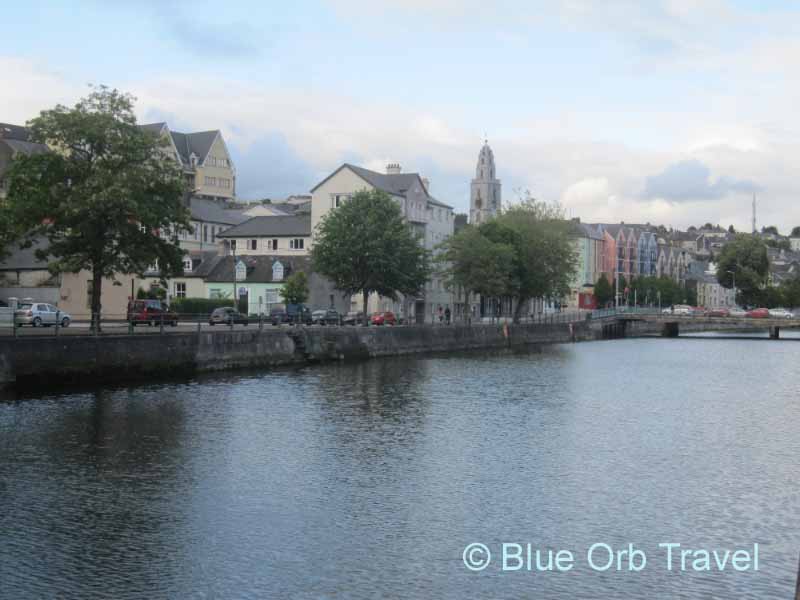
The Bells of Shandon Across the River Lee, Cork, Ireland

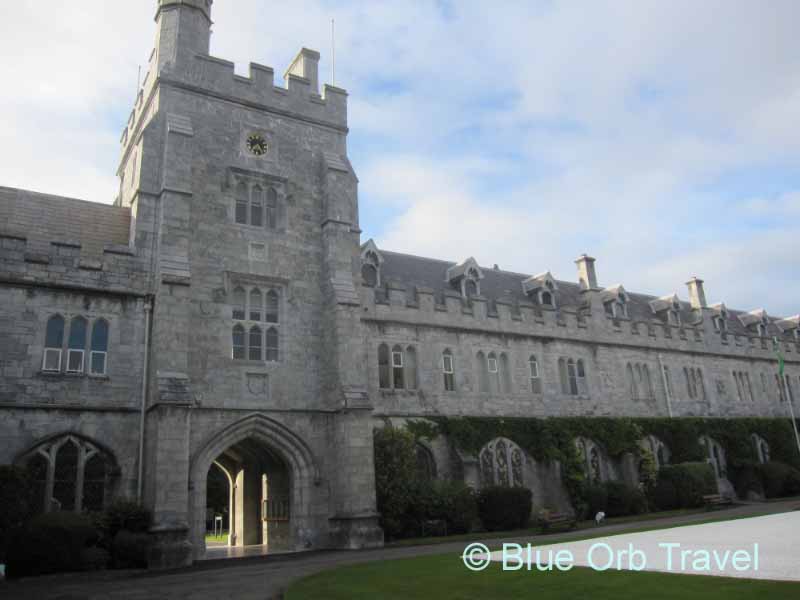
Elizabeth Fort was built as a fortification outside the city walls in 1601.  While parts of the fort are now used as a police station, other areas are accessible to tourists, as are some of the original town walls.  Culture abounds in Cork, as attested by the Crawford Art Gallery, the ultra modern Cork Opera House and the beautiful University College Cork, built in 1845, which straddles the south channel of the River Lee.  While all of these sites are easily accessible on foot, St. Fin Barre’s Cathedral and the University College Cork located near one another on the south side of the city are particularly worth the time and effort to see.

University College, Cork, Ireland

Kissing the Blarney Stone

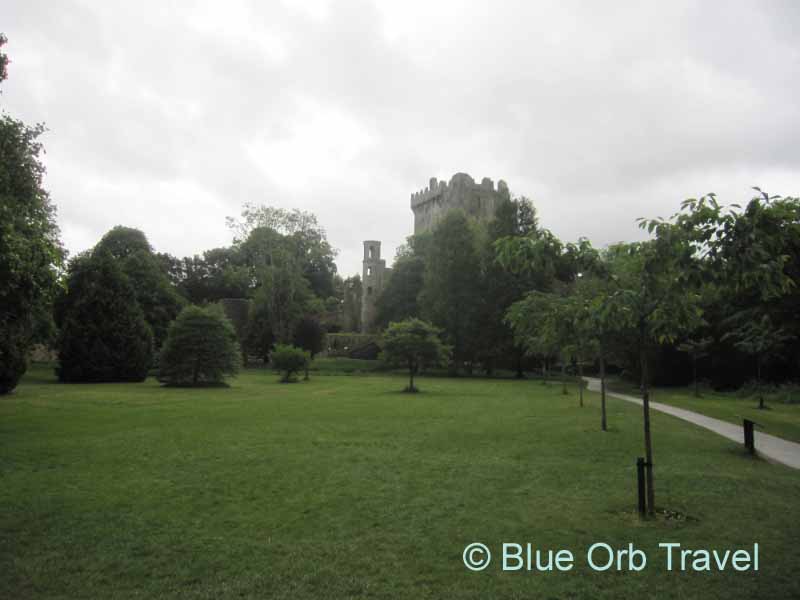
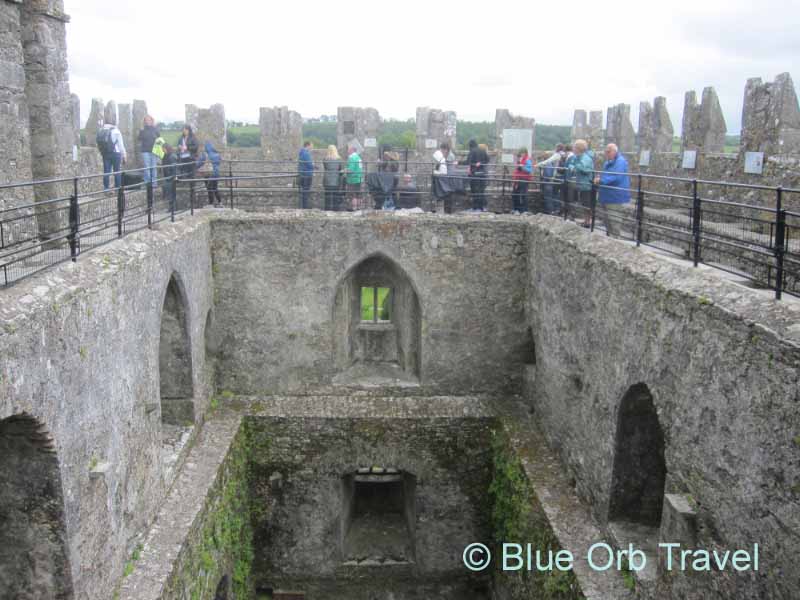
No trip to Ireland would be complete without kissing the Blarney Stone.  Located high up in the tower of the 600 year old Blarney Castle just outside of Cork, the Blarney Stone can only be kissed while lying on your back and being suspended partially upside down…and trusting the guide to hold you!  It really isn’t as scary as it sounds and once done, the gift of Irish gab is supposedly conferred upon the ‘kisser’.  The short bus ride from the Cork city center to the castle cost about $9 for the round trip and the entrance fee to the castle grounds was about $15.

Blarney Castle Near Cork, Ireland

The Blarney Castle and Gardens are actually a large, active estate located on the River Martin and the Blarney River.  Visitors can also tour the elegant Blarney House built in 1874 where the current baronet and his family actually live.  Put on your hiking shoes as you take a self guided tour of the gardens, the castle with its dungeons and caves and the rock close with its waterfalls, Druid’s Cave and Witch’s Stone.  One could spend hours wandering the grounds and exploring the many points of interest to be found in this magical place.  Trust me!  You won’t want to miss it.  Just before I left I’m almost certain I saw several Leprechauns, but then maybe I’m just full of Blarney.

Kissing the Blarney Stone Atop Blarney Castle, Ireland

The Friendly Corkonians

The hour and a half bus ride from Killarney to Cork cost about $24 and took us through some beautiful sights and scenery, including the market town of Macroom.  Corkonians are a very friendly lot and I enjoyed chatting with a number of them during my wanderings about the city.  It’s interesting to note that they are sometimes referred to as ‘The Rebels’ for their early disavowal of British domination during the long struggle for Irish independence.  I was very fortunate to find a wonderful place to stay while I was in Cork and encourage you to return for my full report on Creedon’s Bed and Breakfast.  It goes without saying that with its many cultural and architectural treasures in addition to the nearby Blarney Castle, Cork is an essential stop on any trek through Ireland.

Saint Fin Barre's Cathedral, Cork, Ireland
Saint Fin Barre’s Cathedral, Cork, Ireland

Cork, Ireland Read More »

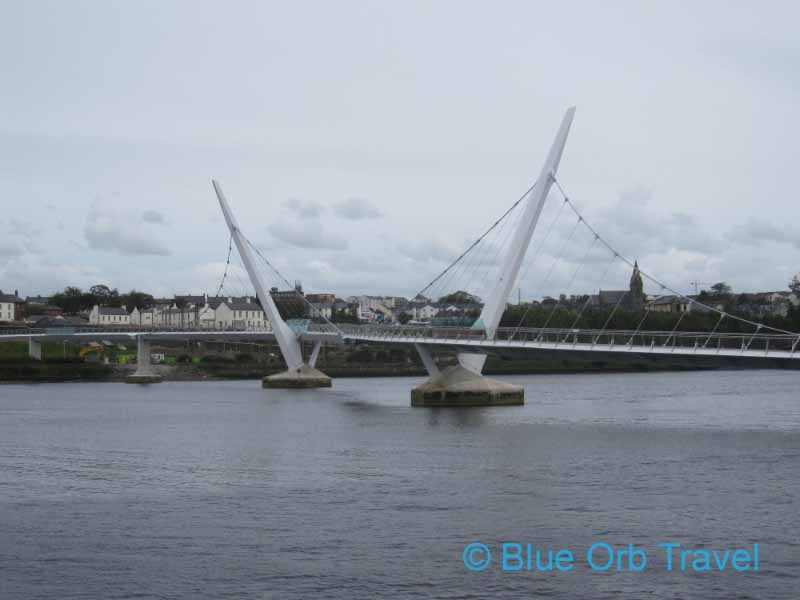
The Peace Bridge, Londonderry, Northern Ireland

Londonderry, Northern Ireland

Londonderry Air

As lilting as its namesake tune which accompanies the lyrics to ‘Danny Boy’, Londonderry is the second largest city in Northern Ireland and, like so many of the destinations we’ve visited on this trip, it is situated on a major river.  The River Foyle is a fast flowing tidal river that empties into the nearby Lough Foyle1 on the Atlantic Ocean.  The old walled city lies on the hilly west bank of the River Foyle known as Cityside, but the train station, where the track comes to a dead end, is on the more rural east side of the river known as Waterside.  While Londonderry is the legal name of the city, it is more commonly referred to as Derry2, a name which the Catholic nationalists prefer.  The river is easily traversed on foot between Waterside and Cityside using the double deck, pedestrian friendly Craigavon Bridge which also affords some interesting views of the surrounding area and a straight shot at the Peace Bridge, a modern new cycle and foot bridge farther north.

The Peace Bridge, Londonderry, Northern Ireland

The Waterside 

          There is only one remaining train station in Londonderry and it is located on the Waterside.  Opened in 1852 and notable for its impressive clock tower, the station provides easy access to all of Londonderry.  Unfortunately, the track ends here and the only service at this station is the line to and from Belfast, which takes two hours and costs $17.  Fortunately, there is a modern bus station on the Cityside that provides excellent service to points south.  Just up the hill and around the corner from the train station on the Waterside I found a wonderful place to stay call the Iona Bed and Breakfast, which I will feature in my next article.

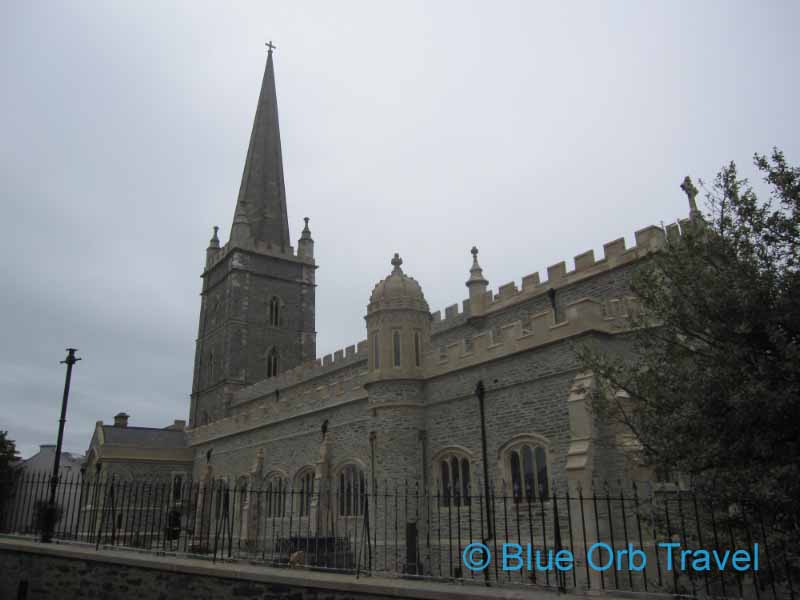
St. Columb's Cathedral, Londonderry, Northern Ireland
St. Columb’s Cathedral, Londonderry, Northern Ireland

The largely Protestant Waterside area has a number of quaint shops, small businesses and attractive residences.  Walking uphill to the north you pass the Ebrington Barracks where British troops were stationed until 2006 and which is now being redeveloped into a shopping and residential area.  A few steps farther along you will come to St. Columb’s Park located on an angle promontory overlooking the river and across the water to the Cityside.  A large, beautifully renovated Georgian house located within the park and now used for seminars and meetings is definitely worth a peak.

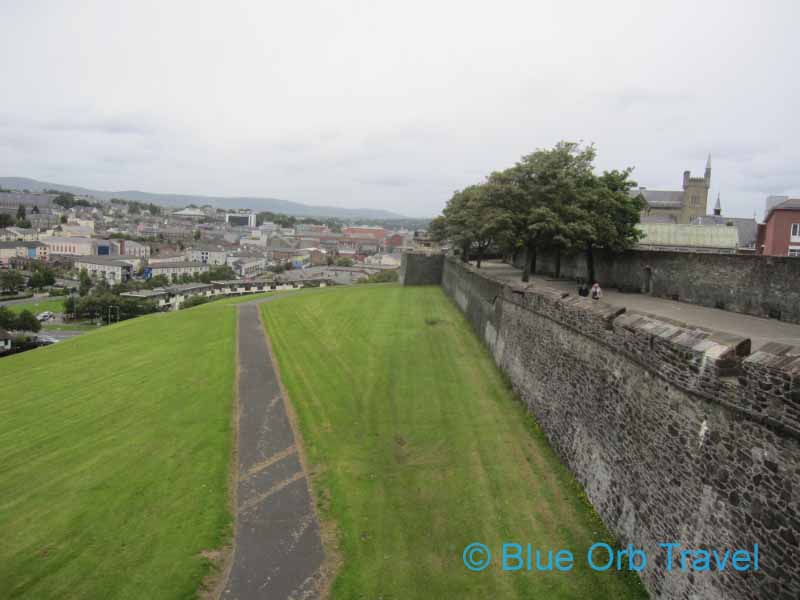
The City Walls, Londonderry, Northern Ireland

The Walled City 

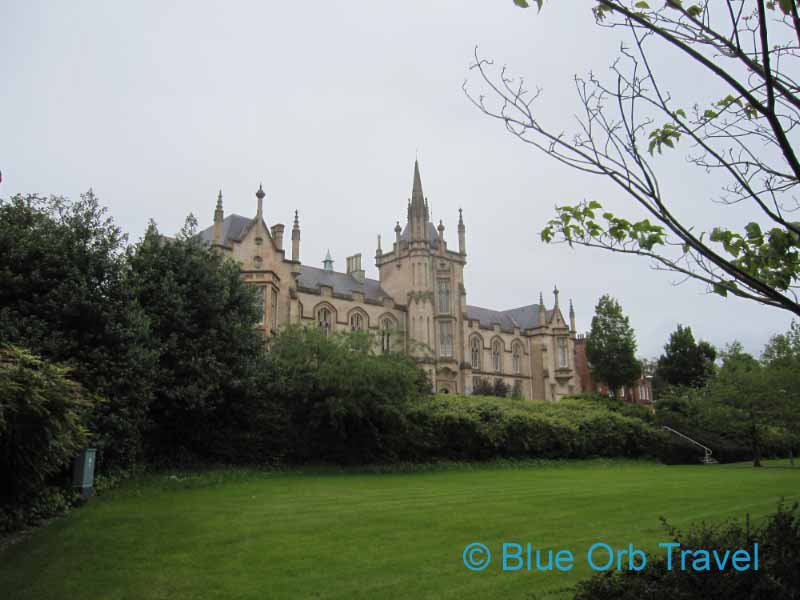
          Across the River Foyle on the Cityside are the city walls built between 1613 and 1618 as defenses for the settlers from Scotland and England.  They give Derry the distinction of being the only completely walled city in Ireland and visitors can walk along sections of the wall for some great views of the city and surrounding area.  Derry is one of the oldest inhabited places in Ireland and has many landmarks to show for it.  A walking tour of Derry will take you to the Guildhall, the Heritage Tower and several beautiful cathedrals, including St. Eugene’s Cathedral and St. Columb’s Cathedral, which is thought to have been the inspiration for John Newton’s famous hymn, Amazing Grace.  Right in the midst of these older buildings is an area with a modern new shopping center.  I took a short walk outside of town to visit the Magee campus of the University of Ulster and see its interesting mixture of traditional architecture and modern new facilities.

The University of Ulster, Londonderry, Northern Ireland

Stigmata of ‘The Troubles’ 

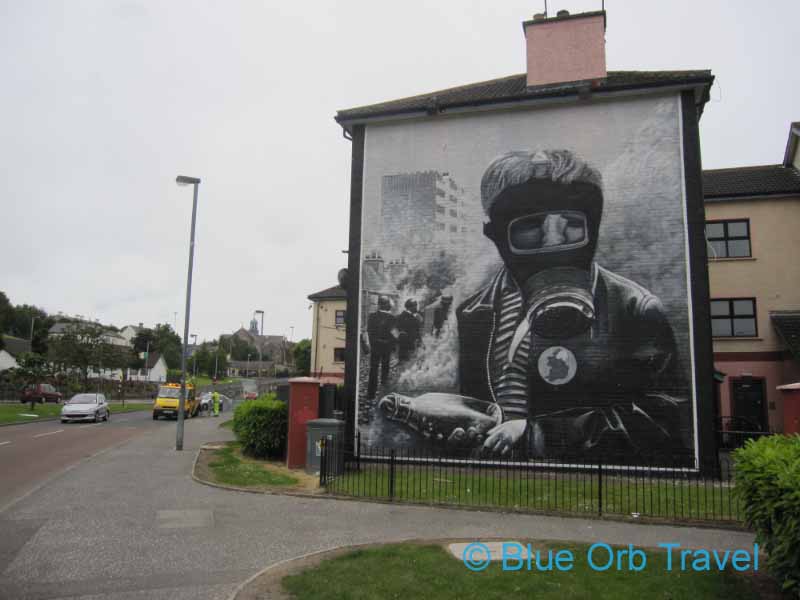
          In recent years Londonderry has been center stage for the strife between Catholic nationalists and Protestant unionists, also known as ‘The Troubles’.  As a result of this now largely resolved conflict, most of the Protestants moved to the Waterside, leaving Catholics in the majority on the Cityside.  It would be impossible for visitors to miss the many reminders of this difficult time in Irish history when touring Derry.  Looking west from the city walls across a large grassy knoll is a broad valley known as The Bogside and this is where many of the events of ‘The Troubles’ took place and where they are now memorialized.

Bogside Mural in Catholic Derry, Northern Ireland

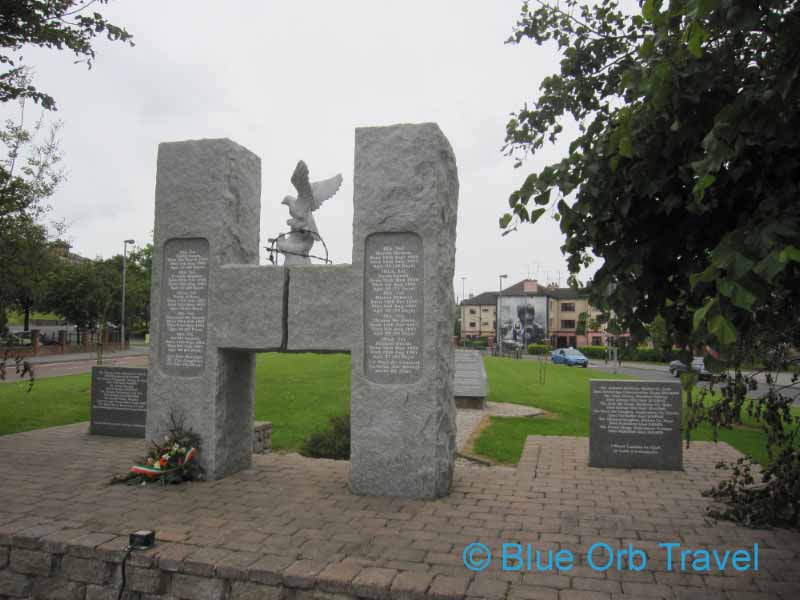
The main events are commemorated on a square known as Free Derry Corner.  Here you will find several monuments, including the H Block Memorial commemorating the hunger strikes of 1981, as well as several nearby Catholic wall murals.  It is here and in the surrounding streets that the riots known as the Battle of the Bogside took place in August 1969.  Considered to be one of the first incidents of ‘The Troubles’, it started when nationalists protested a loyalist parade and ended with the deployment of British Troops.  Also nearby is the site of Bloody Sunday, an incident in which British troops fired on civil rights protesters, killing 14 of them in January 1972.  In spite of these visible reminders, I found no remaining evidence of conflict during my visit and would not hesitate to encourage travelers to experience this beautiful and historic city and mingle with its friendly inhabitants.

The H Block Hunger Strike Memorial, Derry, Northern Ireland

1 Lough is related to the word Loch and both are pronounced as lock, meaning lake or bay.  In this case it refers to an estuary, bay or sea inlet.

2 The name derry comes from the Irish word doire meaning ‘oak grove’.

Londonderry, Northern Ireland Read More »

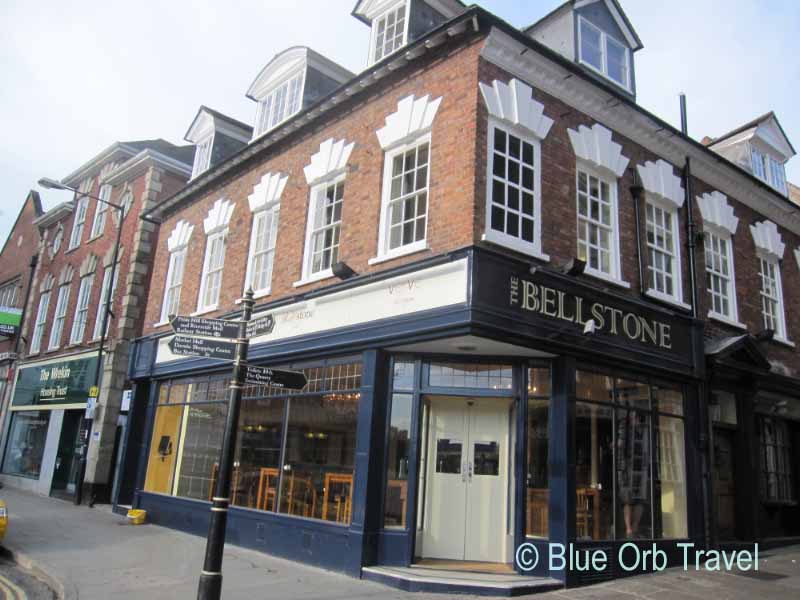
The Bellstone Hotel, Shrewsbury, England

The Bellstone Hotel, Shrewsbury, England

The Bellstone Hotel in Shrewsbury, England…An Awesome Accommodation

          The first several establishments that I tried after arriving rather late in the day in Shrewsbury, England were either fully booked or too expensive.  One proprietor who had no vacancies was kind enough to point me in the direction of the Bellstone Hotel and in no time I was checking into a sparkling clean room with private bath for the equivalent of $98, including a full Shropshire breakfast.  I soon found out that the hotel was brand new, having just recently opened and I apparently had the honor of being the first guest to occupy my room.

The Bellstone Hotel, Shrewsbury, England

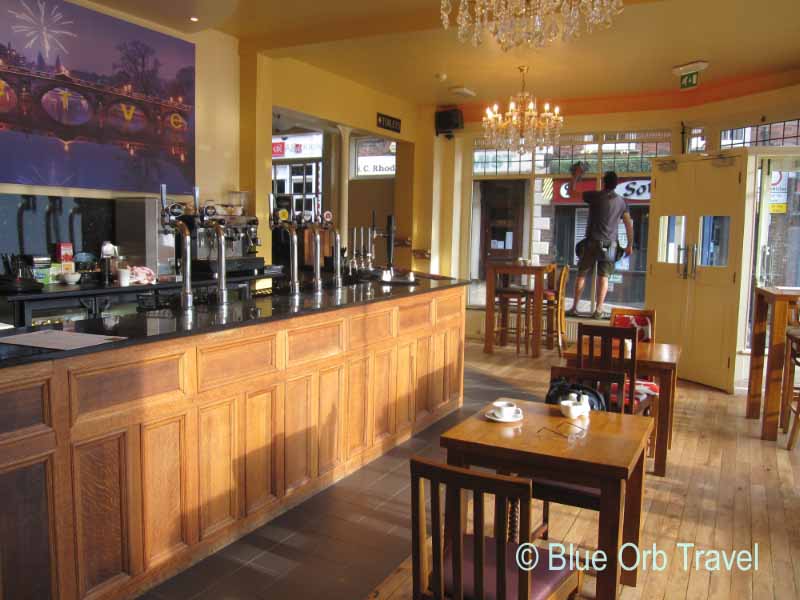
          Located on a fairly quiet street in the center of town, the Bellstone is a stylish hotel with 12 well appointed en-suite rooms and a bar and bistro on the main floor.  The staff members were extremely pleasant, friendly and welcoming and immediately made me feel right at home.  After getting checked in and settled into my room, I was able to head out for a tour of the medieval town of Shrewsbury, armed with a map and a list of important sights to see provided by the hotel manager.

Bar and Bistro at the Bellstone Hotel

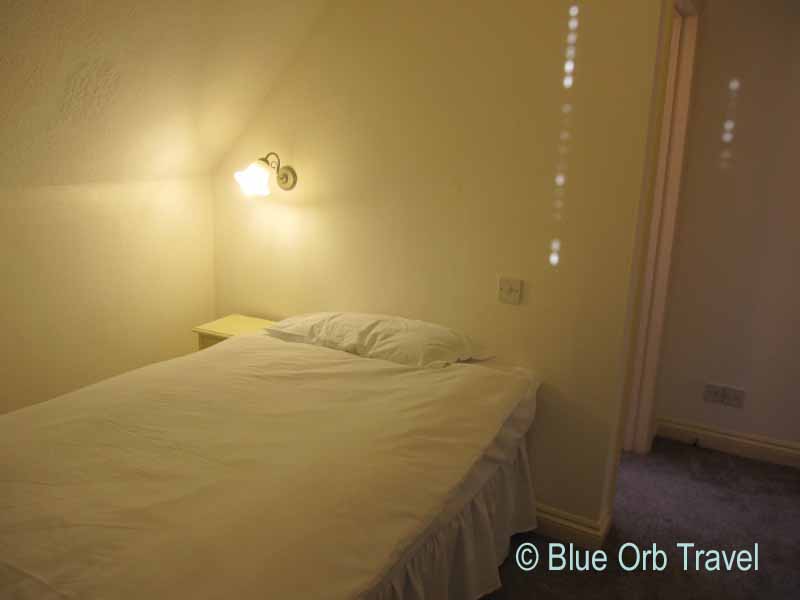
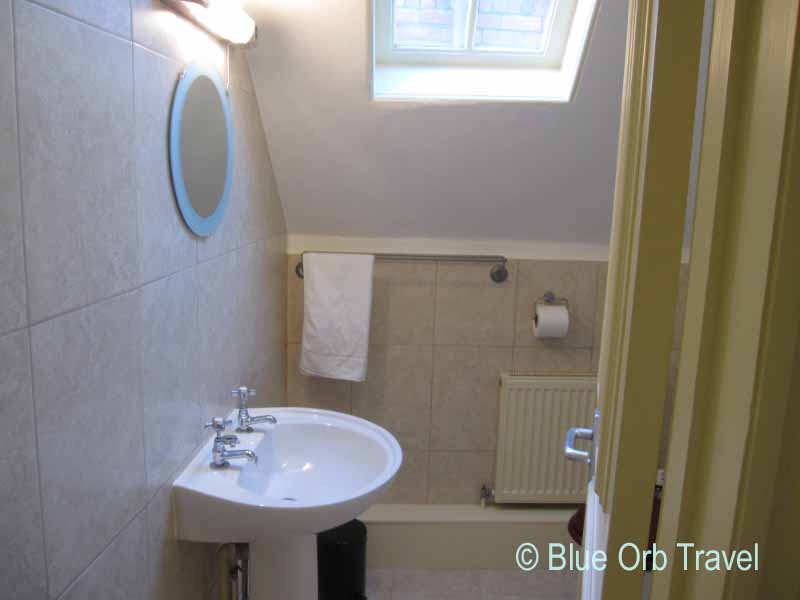
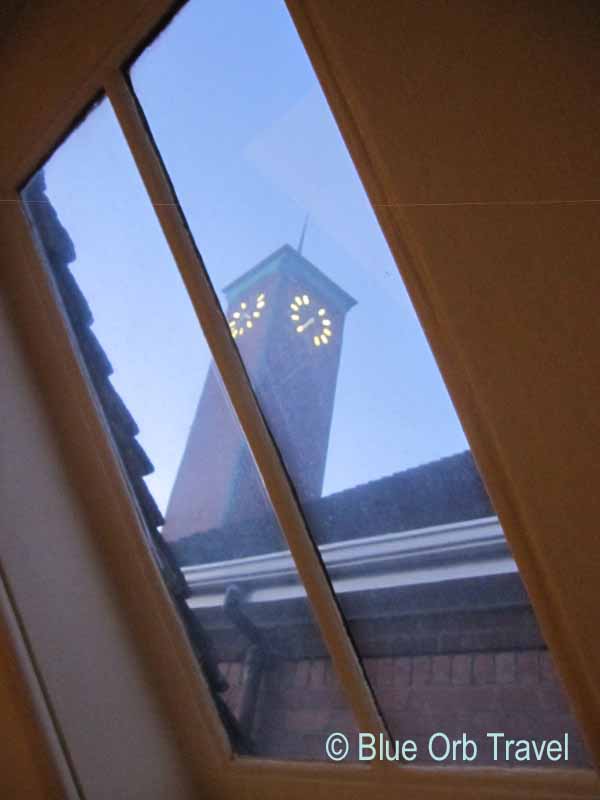
          My room could not have been more comfortable…with a nice bed, desk, television and coffee and tea tray provided by the hotel.  The bathroom was spacious and clean and there was a skylight that afforded an interesting view of a nearby clock tower.  After my invigorating walk around Shrewsbury it felt good to get back to my room, get my shoes off and take a load off my feet.  I gave in to my rapidly developing habit of sitting down with a cup of tea as I contemplated my day in this beautiful little walled medieval city.

Room at the Bellstone Hotel, Shrewsbury, England

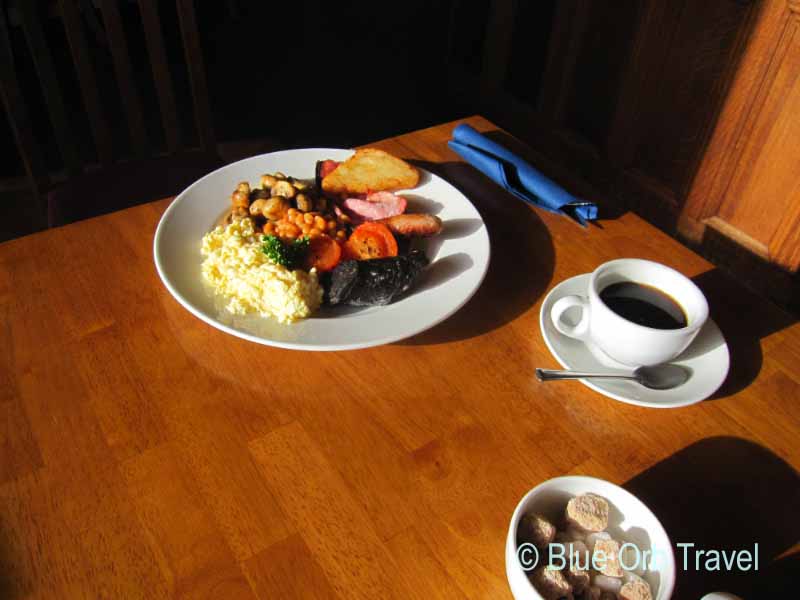
          After a good night’s sleep I had a wonderful breakfast the next morning.  I discovered that breakfast in the British Isles is generally composed of eggs, hash brown potatoes, fried tomatoes and mushrooms, baked beans, ham or bacon (rashers in Ireland!), toast and tea or coffee.  By this stage of my trip I had already learned to decline the black pudding, which is actually blood sausage!  Breakfast in England is called a ‘full English breakfast’, in Ireland it is a ‘full Irish breakfast’, and in this case, since I was in the county of Shropshire, it was a ‘full Shropshire breakfast’, each one having its own slight variations.  In any case, the breakfast at the Bellstone Hotel was delicious and after bidding farewell to my gracious hosts I was soon on my way to catch the train to Conwy, Wales.  On your next trip to the British Isles you will not want to miss Shrewsbury, England and the Bellstone Hotel would be a perfect place to stay while you are there!

Shiny New Bathroom at the Bellstone Hotel, Shrewsbury, England
Full Shropshire Breakfast at the Bellstone Hotel, Shrewsbury, England
Full Shropshire Breakfast at the Bellstone Hotel
Clock Tower Through the Skylight

The Bellstone Hotel, Shrewsbury, England Read More »